
You might spot deer at dusk or catch a faint sound in the darkness, but they don’t just wander aimlessly at night. Deer actively move, feed, and keep watch during low-light hours like dawn, dusk, and after dark to dodge people and predators. This helps them stay safer and conserve energy.
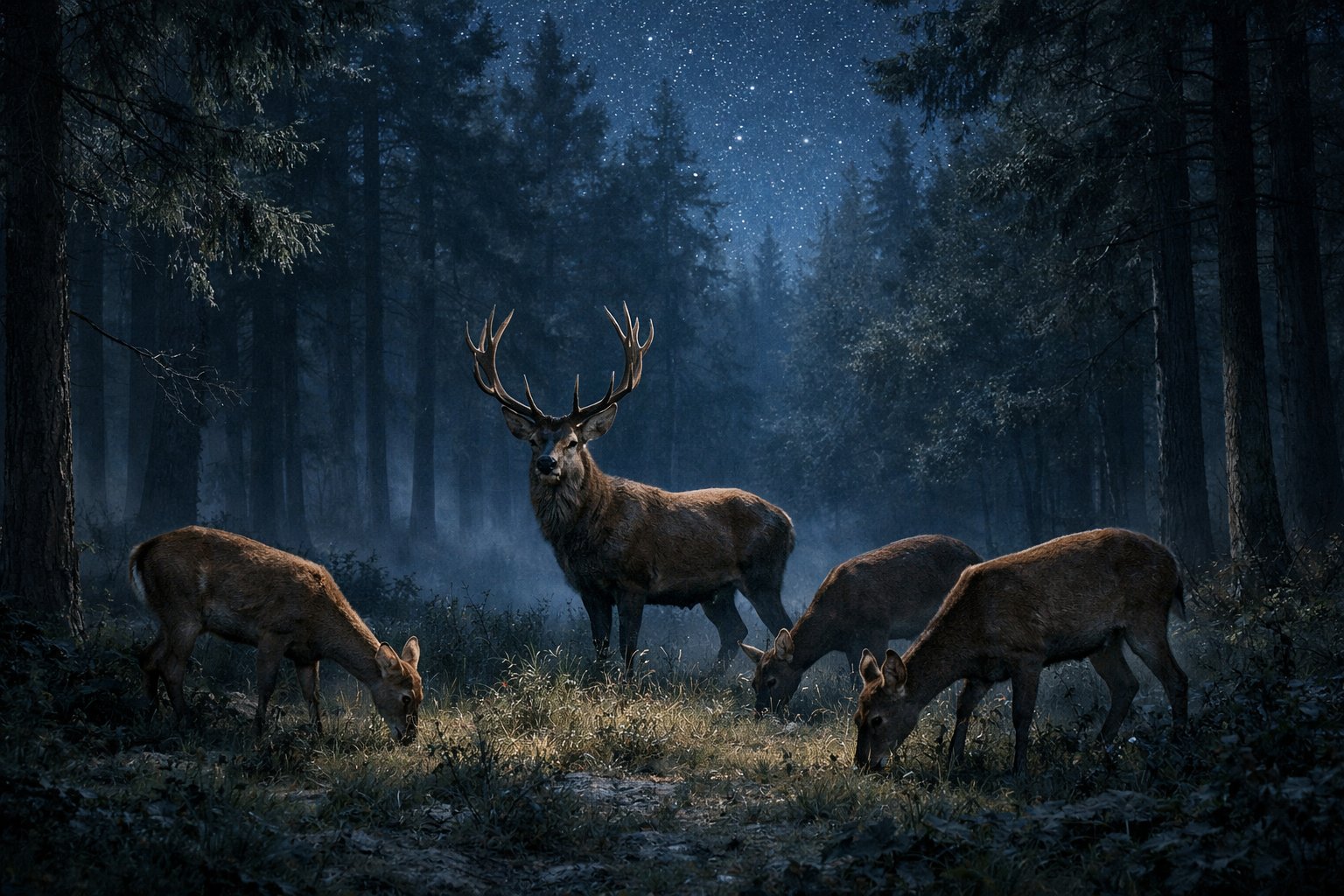
Weather, hunting pressure, and food needs shape when and where deer travel at night. Their sharp senses and smart habits help them stay hidden and thrive after sunset.
Nighttime Deer Behavior and Activity Patterns

At night, deer focus on feeding, moving between bedding and food, resting in quick spurts, and sometimes fighting or courting. They prefer traveling in low light, picking out leafy plants and forbs, and using thick cover to stay out of sight.
Nocturnal Feeding Habits
You’ll usually find deer feeding after dusk when people head inside and things quiet down. White-tailed deer and mule deer munch on grasses, forbs, browse, and crops. They go for high-energy foods like acorns, tender shoots, and soybeans if they can find them.
Moonlight and clouds change how far they’ll venture from safety to eat. On brighter nights, deer might feed further out, but heavy clouds or thick cover make them feel bold enough to move.
If you look closely, you might spot feeding signs like clipped stems, trampled plants, or fresh droppings near field edges. Bucks focus on protein-rich forbs in summer and acorns in fall. Elk do almost the same, but they tend to feed in bigger groups and go for rougher grasses.
Movement Between Bedding and Feeding Areas
Deer usually pick thick cover—like young saplings, brushy ravines, or cedar thickets—to bed down. They travel along worn trails to reach feeding spots.
You’ll spot narrow trails, sapling rubs, and well-trodden paths that show where they commute. They try to stay hidden by moving along tree lines and using hedgerows for cover. In the suburbs, deer change their routines to avoid people and cars, often getting even more nocturnal.
How far they travel depends on species and habitat. White-tailed deer usually bed within a few hundred yards of food, but mule deer and elk might go farther in open country. If you want to see them, check where thick cover meets open food sources.
Sleeping Patterns and Rest
Deer rest in short bursts, not long stretches. They tuck their legs under their body in a shallow spot to keep warm. These naps last just a few minutes to a couple hours, adding up over the night.
They pick bedding spots with quick escape routes and good cover. Does with fawns hide their young in dense spots during the day and come back at night to nurse. When it’s cold, deer rest more between feeding trips to save up energy.
Even while resting, deer stay alert and will lift their head at the slightest sound. If predators or people disturb them, deer cut rest short and move bedding sites more often.
Social Interactions and Rutting Season
During rut, bucks get restless and move more at night to find does and challenge other males. You’ll notice more scrapes, rubs, and even scuffles after dark. Courtship and fights usually peak from late fall into early winter for most temperate species.
Outside rut, deer keep looser social groups. Does form small family bands, while young bucks might hang out together. At night, group sizes shift—elk might gather in big herds on open ground, but white-tailed deer usually stick to small groups.
You’ll see rutting behaviors mix with feeding and bedding habits. Trampled plants and fresh scent marks often show up near deer trails. If you’re hunting or just watching, expect more deer movement and unpredictability at night during the rut.
Adaptations and Influences on Night Activity

Deer rely on their sharp senses in the dark, and things like weather or predators can change their routines. Their eyes, feeding habits, and safety choices all play a part in how they act after sunset.
Sensory Adaptations for Low Light
Deer have a reflective layer behind their retina called the tapetum lucidum, which boosts their ability to see in the dark. This adaptation helps them spot shapes and movement at night—honestly, it’s a little impressive.
Their big pupils and loads of rod cells let them see in dim light, but colors just turn into gray blurs.
Hearing and smell matter even more when it’s dark. Deer can rotate their large, cupped ears to catch tiny sounds, and their noses sniff out fresh browse or danger from far away.
Since deer are ruminants, they pick high-calorie plants you can smell from a distance, then hide in cover to chew their cud safely.
Environmental and Seasonal Influences
Shorter winter days push deer to be more active at night, since daylight feeding time shrinks. You’ll spot more deer moving after dark in late fall and winter, when they need to pack on fat for the cold.
Moon phases play a role too. On bright, moonlit nights, deer move more, but storms or deep snow slow them down.
Food sources also change their habits. If crops, salt licks, or even suburban lawns are safer at night, deer adjust their movement to reach them. Roads and habitat changes force deer to cross risky spots after dark, when traffic’s lighter.
Season affects appetite and social life—does with fawns move differently than lone bucks during rut or harsh winter.
Predator Avoidance and Human Impact
Predators and hunting pressure really shape how deer move at night. When wolves or coyotes are around, deer stick to night cover and pick travel routes that help them stay hidden.
You’ll probably notice tighter travel lanes and more edge movement near thick brush. It’s almost like they know where the danger is and hug the safest spots.
When people hunt a lot, deer figure it out fast. They start avoiding daylight, becoming way more nocturnal.
Older bucks especially seem to shift their habits, sneaking around after dark to steer clear of hunters.
Human activity changes things, too. If there’s a lot of daytime disturbance, deer just flip the script and come out at night.
They’ll hit up lawns, crops, or backyard feeders after sunset. Honestly, this makes driving at night a bit riskier—you never know when a deer might dart out.
If you’re a hunter, keep in mind that pressured deer will change up their routines. Watching for night movement can really help you pick a better stand location.


