
You see deer glowing in your headlights and probably wonder how well they can actually see at night. Deer don’t see in total darkness, but their eyes let them see way better than you do when it’s dim out, thanks to some wild features that boost light detection. This stuff matters—whether you’re driving at dusk, hiking at twilight, or just hanging out in a blind, hoping to spot something cool.
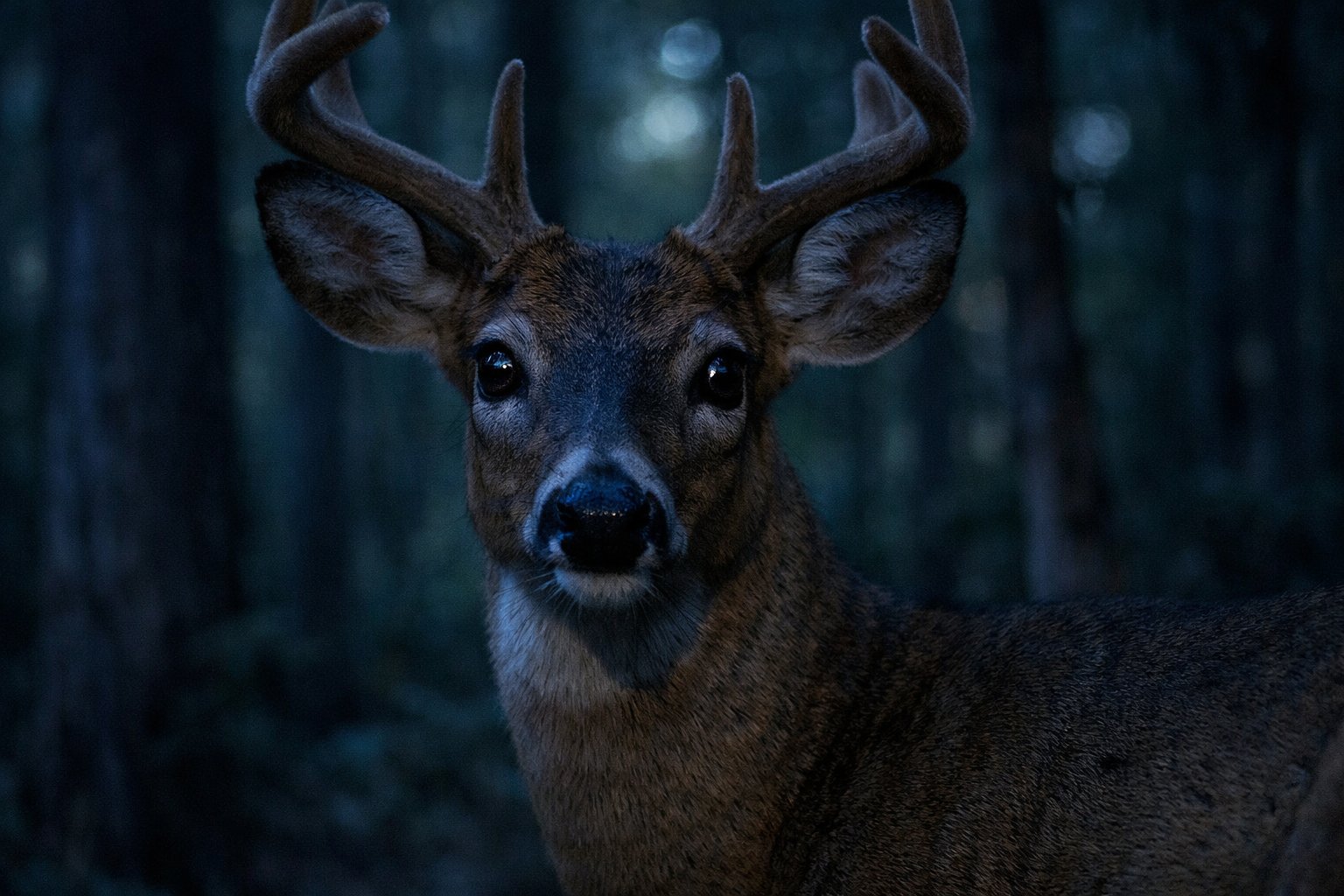
You might be curious about how their eyes pick up faint light, why movement really pops out for them, or what causes that eerie shine. Knowing this can help you get why deer act the way they do after dark and maybe help you stay a little safer near roads and trails.
How Deer See in the Dark

You’ll get a look at what parts of a deer’s eye help them see when it’s dark, how far they can spot things at night, and how their night vision stacks up against yours. Check out the details to see why deer notice motion more than fine detail and what’s behind that glowing eyes thing.
Night Vision Adaptations in Deer
Deer eyes have some pretty neat features that help them see in low light. The tapetum lucidum sits behind the retina and bounces light back through the photoreceptors.
This reflection gives rod cells a second shot at catching faint light, which is what makes deer eyes seem to shine at night.
In the deer retina, rod cells way outnumber cone cells. Rods pick up light and motion in dim conditions.
Cones let you see color, but deer don’t have many, so they see less color and more contrast when it’s dark.
Deer have big pupils that open up wide at dusk and dawn. Those bigger pupils let more light in and help rods do their job.
All these features let whitetail deer and their cousins move around and catch motion even when it’s pretty dark out.
How Far Can Deer See in the Dark?
How far deer can see depends on stuff like moonlight, cloud cover, and what’s around them. On a clear night with a full moon, deer can spot movement about 150–200 yards away in open fields.
If there’s no moon and it’s just regular nighttime, their range drops a lot—down to maybe a few dozen yards.
Their vision isn’t as sharp as it is during the day. Deer care more about picking up movement than seeing crisp shapes.
Snow or anything that bounces light around can help them see farther. Heavy brush or fog, though, really cuts their range.
Headlights sometimes blind or freeze deer because the sudden brightness floods their rods. That’s why you’ll see deer just stand there in your beams instead of bolting.
Comparison of Deer and Human Night Vision
You use cone cells for color during the day, but deer rely on rod cells for night vision. In dim light, deer can spot motion and low-contrast stuff better than you can.
Humans win at seeing detail and color when it’s bright out, though.
If you’ve got 20/20 vision, you’ll see details better in daylight. But at night, your eyes drop down to something like a deer’s 20/60–20/200.
Deer keep their sensitivity at low light thanks to that tapetum and all those rods.
If you’re out around deer at dusk, move slow and steady. Avoid shining bright lights at them.
That way, you’re less likely to spook them or blind them with your headlamp.
Deer Eye Structure and Visual Capabilities

Deer eyes work well for picking up dim light, spotting movement, and scanning a wide area. Here’s how their light-sensitive cells help, what colors they can actually tell apart, and how they figure out motion and distance.
Role of Rods and Cones in Deer Eyesight
Deer retinas pack in way more rod cells than cone cells. Rods handle low light and motion, so when it’s dawn, dusk, or night, deer have the edge.
Rods give them solid sensitivity to faint light, but they don’t help much with sharp detail.
Cones are for color and fine detail. Deer don’t have many cones, and they’ve got just two types.
That means they see blues and yellows better than reds. Their vision is called dichromatic.
Cones work best in daylight, so deer actually see finer detail during the day than at night.
A reflective layer called the tapetum lucidum sits behind the retina. It bounces light back through the rods and cones, which boosts sensitivity when it’s dark.
That’s what causes the eye shine you catch in your headlights.
Color and Depth Perception
Deer are dichromatic, so they don’t see the full color range you do. Reds and oranges just look kind of gray or dull to them.
Blues and yellows pop out more, so if you’re wearing those colors, deer might notice you faster.
Depth perception comes from binocular vision. Deer have eyes set wide apart, giving them a huge field of view but not as much overlap in front.
This setup helps them spot predators from all sides. But it means they don’t get quite as sharp depth cues right in front as humans do.
Deer use head movement and nearby objects to judge distance. In low light, those depth cues get weaker because cones and detail vision don’t work as well.
That’s when motion and changes in size become more important for figuring out how far away something is.
Motion Detection and Field of View
Deer pick up on movement really well. Their retinas, packed with rods, help them spot motion fast—even when the light’s low. If you shift suddenly or something flickers nearby, they’ll notice.
This keen sense keeps them alert to predators and ready to bolt at a moment’s notice.
They see a lot, too. Most species enjoy a field of view around 310 degrees. You can try coming in from different angles, and they might not spot you right away.
But there’s a catch. Their binocular vision—the part that helps them focus straight ahead—is pretty narrow. So, tracking one thing far off isn’t their strong suit.
If you’re careful, you can work with this. Move slowly and steadily, and you’re less likely to set off their alarm bells. But if you move quickly or something bright flashes, expect them to snap their attention your way fast.


