
Hitting a deer is never fun, and honestly, it can really shake you up. The best thing you can do is try to stay calm and make safe choices for yourself and anyone else around. If the deer or anyone is injured, pull over somewhere safe, switch on your hazards, call emergency services, and don’t go near the animal.
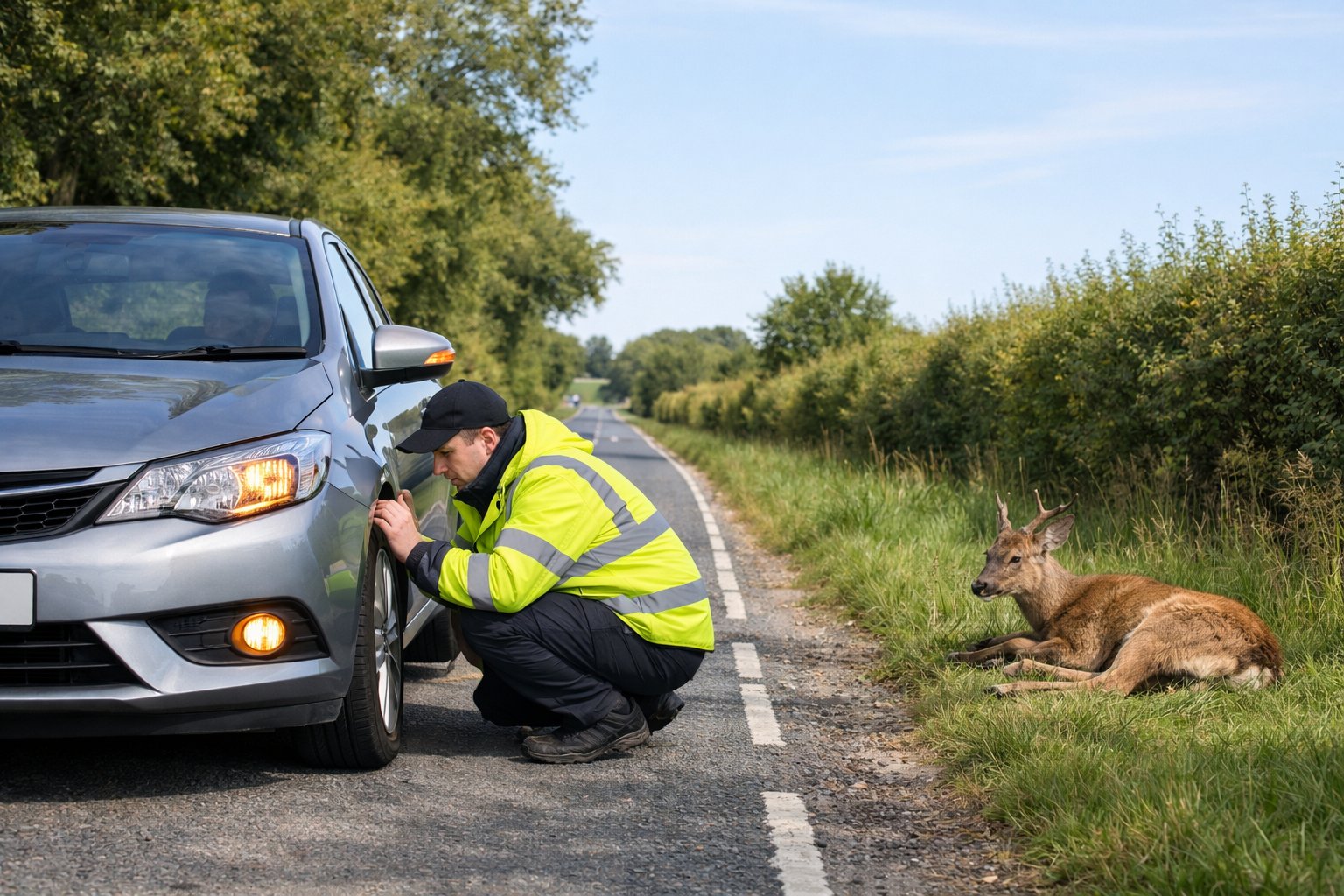
Take a moment to check your car for damage. Decide if it’s actually safe to keep driving or if you need to stop for good.
The next sections will cover reporting the accident, what your insurer needs to know, and a few tips to avoid deer collisions in the future.
Immediate Steps to Take After Hitting a Deer
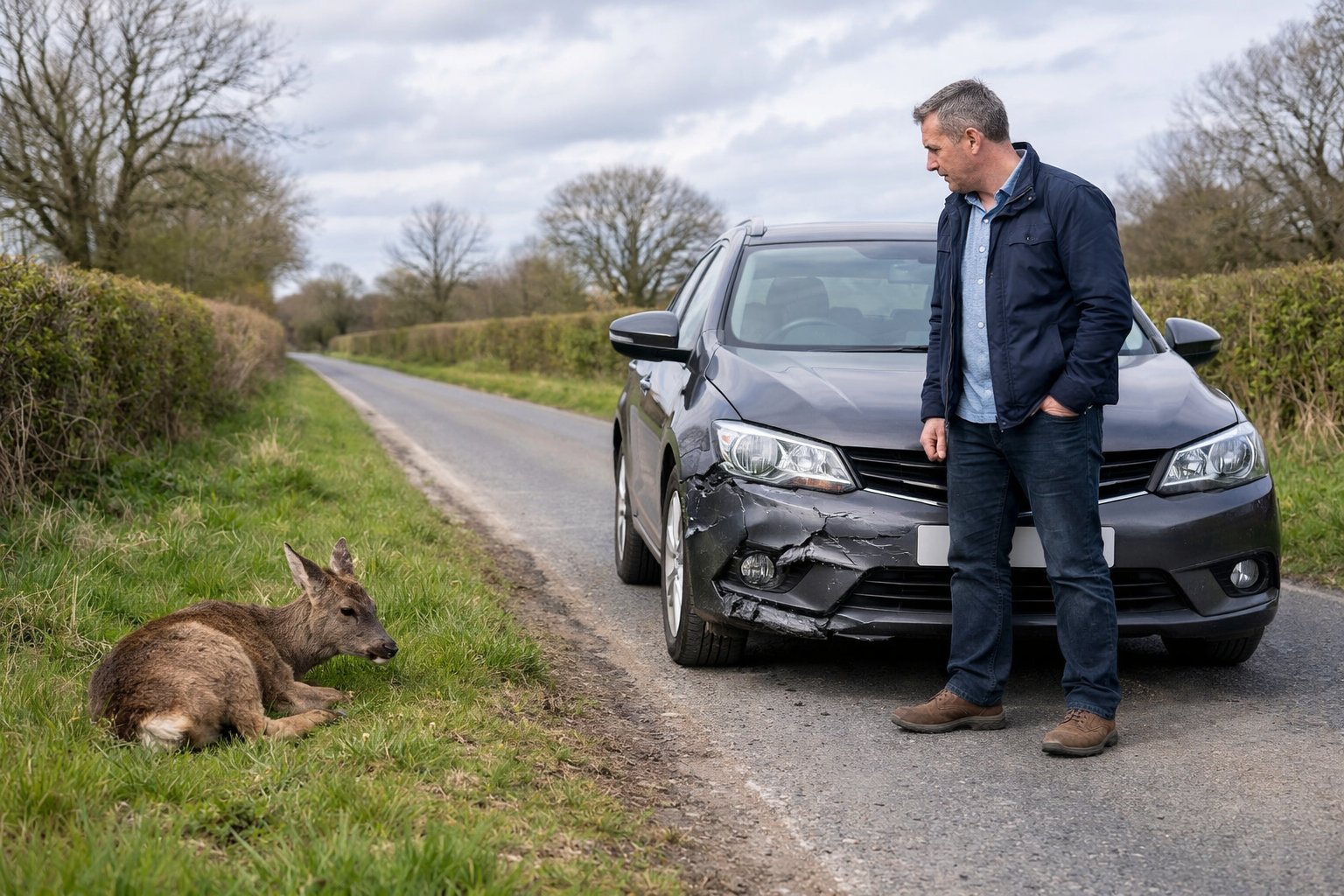
Stop your car somewhere safe. Check everyone inside, and do what you can to secure the scene.
Use your hazard lights. If you can, move your car off the road, and call for help if anyone’s hurt or the deer is blocking traffic.
Ensure Safety and Stop Safely
If your car still works, steer gently to the verge or a lay-by. Park well clear of moving traffic.
Apply the handbrake and turn off the engine. If you can’t move your car, just stay inside with your seatbelt on and doors locked until it’s safe to get out.
Check yourself and your passengers for injuries right away. If anyone’s hurt or feeling weird, call 999 for an ambulance.
Don’t try to move seriously injured people—just wait for paramedics.
Use Hazard Lights and Assess the Scene
Switch on your hazard lights to warn other drivers. Got a high-vis jacket? Put it on before you step out.
If you have a warning triangle or cones, put them at least 45 metres behind your car—especially on a fast road.
Walk around only if it feels safe. Watch out for hazards like leaking fuel, broken glass, or the deer lying in the road.
Snap some quick photos of the car damage, your position on the road, and any signs. If you can, note your exact location—use a milepost, GPS, or even a what3words address.
Call Emergency Services if Needed
If someone’s injured, call 999 and ask for an ambulance. If the deer is blocking traffic or there’s a real danger, call the police on 101, or 999 if it’s an emergency.
Give your location, how many vehicles are involved, and whether the animal is alive or dead.
If you can share a what3words location or a nearby junction, do it—it really helps responders find you.
When you report, stick to the facts: describe injuries, the state of your vehicle, and any fuel leaks.
Try to save your phone battery for calls and directions.
Dealing with an Injured Deer
Don’t go near or try to move a badly injured deer. Wild animals can be unpredictable and honestly, it’s risky.
If the deer’s still alive but stuck on the road, keep your distance. Warn other drivers with your hazards and high-vis jacket.
Call the police or local council to report the injured deer so trained people can handle it.
If the animal needs to be put down, only let trained officers or wildlife vets do it.
Even if the deer runs off, report the collision anyway—it helps with insurance and road safety records.
Reporting, Legal Guidance, and Insurance

Act quickly and be clear after a deer collision. Call the police if someone’s hurt, if there’s danger to other road users, or if your car’s badly damaged.
Let your insurer know what happened. Take notes, photos, and get contact details if you can.
When and How to Report to Police
If anyone’s injured, dial 999 right away. For non-injury accidents, contact the local police or 101 to report it.
Give them the exact location—road name or nearest mile marker—the time, and details about any hazards or live deer.
Take photos of your car, the scene, and any animal remains if it’s safe. Write down the names and badge numbers of any officers who show up.
If police don’t attend, keep a written log of your 101 call reference and any incident number. Insurers often want this if you make a claim.
Relevant UK Laws and Deer Act 1991
You’re not usually criminally liable for hitting a wild deer, but you still have duties under road law and animal welfare rules.
The Deer Act 1991 covers poaching and the killing or taking of deer. It doesn’t excuse you from reporting if other laws require it.
If you cause extra danger—like swerving and hitting another car or pedestrian—you could face charges under regular road traffic law.
Keep evidence and any police notes to show you acted responsibly. The British Deer Society has more guidance on legal issues and safe handling of deer incidents.
Contacting Insurance Providers
Call your insurer as soon as you can. Most policies treat deer strikes as comprehensive claims.
Have your policy number, the time and place of the incident, any police reference, photos, and repair estimates ready.
Ask if your policy has a specific deductible for animal collisions and whether claiming will affect your no-claims bonus.
If the insurer questions your claim because there’s no police report, provide the 101 call log or any witness details.
If you’re confused about the terms, the Association of British Insurers or your insurer’s complaints process can help.
Supporting Wildlife and Specialist Organisations
If you find a deer that’s alive but injured, don’t try to move it. Call your local police for animal welfare help, or reach out to a wildlife charity listed by the British Deer Society.
You can also get advice from regional wildlife rescue groups or the RSPCA. They’re usually happy to help.
If you’re looking for ways to reduce future risks, check out guidance from DeerAware and the British Deer Society. They highlight seasonal high-risk times, like dawn and dusk or during the autumn rut.
These groups also offer tips on what to do right after hitting a deer. They even explain how you can keep yourself and other road users safe.


