
You’ll spot deer at dawn and dusk, but during the day, they vanish into places where cover, visibility, and a quick escape all come together. Deer rest in hidden bedding spots—think tall grass, dense brush, forest edges, or evergreen thickets. They stay partly alert, always ready to bolt if something feels off.
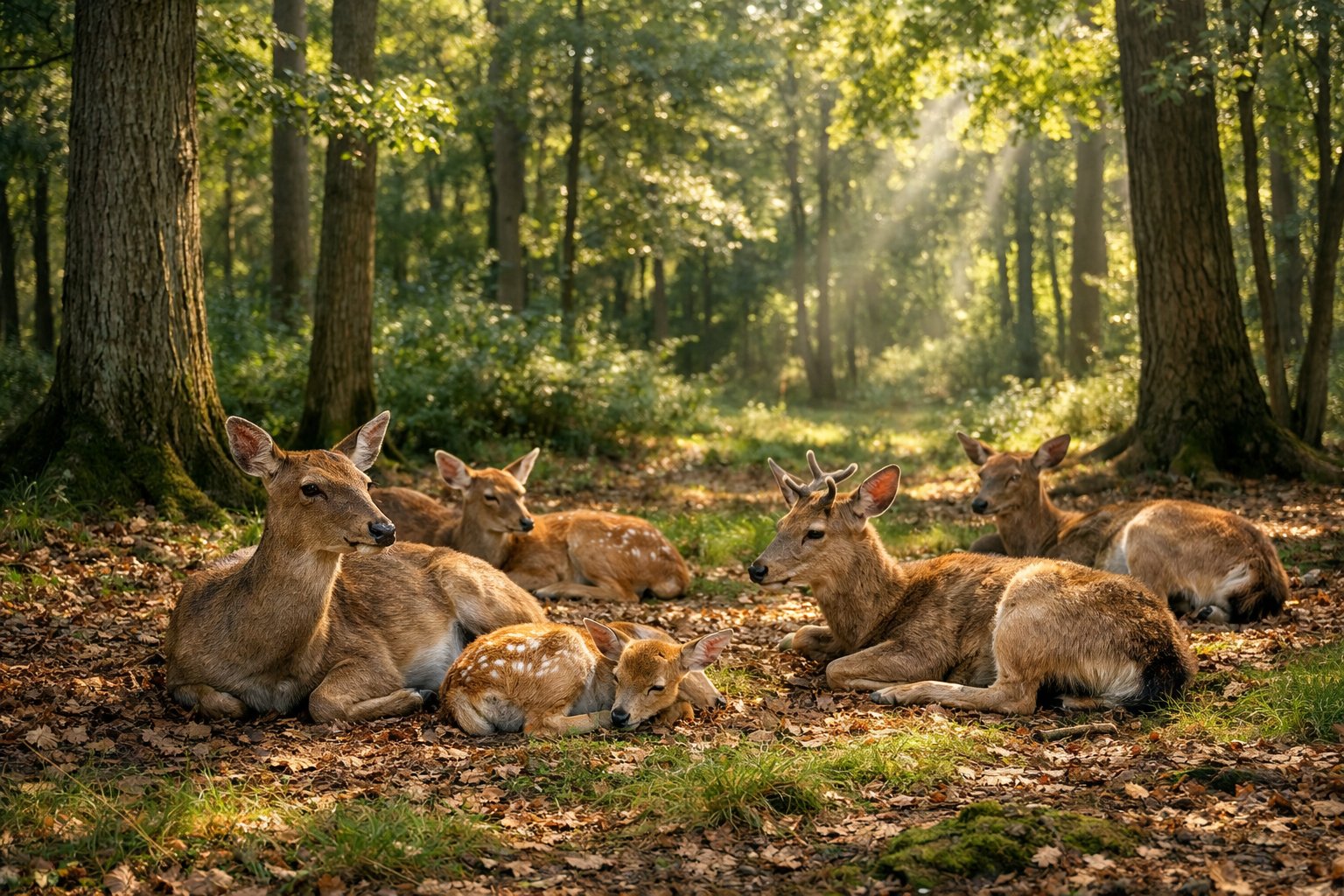
Ever wonder why they pick those spots? They nap in short bursts, and does, bucks, and fawns all have their own strategies for safety.
If you follow the clues—flattened grass, oval depressions, scattered tracks—you might actually find where deer sleep during daylight.
Where Do Deer Sleep in the Day?
Deer pick spots where cover, scent control, and escape routes all intersect. You’ll see beds near food, hidden by brush, or tucked under evergreens that block wind and sight.
Common Daytime Bedding Locations
Deer usually bed down in tall grass, thick brush, or along the edges of forests. In fields, check the edges of corn or soybeans and old fencerows—places where plants break up their outline.
In the woods, white-tailed deer and mule deer use the understory near fallen logs or conifer thickets for shade and concealment.
Wet spots work too. Marsh islands and cattail pockets keep predators at bay.
On hills, deer prefer leeward slopes and ridge points so they can face the wind and see what’s coming. Suburban deer get creative—overgrown yards and drainage ditches close to food work just fine.
Look for oval depressions and bent grass to spot fresh beds.
Factors Influencing Bedding Site Selection
Wind direction and scent control really matter to deer. They often face into the wind to catch danger early with their nose.
Staying close to food and water means less travel and more energy saved, so bedding near feeding areas is pretty common.
Cover density and visibility need to balance out. Thick cover gives them hiding power, but they still want to see and escape fast if needed.
Snow, temperature, and hunting pressure all play a role. In winter, deer pick south-facing slopes and evergreens for warmth.
When people show up more, deer move their beds farther from trails and roads. If predators lurk nearby, deer choose heavier cover or even small islands.
Differences Between Bucks, Does, and Fawns
Bucks usually sleep solo. You’ll find their beds on high spots or hidden under sparse cover, places where they can watch and run if needed.
Buck beds look bigger and more oval-shaped.
Does, on the other hand, bed together—especially when fawns are around. Their beds sit in thicker cover close to feeding paths.
Group bedding lets several does watch for danger and helps keep fawns safe.
Fawns hide incredibly well in tall grass or brush. They curl up in a tiny, circular bed while their mother feeds nearby.
You’ll spot their beds as small, barely-disturbed depressions—almost invisible unless you’re really looking.
How and When Deer Sleep During the Day

Deer nap in short bursts and light dozes, usually in hidden spots close to food and escape routes. They stay partly alert, using cover to hide, and move if things get risky.
Sleep Patterns and Alertness
You’ll notice deer don’t just crash out for hours. Instead, they take a bunch of short naps.
They’ll lie down in grass, brush, or under evergreens, but keep their ears and noses working. That way, they can catch a predator before it gets too close.
Deer usually face into the wind so your scent drifts toward them, not away. That’s a smart move for survival.
Even when you see a deer with its head down, don’t assume it’s out cold. It can jump up in a flash—light sleep is the name of the game.
Length and Quality of Daytime Sleep
Deer rack up several hours of rest during the day, but only a little bit is deep sleep. Most of it? Short 3–10 minute naps, with a few longer 15–30 minute rests if they feel safe.
Altogether, they get about 8–12 hours of rest over 24 hours.
If they find dense cedar or pine thickets, they might get deeper sleep. In open or hunted places, they sleep lighter and move more.
Standing sleep doesn’t last long; they only stand for quick, alert pauses.
Sleeping Alone vs. in Groups
You’ll notice bucks usually bed down alone. They pick hidden, elevated spots and seem to prefer it that way.
Bucks like single, larger oval depressions. They also move their beds around now and then, probably to dodge predators or maybe even rivals.
Does, on the other hand, tend to bed in groups—especially if they’ve got fawns. Group bedding means everyone gets a little more security.
Fawns blend in almost perfectly near the doe. They barely move for hours while the doe forages nearby.


