
You probably see deer everywhere—woodlands, parks, even crossing country roads. Adult wild deer in the UK don’t really have any large natural predators, so people and habitat shape their numbers most. Without big carnivores, deer populations have grown a lot in many areas.
Let’s get into how Britain’s deer (Cervidae) ended up here, which predators used to matter, and how people now manage things. There are some clear examples of what’s happening to plants, forests, and the animals that live alongside deer.
Predators of Deer in the UK: Past and Present

Let’s look at how large predators once kept deer numbers down, what threatens deer now, and how scavengers clean up deer carcasses across places like the Scottish Highlands and East Anglia.
Historic Natural Predators of UK Deer
Wolves, lynx, and brown bears once hunted deer across Britain. Wolves hunted red deer (Cervus elaphus) and packs went after groups of roe deer (Capreolus capreolus) on moors and in lowland woods.
Lynx ambushed roe and muntjac in thick woodland. Bears sometimes tackled bigger stags on hillsides.
People hunted and pushed out those predators over centuries. Habitat loss finished the job. That left red deer, roe deer, fallow, sika, muntjac, and Chinese water deer without many natural checks.
You can still spot traces of that history in Scottish glens and on Exmoor. Deer behaviour there shows what happens after big carnivores disappear.
Current Threats to Adult and Young Deer
Today, people cause most adult deer deaths. Legal and illegal culling, cars on roads, and disease all reduce the population.
In the Highlands and parts of northwest England, people manage red deer numbers through stalking to protect forests and farmland.
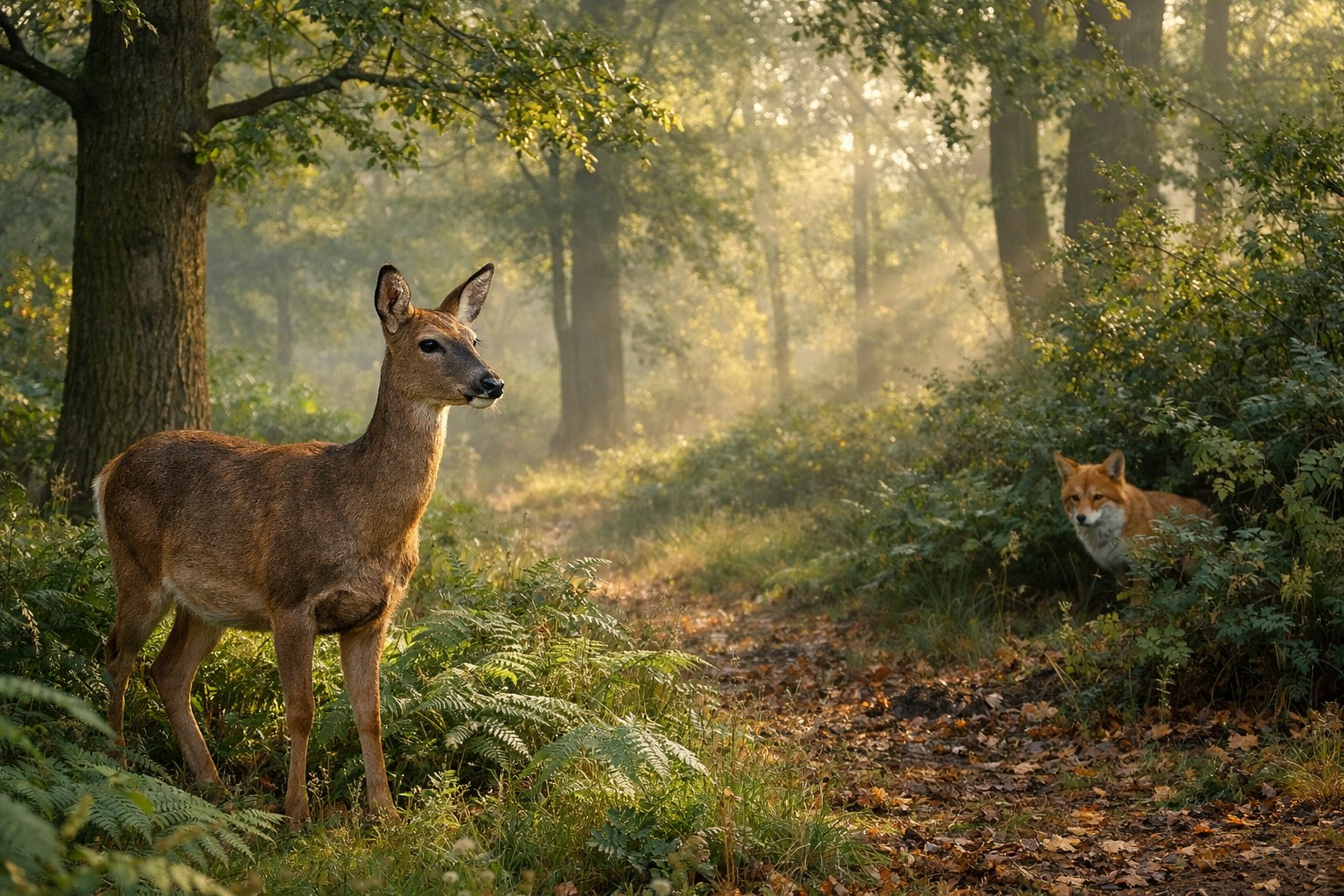
Young deer have it tougher. Foxes take fawns, especially where there isn’t much cover—think East Anglia or the edge of moorlands.
Weather, hunger, and parasites kill a lot of fawns too. Muntjac and Chinese water deer fawns hide well, which helps them survive. But as muntjac spread, they run into more trouble with gardeners and in small woods.
Role of Scavengers in Deer Carcass Consumption
When a deer dies, scavengers move in fast. Buzzards and other raptors pick at exposed carcasses and small limbs, especially in upland places and the Highlands.
Ravens and crows show up in both fields and woods to feed on carrion.
At night, foxes, badgers, and feral dogs strip meat from what’s left. In coastal East Anglia and lowland spots, stoats and polecats might grab a share.
Scavengers help nutrients return to the soil and limit disease by removing decaying tissue. Their work really matters for wildlife and the local ecosystem.
If you’re curious, Forestry England has a good overview on managing deer in the nation’s forests.
Impact of Predator Absence and Human Management
Let’s talk about what happens when big predators are gone, and how people step in to manage herds, protect woods and crops, and even supply venison.
Consequences of No Natural Predators
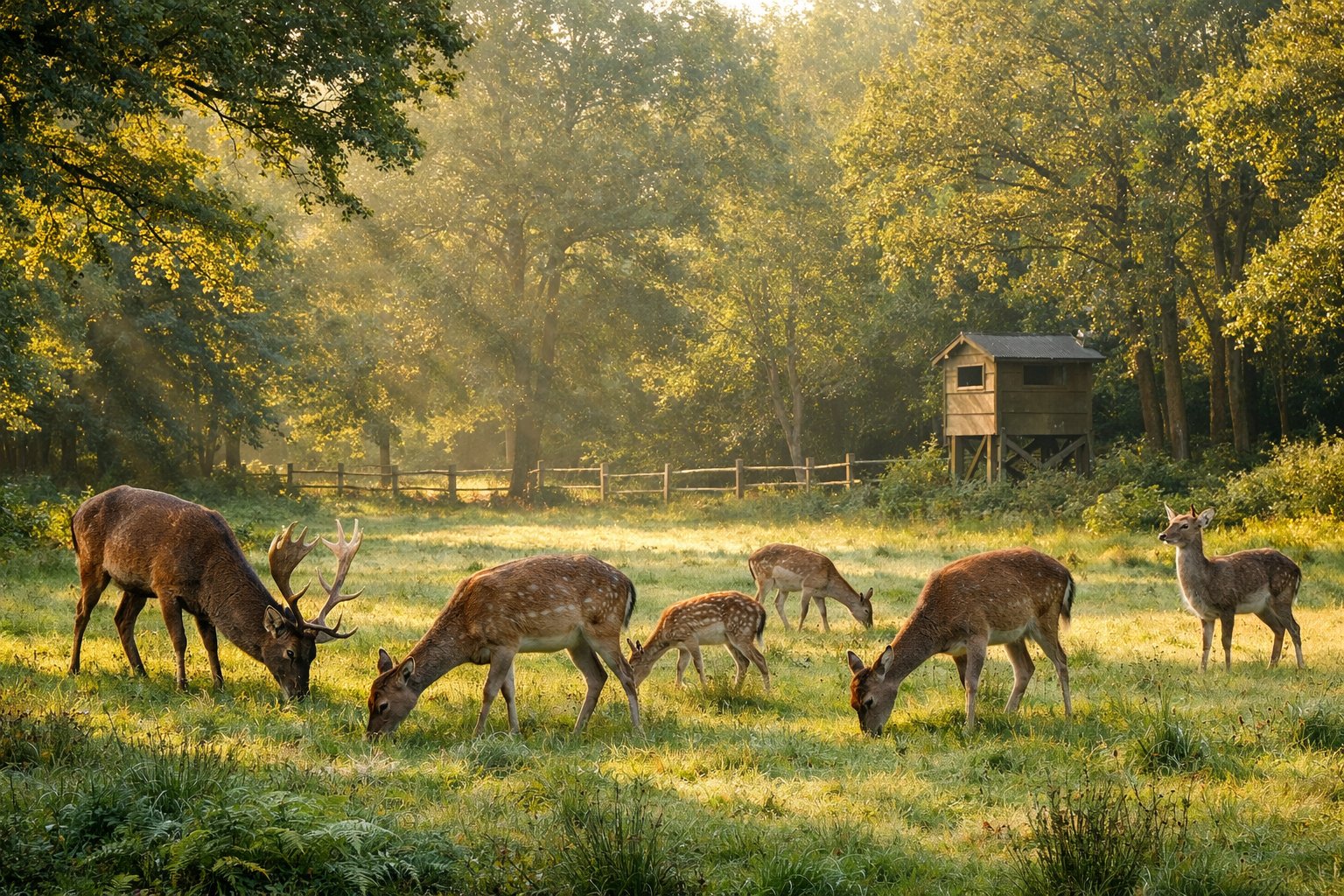
Without wolves or lynx, deer numbers in the UK can climb fast—especially muntjac and roe. More deer crowd into gardens, parks, and woodland edges, where they strip young trees and munch on herbs, leaves, and brambles.
You might spot more browsing damage in forestry plantations and places trying to regrow trees. That slows tree growth and bumps up planting costs for groups like Forestry England.
Fawn and adult survival rates go up because so few predators remain. Now, people have to control populations instead of nature.
This leads to overgrazing, less plant diversity, and more road collisions—sometimes right near housing estates or small parks.
Deer Management Strategies in the UK
Managers use targeted culls, fencing, and habitat tweaks to cut down damage. Landowners and agents set up controlled culls for species like muntjac, roe, and red deer to protect crops, young trees, and biodiversity.
Fencing protects tree nurseries and new plantings. It costs a lot, but it works where deer keep coming back.
Other tricks include planting less tasty species at certain times, using tree guards, and encouraging natural cover to draw deer away from sensitive areas.
Wild venison schemes give value to well-managed culls and help pay for management. You might notice coordinated culls that follow strict codes for safety, welfare, and legal rules.
Role of Organisations in Population Control
Groups like the Deer Initiative and the British Deer Society offer training, guidance, and best-practice standards you can actually use. Forestry England creates woodland management plans and funds protection measures on public land.
These organisations work directly with landowners. They also run monitoring projects and publish local deer density guidance, which is pretty handy if you’re trying to make decisions.
You can reach out to them for advice on planning culls, setting up permits, or even dipping your toes into wild venison marketing. They share data on Scottish red deer and highlight other regional issues, so you can focus management where habitats really need it.
Their work helps reduce conflicts in both urban and rural areas. At the same time, they keep the focus on humane, legal control.


