
You might assume deer nap the day away, but that’s not really true. They actually sleep in short, scattered bursts instead of one long stretch.
Most deer only get about 3 to 6 hours of sleep each day, but that’s broken up into a bunch of quick naps. That way, they can stay alert for danger.
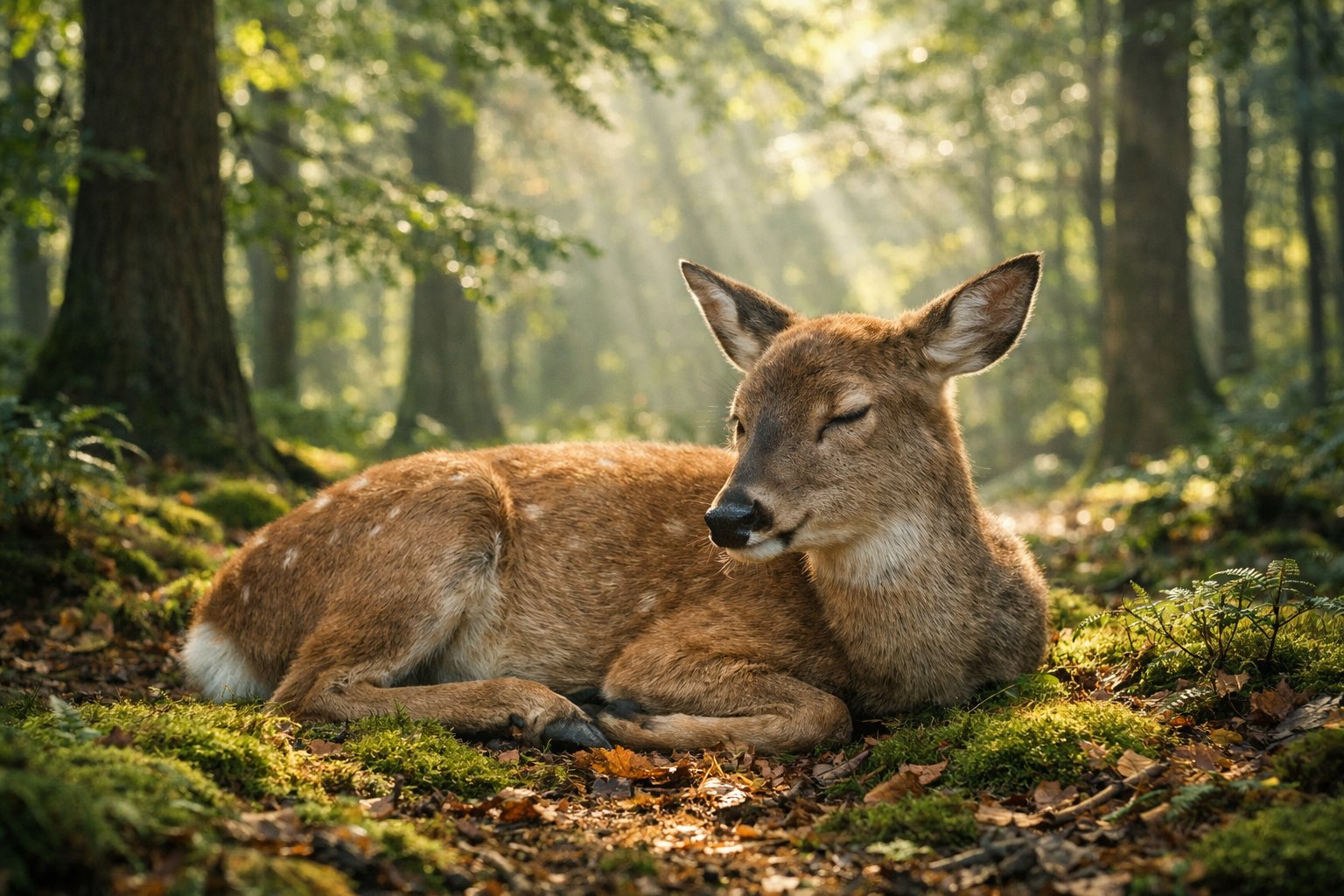
Let’s talk about why deer sleep in these quick micro-naps, when they do it, and how this helps them survive. If you’re hoping to spot real deer behavior, or you’ve wondered why they move at dawn and dusk, this should help.
How Long Do Deer Sleep Each Day?

Deer only rest for a few hours total, and they spread that time into lots of short naps. They balance staying alert with getting enough rest for digestion and movement.
Typical Daily Sleep Duration
Most deer get about 3 to 6 hours of sleep in a 24-hour period.
You’ll often spot them dozing for just 30 seconds to a few minutes, then popping up to check their surroundings.
Studies vary—some include dozing and grazing rest, which bumps totals toward 8–12 hours, but active wild deer usually clock in at 4–6 hours.
During the rut, males might sleep even less.
Females with fawns cut back on sleep too.
Most of their rest is light, slow-wave sleep instead of long REM cycles.
Polyphasic and Fragmented Sleep Patterns
Deer have a polyphasic sleep pattern.
They nap in lots of short bursts, not one big stretch.
You might notice a deer tucking its legs and nodding off, only to jerk its head up at the smallest sound.
This fragmented sleep keeps them vigilant—short naps mean they’re always scanning for predators.
REM sleep does happen, but it’s brief since deep sleep can put them at risk.
Polyphasic sleep matches their crepuscular habits, so they’re up at dawn and dusk, and rest in short stints during the day and night.
Factors Affecting Deer Sleep Duration
Predators really cut into deer sleep time.
If coyotes, wolves, or humans are around, deer take shorter naps and scan more often.
Season and weather make a difference too.
In cold winters, deer spend more time foraging and less time resting.
Hot summers push them to rest in the shade around midday.
Reproductive cycles shake things up: rutting bucks and nursing does get less sleep.
Food availability and human activity also change how long and where deer feel safe to bed down.
If you want a deeper dive into sleep totals and patterns, check out this summary of deer sleep behavior from Biology Insights.
Deer Sleep Habits and Survival Strategies
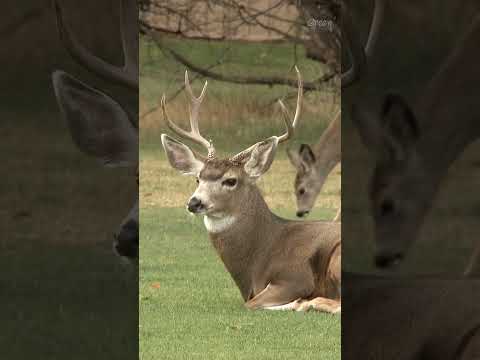
Deer rest in short bursts, always keeping an ear out for danger. They pick bedding spots that offer cover and a quick escape route.
Their sleep style is all about balancing recovery with the need to spot predators or find food.
How Deer Sleep: Lying Down vs. Standing Up
Deer usually lie down with their legs tucked underneath when they need real rest.
This posture lets them ruminate and slip into deeper sleep for a bit.
You’ll notice flattened grass or leaves where a deer has bedded down.
They can also doze while standing, which is handy for quick getaways.
Standing dozing is more common for bucks during the rut and moms with fawns.
They just can’t risk long, deep sleep.
Their muscles and tendons let them spring up fast from either position.
That quickness is crucial in spots with lots of predators or human activity.
White-tailed deer and mule deer both sleep this way.
Moose do something similar, though they often pick denser cover.
Do Deer Sleep With Their Eyes Open?
Deer don’t sleep with their eyes fully open like some reptiles, but they can look partly alert while dozing.
Their eyelids might relax, and they’ll keep their head up or ears moving to check for sounds.
During light sleep, deer keep some reflexes and muscle tone, so they can wake instantly.
In deeper sleep, they close their eyes more, but still wake fast if something spooks them.
Fawns often lie still with eyes closed while their mom goes off to feed.
That helps them stay hidden.
You can’t really judge sleep depth by looking at their eyes.
Instead, watch for ear flicks, changes in breathing, or shifting positions—those clues tell you if the deer is ruminating, dozing, or in a deeper rest.
Where Do Deer Sleep and Bedding Locations
Deer pick bedding spots with cover, good sightlines, and food nearby.
Look for thick brush, tall grass, conifer windbreaks, south-facing slopes in winter, and those edge habitats where woods meet fields.
Fresh beds show up as flattened, oval patches in the vegetation.
Deer often bed down near trails or feeding areas so they can move without much exposure.
On hot days, they’ll pick shady spots.
In the cold, they look for shelter from the wind.
Landowners can help deer feel safe by keeping brush patches and native understory.
Hunters use bedding knowledge to predict deer movement, but sneaking up on beds stresses the animals and really isn’t a great idea.
Group vs. Solitary Sleep Behaviors
Deer sometimes sleep alone, and other times they rest in groups. It really depends on the season and how much risk they sense around them.
Does with fawns usually bed down alone. They’re trying to keep their young hidden, and those fawns can stay still for ages.
When winter hits or predators seem thick, deer often gather in loose groups. They do this to keep watch together.
Social dynamics play a role here. Bucks might go solo when it’s not rutting season, but in fall, bachelor groups sometimes bed down together.
When deer bed in groups, they spread out the risk. One deer can stay alert and warn the others if danger shows up.
Of course, there’s a tradeoff. Group bedding creates more noise and scent, which could tip off predators.
If you’re watching for beds, pay attention to the time of day and the habitat. You’ll catch more movement at dawn and dusk since deer are crepuscular.
Bedding patterns shift with food availability, cover, and how much pressure predators put on them. That’s just how it goes.


