
You’ll usually spot deer tucked deep into thick cover at night—hedgerows, woodland edges, and reed beds all give them shelter, warmth, and a quick way out if they need it. Deer in the UK mostly sleep in dense vegetation close to food and water, picking spots that block wind and hide them from predators and people.
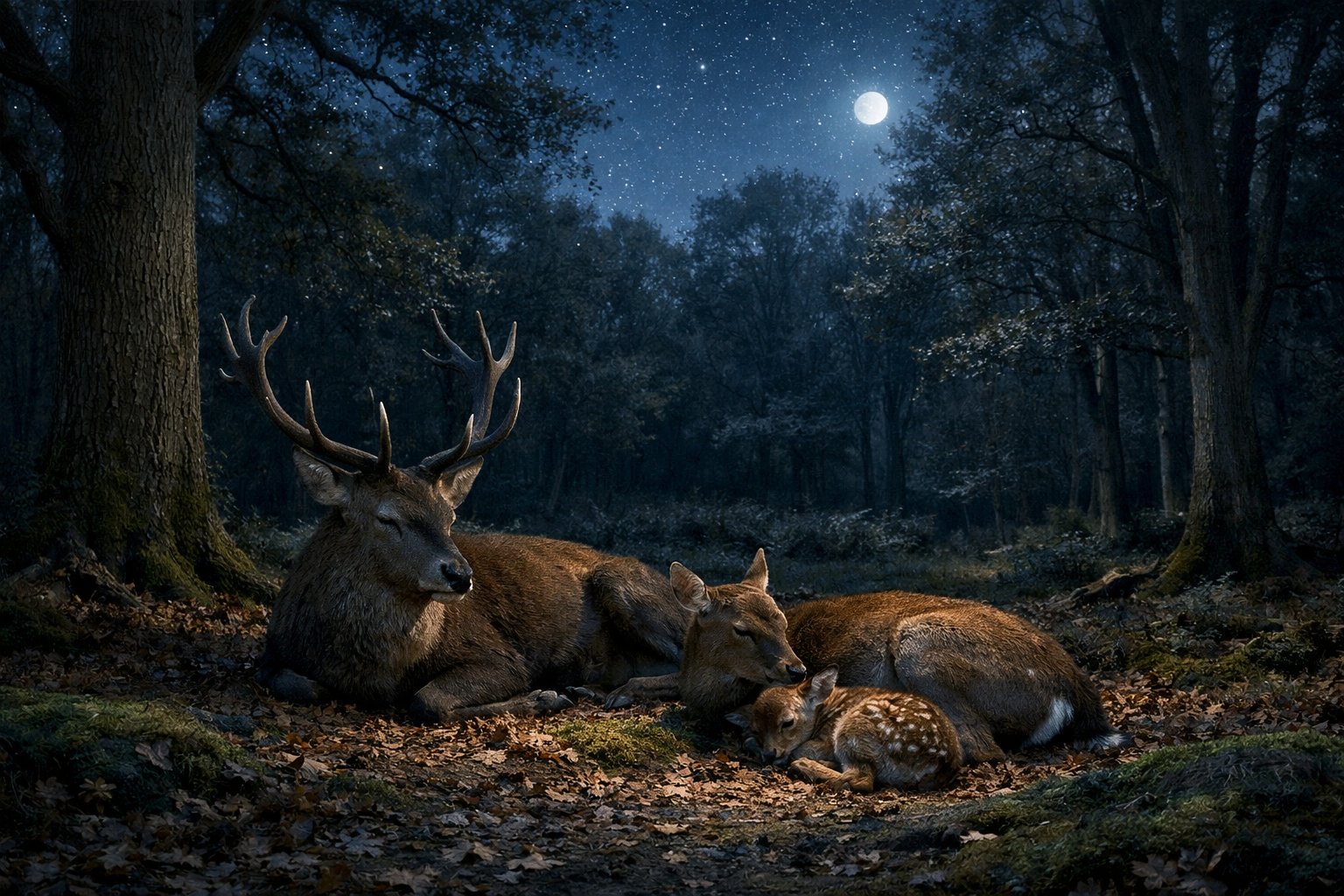
How do deer pick those spots? It depends on the season and what’s threatening them. Their sleep isn’t one long stretch—they take short naps.
Let’s dig into where to look, what signs to notice, and how bedding habits shift between summer, winter, and the rut.
Where Do Deer Sleep at Night in the UK?

Deer in the UK pick night beds that hide them, let them sniff out danger, and keep them close to food. They look for spots where cover, wind direction, and escape routes all line up.
Typical Bedding Areas and Cover
Deer often use evergreen thickets, hawthorn scrub, and dense bramble for night bedding since these keep their cover all winter. You might spot beds under mature pines or spruce, where low branches hide a shallow oval depression and the plants look pressed but not broken.
On farmland, deer bed along field edges and tall hedgerows near cereals or stubble, so they don’t have to travel far to feed.
Look for flattened grass, hoof prints, and small droppings by the bed. Bucks tend to pick higher ground or ridge benches for a better view.
Does and fawns stick to thicker, lower cover where they can disappear.
Factors Influencing Nighttime Bedding Choices
Wind direction really matters—deer usually face into the wind to catch any scent of humans or predators. You’ll spot beds on leeward slopes or in sheltered hollows when it’s blowing hard.
They like to bed close to food—within a short walk of grazing patches, woodland rides, or silage clamps. That way, they save energy.
If people or predators disturb an area, deer move their beds farther away and into thicker cover. Soil drainage and dry ground also play a part, especially in soggier parts of the UK.
Seasonal and Weather-Driven Changes
In winter, deer use south-facing slopes and conifer shelter to stay warm and out of the wind. You’ll find more beds near evergreen thickets that block wind and help keep in heat.
When snow piles up, deer move to lower, sheltered hollows and field edges with less drift.
In hot months, they bed in shady copses or damp ditches to stay cool. During the rut or when raising fawns, patterns change—males bed alone and higher up, while does gather in thick cover near their young.
Rain and storms push deer to the driest, most sheltered spots, even if it’s not right by food.
Urban and Rural Bedding Differences
In rural areas, deer bed in big woodland patches, long hedgerows, and riparian scrub where food and cover are close. You’ll see clear oval beds and regular paths between feeding fields and bedding sites.
In suburban or peri-urban places, deer use overgrown gardens, railway embankments, and small copses to steer clear of people.
Urban deer bed closer to human activity but hide better—behind sheds, in dense ornamental evergreens, or along drainage ditches. If you live near deer, you’ll notice they pick spots with good scent cover and a quick escape, not open lawns.
How and When Do Deer Sleep?

Deer rest in short bursts, stay partly alert, and choose bedding that balances cover, scent detection, and escape routes. Here’s what typical sleep looks like, when it happens, and whether deer group up or not.
Sleep Patterns and Duration
Deer are crepuscular, which means they’re most active at dawn and dusk. In the UK, you’ll often spot movement just before sunrise and after sunset.
Between those busy times, they take lots of short naps instead of one long sleep.
Expect a mix of light dozing and quick, deep naps. Over a day, total rest can add up to several hours, but deep sleep usually lasts only 10–30 minutes at a time.
This polyphasic sleep pattern lets deer feed and stay alert. Different species like fallow deer follow similar routines, though each deer may change habits if people or dogs disturb them.
Deer rarely sleep standing up for long. You might catch them resting upright for a moment, but they get deeper naps only when lying down in dense cover.
Deer Sleep Alone or in Groups
Social habits shift by sex and season. Bucks usually bed alone, picking isolated spots on ridges or tucked under thick cover to avoid rivals.
Does often form loose groups, especially with fawns around, to share the job of keeping watch.
You’ll sometimes find fawns hidden in tall grass or bramble, while their mother feeds nearby. Group bedding helps fawns survive, since several does can keep an eye out for trouble.
In winter, related does may bunch up for warmth and safety.
Local population and wildlife management shape group size. In well-managed parks with lots of deer, you’ll see bigger groups.
In hunted or heavily disturbed areas, bedding gets more secretive and solitary.
How Deer Stay Alert During Sleep
Deer don’t fully zone out when they rest. They keep their ears moving, always searching for the tiniest sound.
You’ll see them sniffing the air, even while lying down. Usually, they’ll face into the wind to catch any scent of danger sneaking up.
They’ve got some tricks with their body posture, too. While dozing lightly, a deer keeps its head up or tucked, ready to bolt at a moment’s notice.
They only slip into deep sleep for short bursts, and only if they’re tucked away in thick, safe cover. Most of the time, they take quick micro-naps, just enough to recharge, but never so deep that they can’t spot a fox, dog, or person creeping close.
The landscape matters a lot. Deer pick bedding spots with easy escape routes—maybe a path, a break in the brush, or the edge of a slope.
If you look, you can often figure out where a deer would run if startled. When wildlife managers protect these bits of cover, they help deer rest with a little more peace of mind.


