
Spotting a deer can really catch you off guard, whether you’re strolling down a quiet trail or driving home at dusk.
Try to stay calm, stop moving, and give the animal some space. The best thing you can do is slow down or stop, and let the deer wander off on its own. That simple move lowers the risk of injury for both you and the deer.
If you’re driving, keep scanning the road edges for more deer and brake firmly, but don’t swerve.
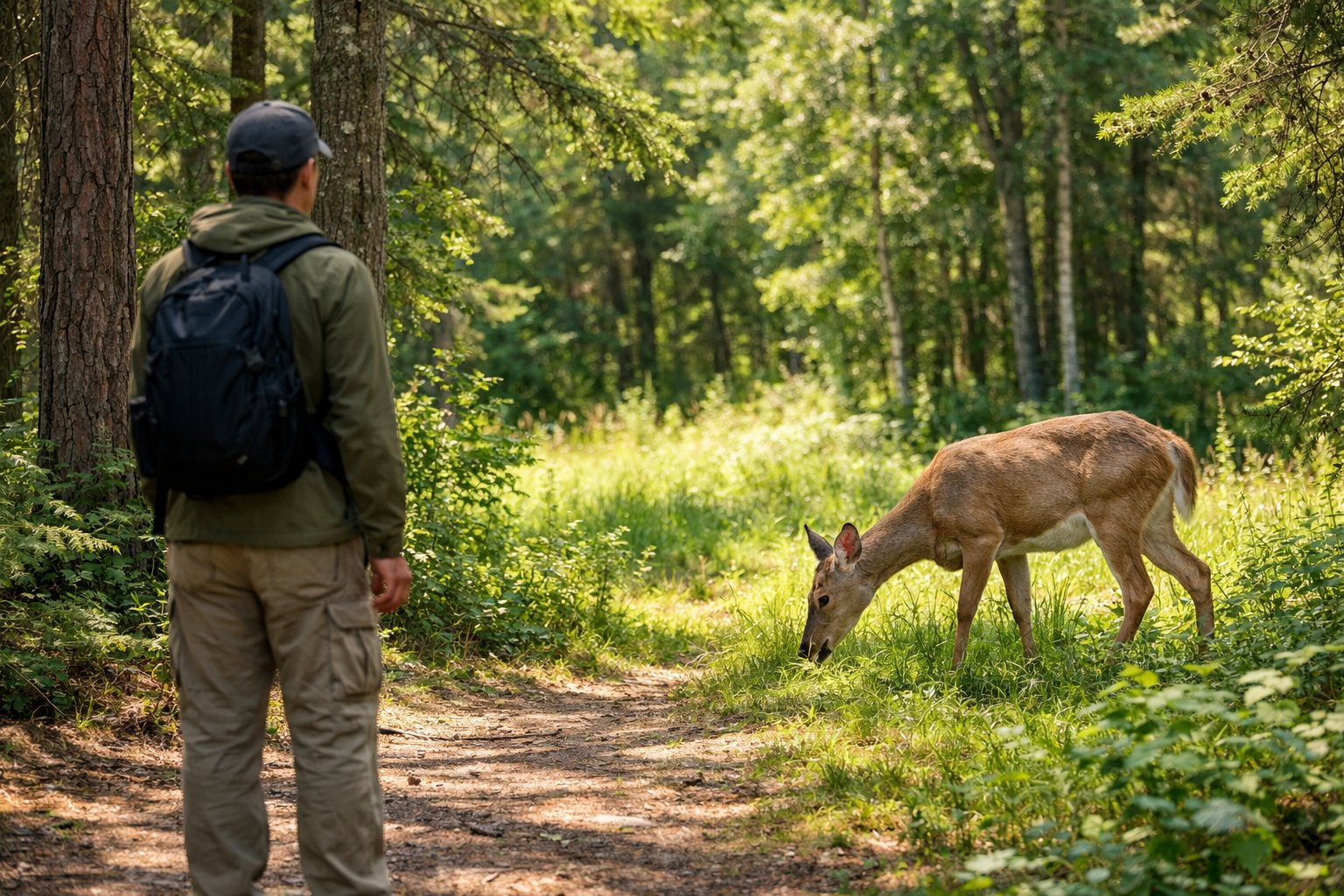
If you’re on foot, back away slowly while facing the deer. Try not to make any sudden movements or loud noises, since those might startle it.
Watch for signs that the deer feels threatened—like stomping, snorting, or ears pinned flat. If you notice any of these, give it even more space.
Let’s dig into how you can handle these moments, whether you’re walking nearby or driving down a deer-prone road.
What to Do If You See a Deer While Driving

Keep an eye out for deer where woods meet the road, especially at dawn or dusk.
Slow down, use your high beams when you can, and be ready to brake in a straight line if a deer steps out.
Slow Down and Stay Alert
Ease off the gas as soon as you spot a deer or see a deer-crossing sign.
Deer tend to move around most at dawn, dusk, and during fall mating season. On rural roads and near woodlines, drop your speed a bit. Use your high beams if there’s no oncoming traffic so you can spot their eyeshine earlier.
Scan both sides of the road for movement.
If you see one deer, assume there could be more—they rarely travel alone. Slow down early instead of slamming on the brakes at the last second. That way, you keep better control and lower your chances of drifting out of your lane.
Keep both hands on the wheel and try not to get distracted. A quick glance at the shoulder helps you figure out how close the deer is and whether it’ll cross.
How to React When a Deer Appears
Brake firmly and stay in your lane. Swerving is risky—it can put you into another car, a tree, or even cause a rollover.
Sticking to a straight line and braking usually keeps everyone safer than trying to dodge.
Try honking your horn and flashing your headlights to warn the deer, but honestly, animals don’t always react the way you’d expect.
If a deer freezes, just stop and wait. If it bolts toward the shoulder, stay put until the road is clear.
If someone’s tailgating you, tap your brakes early to warn them. If a deer blocks the road and you can’t get around safely, stop and turn on your hazard lights.
Stay in your vehicle unless it’s really unsafe to do so.
Safety Steps After a Deer Collision
If you hit a deer, pull over to a safe spot if your car still moves.
Turn on your hazard lights and set the parking brake. Take photos of the damage and the scene—but only if it’s safe to do so.
Don’t try to touch an injured deer. They can be unpredictable and dangerous. Call the police or animal control so the pros can handle it.
Check yourself and your passengers for injuries. If anyone’s hurt, call emergency services right away.
If your car can’t be driven, call for a tow before you leave.
Contacting Authorities and Insurance
If there’s serious damage or someone’s hurt, call the police and file a report.
A police or animal control report can help with your insurance claim and document exactly what happened.
Reach out to your insurance company as soon as you can. Most of the time, hitting a deer falls under comprehensive coverage, not collision, so check your policy.
Hang on to photos, the police report number, and any tow or repair receipts.
If an adjuster comes out, show them your photos and explain what happened. If you’re not sure about your coverage, call your agent and ask them to walk you through animal strike claims.
Encountering a Deer While Walking

Pause for a moment, stay steady, and give the deer plenty of room.
Small, calm actions keep everyone safer.
Stay Calm and Assess the Situation
Stop where you are and take a slow breath.
Notice where the deer stands, how close it is, and if there are other deer around. If it’s more than 25 yards away and not paying attention to you, you can quietly change your route or just wait for it to move.
Keep your noise down. If you need to speak, do it softly, and don’t make sudden gestures.
Look for trees or a wider path so you can put more space between you and the deer without turning your back.
If you see the deer acting strangely—staggering, wounded, or breathing hard—don’t go closer. Instead, make a note of the spot and let animal control or wildlife officials know.
Maintain a Safe Distance
Try to stay at least 25 yards (about 75 feet) away from any deer.
That’s enough space to keep you safe from sudden charges and helps the animal stay calm.
If you want a photo, use your phone’s zoom instead of stepping closer.
Move away slowly and steadily if you need more distance. Face the deer as you back up.
Don’t run—quick movements can trigger a chase or spook other deer nearby.
Keep your dog leashed and close. A loose dog can stress out a deer and make things worse.
If you’re with others, quietly work together to give the animal more space without crowding it.
Read Deer Body Language
Pay attention to the deer’s ears, tail, stance, and any sounds it makes.
Pinned-back ears, stomping, or snorting usually mean the deer feels threatened. If the tail goes up and flashes white, the deer’s probably alarmed and could bolt.
If you see the deer lower its head, stomp, or paw at the ground, it’s getting more agitated.
Try moving away slowly and sideways to calm things down. Keep your hands where the deer can see them, and don’t stare directly—it might take that as a challenge.
If the deer goes back to grazing, scratching, or just acting normal, it probably feels safe again.
Still, keep moving slowly and maintain your distance until either the deer leaves or you’re out of sight.
Special Situations: Fawns and Aggressive Behavior
If you spot a fawn by itself, don’t touch it. Mother deer often leave their fawns hidden, and your scent might make her stay away for good.
Just back away quietly and give the spot plenty of space. If you see a fawn that’s obviously injured, reach out to animal control or a licensed wildlife rehabilitator.
Bucks can act unpredictably during mating season, which usually runs from autumn into early winter in most places. It’s smart to stay extra alert then.
If a buck charges, grab the nearest big object—maybe a tree, rock, or even your car—and get behind it fast.
When you notice a deer that looks sick or hurt, keep your distance. Call your local wildlife authorities right away.
Never try to catch or feed a wild deer. You could get hurt, and the animal might end up worse off.


