
You can feed chipmunks, and in the right situation, it can be a harmless occasional treat. The safest answer to is it good to feed chipmunks is yes, only in small amounts, with plain foods, and without turning wild visitors into regular dependents.
Keep feeding rare, use simple foods, and place them on the ground instead of offering them from your hand. This protects both chipmunk health and your own safety.
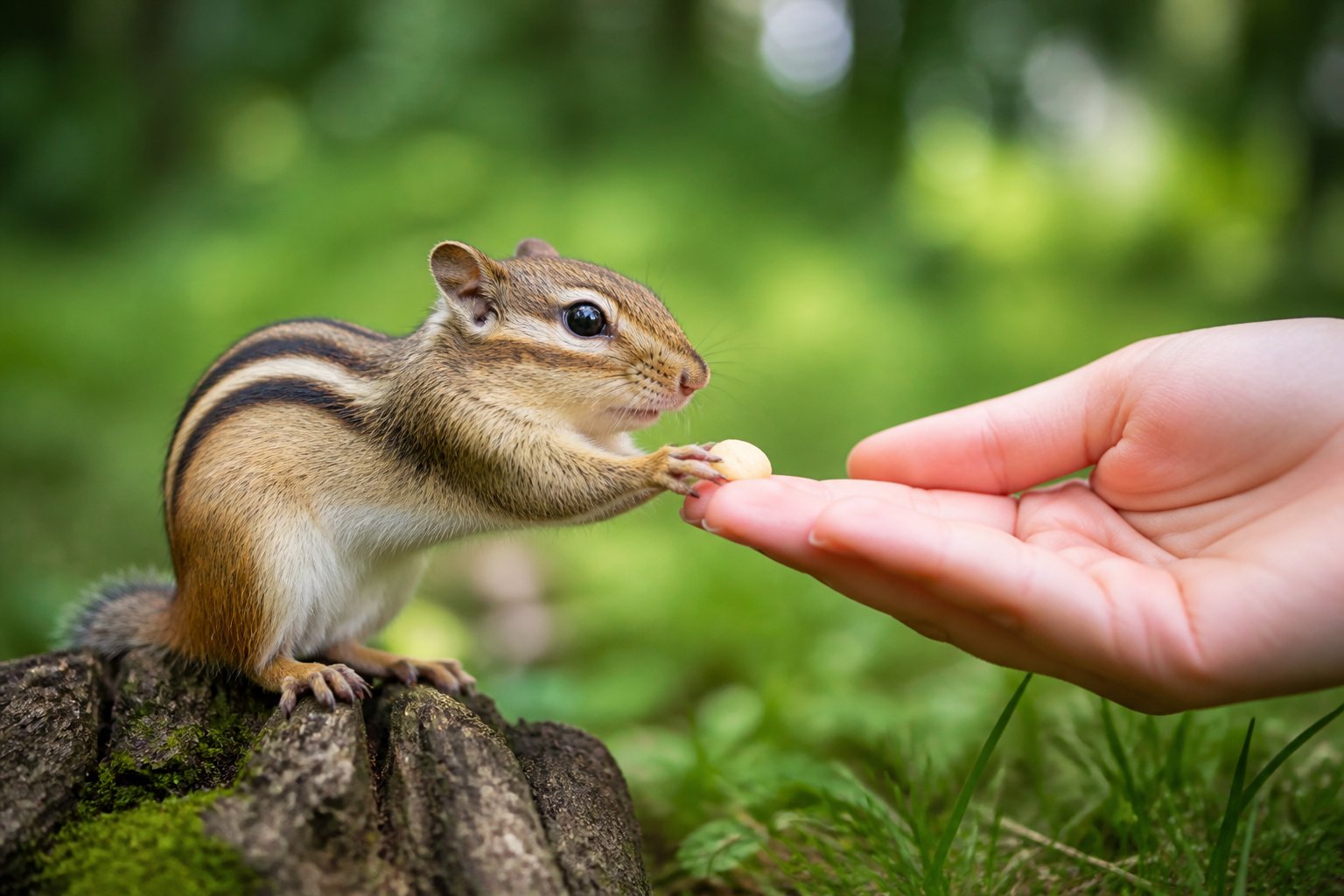
When Feeding Helps And When It Causes Problems
A small snack can fit natural chipmunk behavior when it stays rare and low-stress. Problems start when feeding becomes a habit, because backyard chipmunks may begin waiting for people instead of foraging on their own.
Occasional Snacks Versus Routine Feeding
An occasional treat is very different from daily handouts. Repeated feeding can change behavior and make a yard feel like a food stop.
Treat food like a brief visit, not a routine. Small amounts help preserve independence and reduce the chance that your yard becomes a dependency zone.
Why Hand-Feeding Wild Visitors Is Risky
Hand-feeding can train a chipmunk to come too close, which raises the chance of bites if it gets startled. Wild chipmunks can act unpredictably, even when they seem calm.
Place food on the ground, a flat rock, or a feeder tray. Keeping your hands out of the exchange protects both you and the animal.
Signs A Chipmunk Is Becoming Too Dependent
Stop offering food if a chipmunk starts lingering, acting bold, or showing up frequently at the same spot. Those are signs the food is becoming part of its routine instead of a rare bonus.
You should also stop if leftovers pile up, other animals begin visiting, or the chipmunk looks overly focused on people.
What Foods Are Safe In Small Amounts
The best foods for chipmunks are plain, unsalted, and close to what they already eat outdoors. A balanced chipmunk diet uses tiny portions, a little variety, and foods that support natural chipmunk nutrition.
Nuts And Seeds That Fit Natural Foraging
Plain nuts and seeds are some of the safest foods for chipmunks. Unsalted almonds, walnuts, pine nuts, and sunflower seeds can fit a simple chipmunk food offering when you keep servings small.
Use raw, unseasoned options only. Foods that resemble natural foraging are usually the best match for a chipmunk diet.
Fruits, Vegetables, And Insect Protein
Small pieces of apple, berries, carrot, or leafy greens can round out foods for chipmunks. A little insect protein, such as dried mealworms, can also support a more natural chipmunk nutrition pattern.
Wash produce well and keep portions tiny.
Portion Size And Placement Tips
Give just a few pieces at a time. Chipmunks cache food, so a little goes a long way and extra food can still create overfeeding problems.
Place snacks on a flat surface, rock, or feeder tray and clean up leftovers quickly.
What To Avoid And Why It Matters
Some foods can upset digestion, add too much salt or sugar, or create bigger risks for chipmunk health. A chipmunk diet should stay plain and simple, not built around human snacks.
Salty, Sugary, And Processed Human Foods
Skip chips, crackers, candy, cookies, flavored nuts, and similar snacks. Salty foods and sweet foods do not fit safe feeding.
These items can be hard on a small body and do not support chipmunk health. If a food is heavily seasoned or processed, leave it out.
Bread, Dairy, And Other Low-Value Fillers
Bread, baked treats, and dairy products offer little value and can crowd out better foods. Processed foods and bread can cause health issues.
Low-value fillers belong off the menu.
Toxic Foods And Chemical Hazards
Some foods and plants can be toxic to chipmunks, and lawn chemicals add another risk. Keep any offerings away from treated areas, spilled fertilizer, or pesticide residue.
If you are unsure about a plant, snack, or yard treatment, skip feeding in that spot.
How Pet Care Differs From Backyard Feeding
Feeding pet chipmunks needs more structure than feeding wild visitors. Captive animals depend on you for balance, routine, and the right chipmunk nutrition, while backyard feeding should stay occasional and low-pressure.
Why Captive Diets Need More Structure
A pet chipmunk needs measured meals, fresh water, and a stable routine. Long-term chipmunk care depends on consistent portions and planned food choices.
That structure matters because captivity removes the animal’s ability to balance its own foraging. You need to do that job for it.
Fresh Water, Variety, And Measured Meals
Fresh water should be available every day. Variety can help with appetite and nutrition, as long as each food stays in a measured portion.
Commercial chipmunk food or pellets can help form the base of a captive diet when made for small omnivores. Add vegetables, a little fruit, nuts, and protein without letting treats take over.
When To Ask An Exotic Animal Vet
If your pet stops eating well, gains weight, has loose stools, or seems weak, contact an exotic animal vet.
Chipmunk care can get complicated fast, especially when diet, hydration, or dental issues come up.
A vet can help you adjust portions and spot problems early. That support matters when your animal depends on you for every meal.


