
Ever wondered which animals hunt chipmunks? You’re definitely not alone. These small, striped rodents play a big role in the food chain, and a lot of predators rely on them for a snack. Hawks, owls, snakes, foxes, raccoons, coyotes, and even domestic cats and dogs eat chipmunks.

Chipmunks have to stay alert all the time because danger can come from above or below. Their sharp alarm calls warn others when a predator is near.
Despite these warnings, chipmunks often end up as prey in the wild. When you know which animals hunt chipmunks, it’s easier to appreciate just how tough their daily lives can be.
Curious about how these predators catch chipmunks or how chipmunks try to escape? Keep reading. Nature’s constant tug-of-war between predator and prey is honestly fascinating. For more, check out this chipmunk predator guide.
Natural Predators of Chipmunks
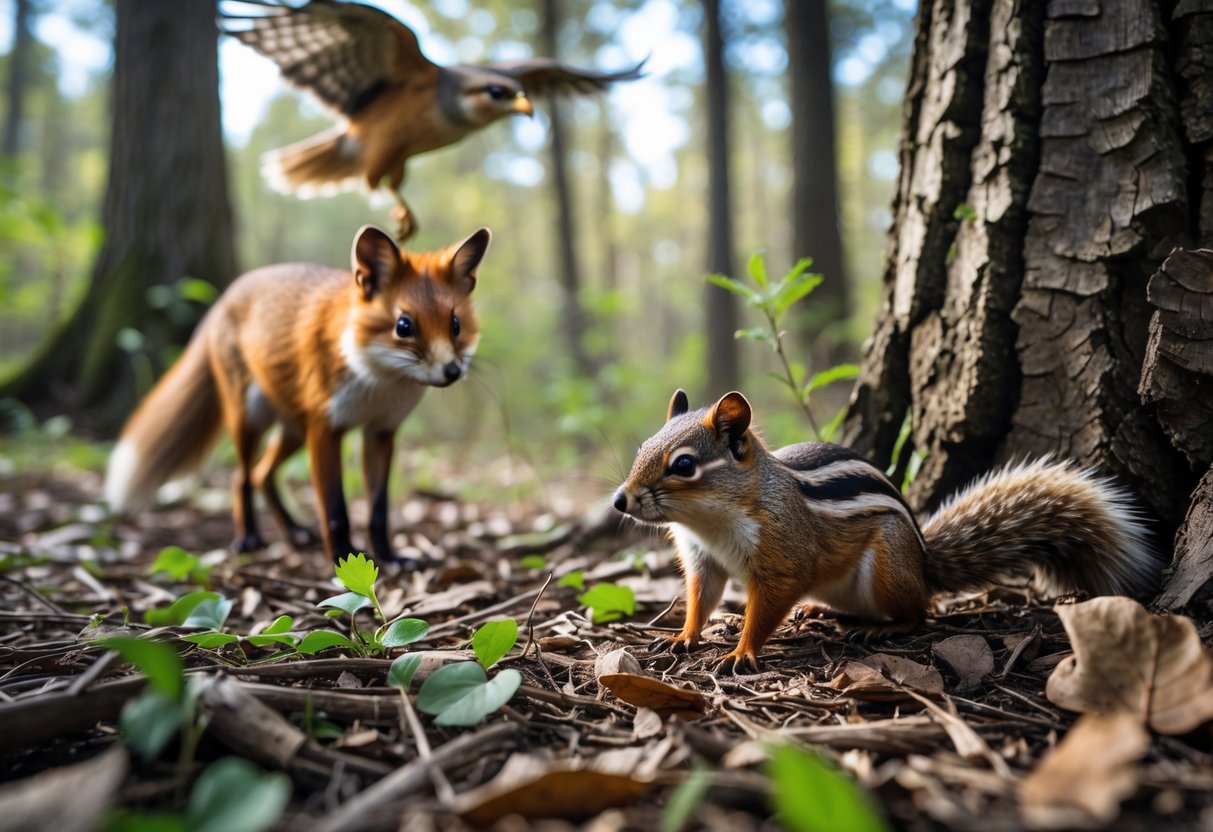
Chipmunks deal with a surprising range of predators in the wild. Some come from the sky, others sneak up on the ground, and a few use stealth and speed to get a meal.
Knowing which animals hunt chipmunks really shows how much they have to watch out for every day.
Birds of Prey
Hawks and owls are some of the most common chipmunk hunters. Hawks, especially Cooper’s hawks, hunt during the day when chipmunks are active.
They spot chipmunks with their sharp vision and swoop down fast before the chipmunks can bolt. Owls, like great horned owls and barred owls, usually hunt at night but sometimes go after chipmunks during the day too.
Owls rely on their hearing and silent flight to catch prey. Great horned owls can eat at least one chipmunk a day since chipmunks fit nicely into their diet.
These birds know how to find chipmunks whether they’re deep in the woods or hanging out near your backyard. If you hear wings overhead, a chipmunk might be in trouble.
Foxes and Coyotes
Foxes and coyotes are clever hunters and often go after chipmunks in forests and fields. Red foxes are probably the most common chipmunk predators in the U.S.
They listen for the tiny sounds chipmunks make and then pounce with impressive speed. Coyotes might hunt chipmunks when bigger food is scarce.
Coyotes live just about everywhere now, from woods to towns, and usually hunt alone for smaller animals like chipmunks. You might see them at dawn or dusk near forest edges, which is when chipmunks are usually out.
Both foxes and coyotes use patience and bursts of speed, so chipmunks are especially at risk when they’re foraging or running between burrows.
Snakes
Snakes are silent and sneaky, often catching chipmunks off guard. Black rat snakes and western diamondback rattlesnakes are two main chipmunk predators.
Black rat snakes live east of the Rockies and climb really well. They chase chipmunks up trees and use their strong bodies to squeeze them.
These snakes aren’t venomous and actually help control rodent populations. Western diamondbacks live in deserts where some chipmunk species, like the Hopi chipmunk, also live.
They wait quietly and ambush prey with venom, striking fast and accurately. Since chipmunks dart around rocks and logs, snakes hiding there are a constant threat.
Weasels and Mustelids
Small but fierce, animals like martens, fishers, and weasels (all mustelids) hunt chipmunks well. Martens live in northern U.S. forests and use speed and sharp teeth to catch chipmunks, especially in the snow.
Fishers look like bigger martens and can follow chipmunks into burrows because their bodies stretch and they can climb. They mostly eat bigger prey but will take a chipmunk if the chance comes up.
Weasels move fast and sneak into chipmunk homes to grab a meal. These predators use agility and their knowledge of hiding spots to get the upper hand.
If you live near woods, you might see signs of these small but tough hunters.
Human Impact and Population Control

Lots of things affect chipmunk populations. Your actions, along with natural predators, shape how many chipmunks live near your home.
If you want to keep your yard balanced and safe, it helps to know how to manage chipmunks.
Domestic Cats and Dogs
Pets, especially cats and dogs, can really reduce chipmunk numbers around your house. Cats love to hunt and often catch chipmunks that wander into the yard.
Dogs can scare chipmunks away, making your space less inviting for them. But there’s a catch.
While your pets help keep chipmunk numbers down, they might also harm other small wildlife, like birds. If you want to protect chipmunks or control them without hurting anything else, maybe think twice before letting your pets roam outside.
Chipmunk Removal Techniques
When chipmunks dig up your garden or flower beds, you do have some options. Live traps are a common, humane choice.
You can bait the traps with sunflower seeds or peanut butter and then relocate the chipmunks far from your home. Chemical repellents might help, but they can irritate pets or other animals.
Scare devices like motion-activated sprinklers or noise makers can keep chipmunks away without hurting them. Always check local laws before removing or relocating any wildlife.
Chipmunk Control Methods
If you want to keep chipmunks in check, you’ll need to make your yard less appealing to them. Start by sealing up entry points to your house or garden sheds.
Bird feeders can be a big draw—spilled seeds basically invite chipmunks over for a snack. Try to keep those areas clean.
Some folks plant herbs like mint or garlic, hoping the smell will send chipmunks packing. It’s worth a shot, right?
Don’t leave pet food outside, either. That’s just asking for furry visitors.
You can put up barriers, like hardware cloth around your garden plants, for some extra peace of mind. These little steps can help you manage chipmunks without going overboard.
Curious about what eats chipmunks or how they behave? Take a look at natural predators that eat chipmunks.


