
Ever wondered if chipmunks sneak into houses? The answer’s yes, though it doesn’t happen all that often.
Most chipmunks stick to the outdoors, burrowing in yards or under porches. Still, if they spot an open door, window, or even a tiny hole, they might wander inside by accident.
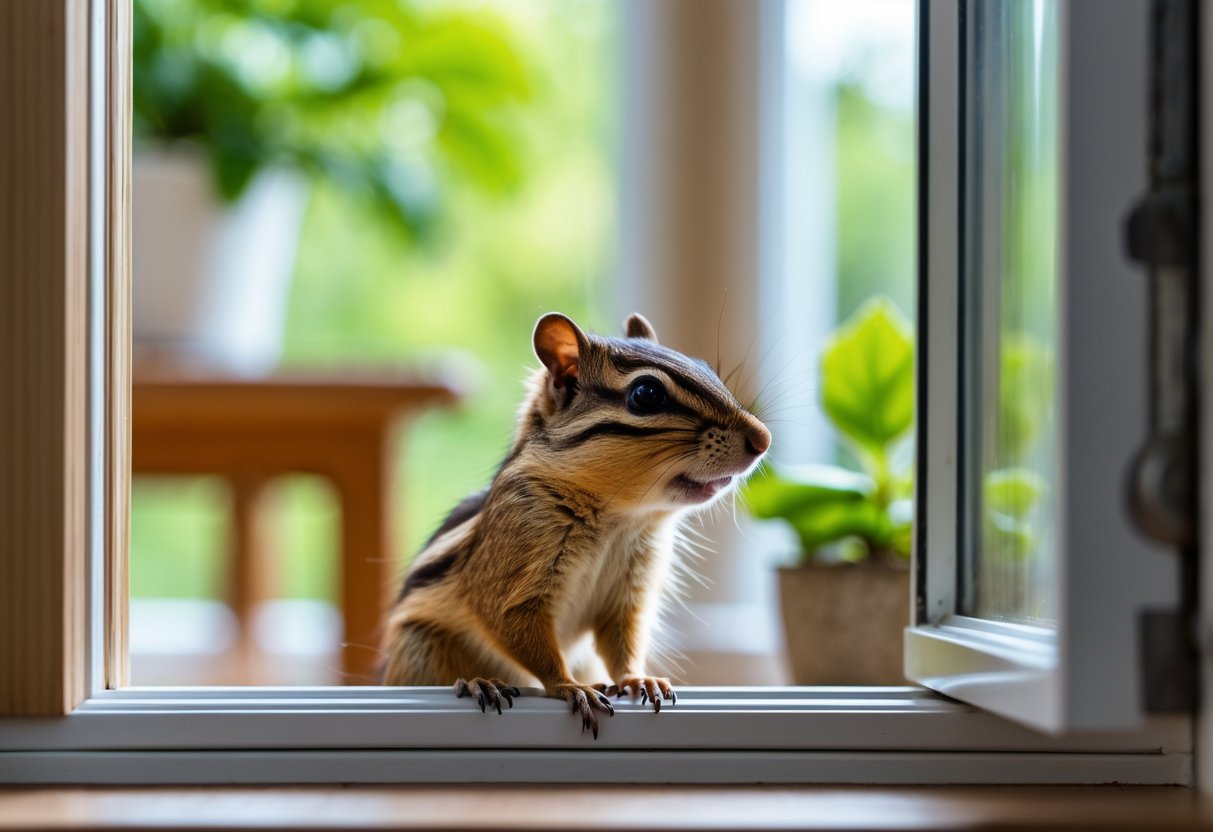
When a chipmunk ends up indoors, it usually happens by mistake while it’s looking for food. They’ll settle in places like attics or wall spaces, but only if they find an easy way in.
Figuring out how chipmunks get inside can save you a lot of hassle. This post will help you spot their entry points, understand the risks, and pick up some simple tricks to keep your place chipmunk-free.
Why Chipmunks Enter Houses

Chipmunks come inside because they want food or a safe spot to hide. They look for openings and settle down in warm, hidden spaces.
Once they’re in, chipmunks can create problems and cause some damage. It’s not something you want to ignore.
Common Entry Points for Chipmunks
Chipmunks can squeeze through surprisingly small spaces. Cracks in your foundation, gaps around doors, and holes near vents are common spots.
Unscreened windows or vents just make it easier for them. They’ll even dig tunnels under crawlspaces or foundations for extra warmth as the weather turns cold.
Check these areas carefully. Sealing up any gaps goes a long way toward keeping chipmunks out.
Signs You Have a Chipmunk Problem Indoors
Hear scratching or rustling in the walls, ceilings, or basement? That might be a chipmunk.
You might find droppings or notice small holes in insulation or stored stuff. Chewed wood or wiring is another red flag.
Chipmunks like to gnaw to keep their teeth sharp. If you spot food or nesting material in odd places, that’s another hint they’ve moved in.
Potential Dangers and Damage to Homes
Chipmunks can chew up wires, insulation, and wood. That messes with your home’s safety and can lead to expensive repairs.
If they tunnel under your foundation, they might even weaken the structure. That’s not something you want to deal with.
They can also carry parasites or bacteria, which isn’t great for your health. If you see signs of chipmunk activity, it’s smart to deal with it quickly.
For more details on how chipmunks get inside, check out How Did Chipmunks Get in my House?
Effective Chipmunk Control and Prevention

Keeping chipmunks out takes a mix of sealing up your place, removing them if needed, and maybe using repellents or traps. It’s worth acting early to avoid headaches later.
How to Get Rid of Chipmunks in the House
If chipmunks are already inside, you’ll want to remove them safely. Live traps baited with peanut butter or fruit usually work.
Check those traps often—at least every day—so you can release any caught chipmunks far away from your home. Skip the poisons, especially indoors, since they’re risky for pets and kids.
If you find active burrows inside, wait until the chipmunks leave, then block the tunnels. Clean up any spilled seeds or nuts so you’re not attracting more.
Seal Up Entryways and Prevent Future Infestations
Chipmunks can wiggle through tiny holes, so give your home’s exterior a close look. Use things like ¼-inch hardware cloth, copper mesh, or stuff-fit fabric to cover up openings.
Pay extra attention to vents, downspouts, foundations, and gaps around doors or windows. Put metal screens over exhaust vents.
Trim back tree branches and bushes so they’re a few feet from your roof and walls. Chipmunks love using those as bridges.
Don’t keep firewood or debris piled up near the house. That just gives them a place to hide.
Fill in any burrow holes around your foundation with soil and cover them with something heavy to stop new digging.
Safe and Humane Chipmunk Removal Options
If you want a humane way to handle chipmunks, try live trapping and relocating them. Use cage traps about 3 x 3 x 10 inches with fine mesh.
Cover half the trap to make it feel safe, and bait it with peanut butter or fruit. Avoid using poisons or fumigants near your home—they’re risky and often not allowed in neighborhoods.
Once the chipmunks leave, fill in their burrows and block the entrances with rocks or wire mesh. Humane removal helps protect wildlife and keeps your home safe.
Using Chipmunk Repellents and Trapping Methods
You can try repellents like predator urine—fox or coyote, for example—to set up a boundary around your garden or house. Taste repellents that use capsaicin or other bitter stuff work on seeds and bulbs, but you’ll need to reapply them often.
Commercial repellents don’t always work the same, and some can get pricey. Always double-check your local rules before you go all in.
When it comes to trapping, I’d go with cage traps if you want to move chipmunks out alive. If they’re dodging those, you might need snap traps or rat-sized ones, but cover them up so you don’t accidentally hurt other animals.
Put your traps close to the spots where chipmunks run or near their burrows. Make sure you use the right bait.
Check your traps every day—nobody wants to leave an animal stuck too long. Pair steady trapping with sealing up entry holes, and you’ll have a much better shot at keeping chipmunks out.
If you want more info, check out chipmunk damage prevention and control methods.


