
Boxers are energetic and playful dogs that bring a lot of joy to their owners. If you are considering adding a Boxer to your family, you might be wondering about their care needs. Boxers can be high maintenance due to their need for regular exercise and mental stimulation. They thrive on activity and can become bored and destructive without enough engagement.

You should know that while they require more attention than some breeds, the rewards of having a Boxer are quite fulfilling. Their playful nature means they love to play and need daily physical activities.
With proper training, you can help manage their high energy levels and keep them happy and healthy.
In this article, you’ll discover what it truly means to care for a Boxer. From exercise requirements to training tips, knowing what to expect can help you decide if a Boxer is the right dog for you. Get ready to dive into the world of Boxers and learn how to make the most of your time with these amazing dogs!
Understanding the Boxer Breed

Boxers are known for their playful personalities and high energy levels. As a loyal companion, understanding their characteristics and care needs is essential for any potential owner. This breed also faces some common health concerns that you should be aware of.
Characteristics of Boxers
Boxers are medium-to-large dogs with a muscular build and strong bones. They have a square-shaped head and expressive, dark eyes that reflect their intelligence. Their short, smooth coat can come in colors like fawn, brindle, and white.
Known for their playful and affectionate nature, Boxers tend to bond closely with their families. They are often described as adaptable and protective. These traits make them great companions, but they also require consistent training and socialization from an early age to help them thrive.
Energy and Activity Levels
Boxers are highly energetic dogs that require plenty of exercise. They enjoy daily activities such as long walks, runs, and playtime. Without sufficient physical and mental stimulation, Boxers can become bored and potentially destructive.
Incorporating games and training exercises can help keep their minds engaged. Since they are intelligent, they respond well to learning new tricks and commands. Regular exercise and playtime also contribute to their overall happiness and well-being.
Common Health Concerns
While Boxers are generally healthy, they can be prone to specific health issues. Common concerns include heart conditions, cancer, and hypothyroidism. Regular check-ups with your veterinarian are important to catch any potential problems early.
Another notable issue is their brachycephalic features, which can lead to breathing difficulties. Monitoring their weight and exercise is key, as obesity can exacerbate these health concerns. By being proactive about their health, you can help ensure your Boxer lives a happy, active life.
Daily Care and Maintenance

Taking care of a Boxer requires attention to their exercise, grooming, and diet. Each of these aspects plays a key role in keeping your Boxer healthy and happy.
Exercise Requirements
Boxers are energetic dogs that need a lot of exercise to stay fit and calm. You should aim for at least 1-2 hours of physical activity every day. This can include long walks, runs, or playtime in the backyard.
Mixing up their routine helps keep them engaged. Consider activities like fetch, agility training, or dog park visits. If they don’t get enough exercise, Boxers may become hyper or develop behavioral issues.
Always remember to adjust the intensity based on your Boxer’s age and health status. Regular exercise helps maintain a healthy weight, which is important for their overall well-being.
Grooming Needs
When it comes to grooming, Boxers have minimal needs. They have short coats that require occasional brushing to reduce shedding. You may notice moderate shedding throughout the year, but it increases during spring.
A good brushing session helps to keep their coat shiny and healthy. Bathing should only be done as needed, typically every few months. Look for gentle dog shampoos that won’t irritate their skin.
Be sure to check their ears and nails regularly. Cleaning their ears prevents infections, and regular nail trims keep them comfortable during walks.
Diet and Nutrition
Feeding your Boxer a balanced diet is essential for their health. A high-quality dog food that lists meat as the first ingredient is a good start. Look for foods that include omega-3 fatty acids to support their coat and overall health.
Portion control is important for maintaining a healthy weight. You can consult your vet for specific recommendations based on their age, weight, and activity level.
In addition to dry kibble, consider adding healthy treats and fresh vegetables. Avoid giving them too many table scraps, as this can lead to obesity. A healthy diet contributes to a happier and more energetic Boxer.
Training and Socialization

Training and socialization are crucial for Boxers. These active dogs need the right guidance to thrive and become well-behaved companions. Focusing on these areas helps reduce potential behavior problems and ensures they fit well into your family.
The Importance of Training
When you bring home a Boxer puppy, training should start early. These dogs are generally easy to train due to their intelligence and eagerness to please. Focus on basic commands like sit, stay, and come during your training sessions.
Using positive reinforcement is key. Rewarding good behavior with treats and praise helps them understand your expectations. This method not only promotes learning but also strengthens your bond.
Be aware that Boxers can act out if they feel neglected. They may dig or bark excessively without proper mental stimulation. Effective training can minimize these issues and help your Boxer develop into a well-rounded pet.
Social Needs and Behavior
Socialization is essential for a Boxer’s development. Early exposure to different people, pets, and environments reduces the risk of aggression and fearfulness later in life. This breed thrives on social interaction, so include your Boxer in family activities.
Consider crate training as a way to give your dog a safe space. It can also help with separation anxiety since Boxers can become overly attached to their families. When they learn to enjoy their crate, it provides comfort when you are not home.
Regular playdates and visits to parks can further enhance their social skills. A well-socialized Boxer is often more confident and easier to manage.
Fun and Enrichment for Boxers
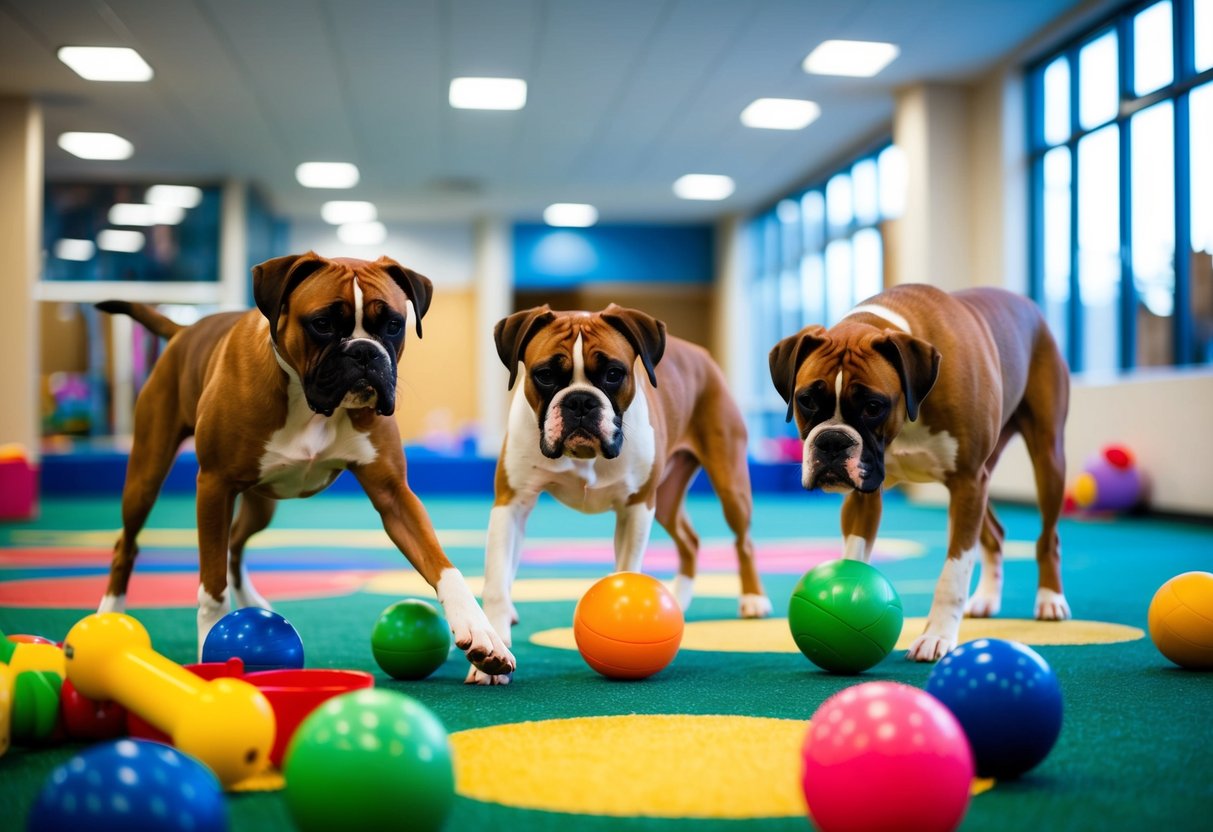
Boxers are active and affectionate dogs that thrive on fun and engaging activities. To keep your Boxer happy and mentally stimulated, it’s essential to provide various interactive games and toys. This will help to meet their high exercise needs while preventing destructive behavior.
Interactive Play and Activities
Engaging in active playtime is crucial for your Boxer. They love games that involve running and jumping. Activities like fetch, tug-of-war, and hide-and-seek can be very enjoyable for both of you. These games help burn off excess energy, keeping your dog fit and happy.
Consider setting up an agility course in your backyard. Simple obstacles like tunnels, jumps, and weave poles can provide hours of fun. Training your Boxer to navigate these challenges not only builds their physical strength but also strengthens your bond. You can also involve them in dog sports like flyball or obedience competitions, which combine physical and mental challenges.
Toys and Games for Mental Exercise
To keep your Boxer mentally sharp, use puzzle toys that require problem-solving. These toys can hide treats, motivating your dog to figure out how to get to the reward.
Some popular options include KONG toys and treat-dispensing balls.
Interactive games, such as scent work or nose games, can also be beneficial. Hide treats around the house and encourage your Boxer to find them. This stimulates their natural instincts and keeps their mind busy.
Additionally, providing a variety of toys to chew on can prevent boredom and destructive behavior. Regularly rotating their toys helps maintain interest and excitement.


