
Boxer dogs are known for their playful and energetic nature, but like any breed, they can have behavior problems. Understanding the common behavior issues with Boxer dogs can help you enjoy a better relationship with your pet.
From hyperactivity to separation anxiety, recognizing these challenges early can make all the difference in how you manage their needs.

One key issue is lack of socialization, which can lead to fearfulness or aggression. It’s important to expose your Boxer to a variety of people, pets, and environments while they are young.
Another common problem is hyperactivity. Boxers are high-energy dogs that require regular exercise and mental stimulation.
By being aware of these potential problems, you can take proactive steps to ensure your Boxer remains happy and well-adjusted. A well-trained and socialized Boxer can be a loving companion that brings joy to your life.
Understanding Boxer Dog Behavior

Boxers are known for their playful nature and high energy levels. By grasping their origins and temperament, as well as their common behavioral traits, you can create a harmonious environment for your pet.
Origins and Temperament
Boxers originated in Germany in the late 19th century. They were bred from the Bulldog and the now-extinct Bullenbeisser. This history gave them a strong and confident demeanor.
Their temperament is friendly, loyal, and protective. Boxers typically bond closely with their families and make excellent family pets. They often exhibit a playful attitude, enjoying games and interacting with family members.
Socialization from a young age is key. Without it, their natural instincts can turn into undesirable behaviors like fear or aggression. Ensuring your Boxer feels secure and loved is essential for a happy backyard romp.
Common Behavioral Traits
Boxers are lively and full of energy. They require regular exercise to prevent boredom, which can lead to behavioral problems. Without proper outlets, they may become hyperactive or even destructive.
These dogs are also known for their affectionate nature. They love being around people and can become anxious if left alone for long periods. This separation anxiety can lead to whining or barking.
Training and consistent routines help manage their behavior. Teaching commands like “sit” or “stay” can create a more obedient and relaxed pet. Regular playdates with other dogs can also enhance their social skills and curb unwanted behaviors.
Addressing Behavioral Issues

Behavioral issues in Boxers can be managed with some specific strategies. Understanding the root causes of these problems will help you address them effectively.
Dealing with Aggression
Aggression in Boxers can stem from fear, lack of socialization, or territorial behavior. To manage this, start by identifying the triggers. Is it other dogs, people, or certain situations?
Begin the process by socializing your Boxer with different people and environments. Gradual exposure helps build confidence and reduces fear. For instance, attend dog parks or group classes where your dog can interact with others safely.
Use positive reinforcement techniques. When your Boxer behaves calmly around triggers, reward them with treats or praise. This approach encourages good behavior and reduces aggressive tendencies. Consistency is key; practice these techniques regularly.
Countering Excessive Barking
Excessive barking can become a nuisance. It often signals boredom, anxiety, or a need for attention. The first step is to pinpoint the reasons behind your dog’s barking.
Start by ensuring your Boxer gets enough exercise. A tired dog is usually a quiet dog. Daily walks, playtime, and mental stimulation can significantly reduce their urge to bark.
When barking occurs, use commands like “quiet.” When they stop barking, immediately reward them for being calm.
Desensitizing your Boxer to common noises, such as doorbells or strangers, also helps reduce excitement and barking over time.
Preventing Destructive Chewing
Chewing is a natural behavior, but it can become destructive if not managed. To keep your belongings safe, provide your dog with appropriate chew toys.
Choose sturdy chew toys designed for Boxers. These toys can satisfy your dog’s chewing instincts and keep them occupied. Rotate toys regularly to maintain their interest.
If you catch your Boxer chewing on furniture or shoes, redirect their attention to their chew toys immediately. Reward them when they choose the right items. This training reinforces positive behaviors and discourages destructive chewing habits.
Managing Separation Anxiety
Separation anxiety in Boxers is quite common. This condition can lead to barking, destructive behavior, and even attempts to escape.
Start by creating a comfortable environment for your dog.
Use gradual departures to help your Boxer adjust. Practice leaving the room for short periods and gradually increase the time away. This technique helps them understand that you will return.
Comfort items, like a favorite toy or a piece of your clothing, can provide solace. Using calming products, such as sprays or treats, may also help reduce anxiety levels.
Remember to reward calm behavior when you return home to reinforce a positive experience.
Effective Training Strategies

Training your Boxer is essential to prevent behavior problems and ensure a happy home. Focus on obedience training, positive reinforcement, and early socialization. These strategies help manage their high energy levels while building a strong bond between you and your dog.
Essentials of Obedience Training
Obedience training lays the foundation for good behavior. Start with basic commands like “sit,” “stay,” and “come.” Use short training sessions of about 5 to 10 minutes to keep your Boxer engaged.
You can use crate training to help manage their behavior when you’re not around. This technique provides a safe space and helps establish a routine. Remember to be patient and consistent.
Reward your Boxer when they follow commands. This will build their confidence and encourage them to repeat the behavior.
Positive Reinforcement Techniques
Positive reinforcement is one of the most effective training methods. It involves rewarding your Boxer for good behavior with treats, praise, or playtime. This keeps them motivated and eager to learn.
When your Boxer displays the desired behavior, immediately offer a reward. Timing is crucial; it helps them connect the action with the reward.
You can gradually reduce treats as your dog becomes more reliable. Instead, use praise and extra playtime as rewards. This method supports their mental stimulation and keeps their enthusiasm high.
Importance of Early Socialization
Early socialization is key to a well-adjusted Boxer. Introduce your dog to different people, pets, and environments from a young age.
This exposure helps reduce anxiety and prevents aggressive behaviors later.
Attend puppy classes where your Boxer can learn to interact with other dogs. Supervised playdates can also be beneficial.
Remember, the goal is to create positive experiences. This will help your Boxer remain calm and friendly as they grow. The earlier you start socialization, the easier it is to address any potential behavior problems down the line.
Promoting Physical and Mental Exercise
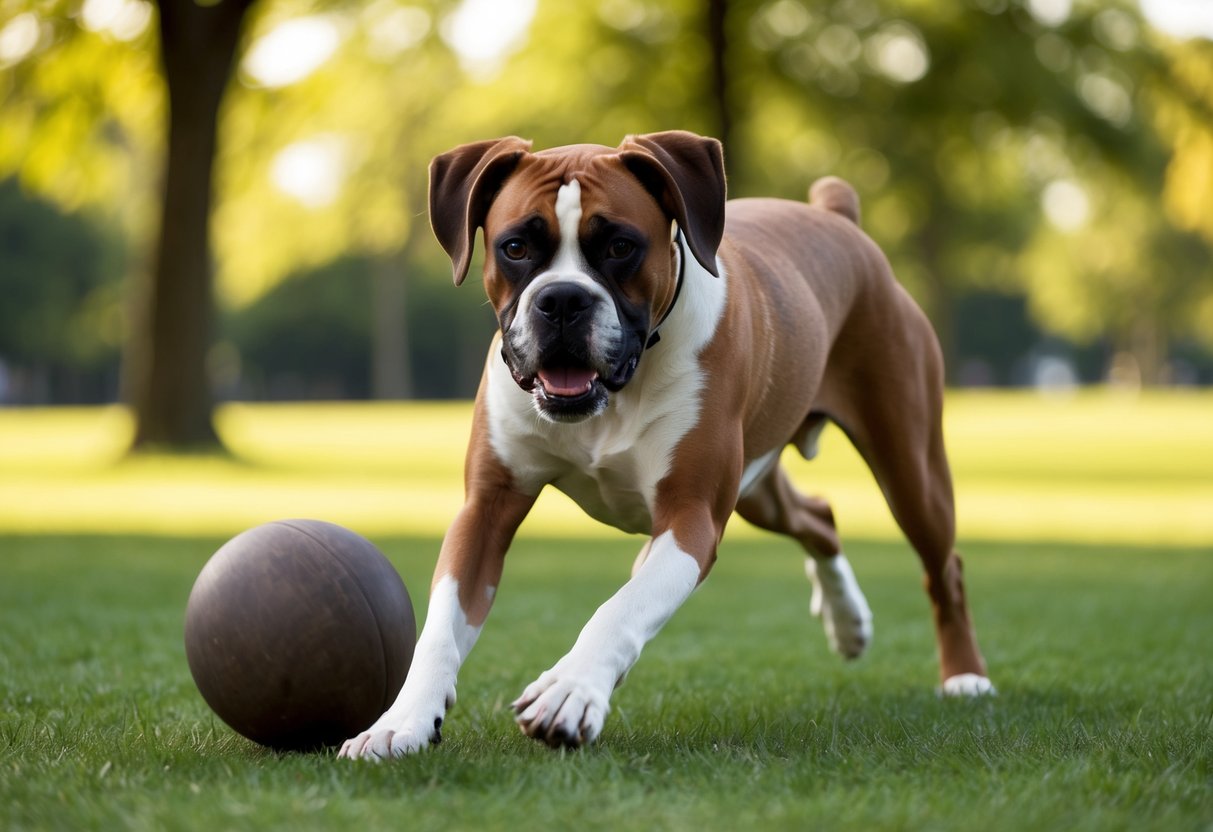
To keep your Boxer happy and healthy, you need to focus on both physical and mental exercise. A well-balanced routine will help prevent behavior problems and keep your dog engaged.
Daily Exercise Requirements
Boxers are high-energy dogs that need daily exercise. Aim for at least 1 to 2 hours of physical activity each day.
This can include brisk walks, runs, or play sessions in a safe area. Daily walks are essential for both exercise and socialization, helping your Boxer become well-adjusted and friendly.
Incorporating different activities can prevent boredom. Try varying routes during walks or choosing new parks.
Always ensure they are off-leash in safe, enclosed spaces to let them run freely when appropriate.
Incorporate commands like “sit” or “stay” during walks to reinforce training. This mix of exercise and training helps burn off energy and reinforces good behavior.
Interactive Play and Stimulating Toys
Interactive playtime is a great way to combine fun and exercise. Use toys that challenge your Boxer both physically and mentally.
Balls, tug toys, and puzzle toys can keep your dog engaged and reduce destructive behavior.
Playing fetch or tug-of-war can also be great ways to bond with your Boxer.
Make sure to offer plenty of breaks, and encourage your dog to think of solutions during play. This not only boosts their physical activity but also provides necessary mental stimulation.
Don’t forget to rotate toys to keep things fresh. New toys can excite your dog and encourage them to play more. You might also consider having playdates with other dogs for additional socialization.
Advanced Training and Agility
Your Boxer’s energy can find excellent outlets through advanced training and agility activities. Agility training not only enhances physical skills, but it also strengthens your bond through teamwork and communication.
You can enroll your Boxer in agility classes or set up a simple course in your backyard. Use obstacles like jumps, tunnels, and weave poles. Start with basic commands and gradually increase complexity.
To improve focus during training, incorporate commands like “off” and “stay.” If you feel overwhelmed, seeking professional help from trainers can guide you through the process. A Boxer that enjoys agility will also be calmer at home, making everyone happier.


