
Ever notice how frogs just seem to pop up and start croaking like crazy after a rainstorm? It’s not just your imagination. Frogs come out after it rains because the damp, humid air keeps their skin moist, makes food easier to find, and sets the stage for mating and laying eggs. Rain shakes things up in the environment, and frogs absolutely take advantage of that.
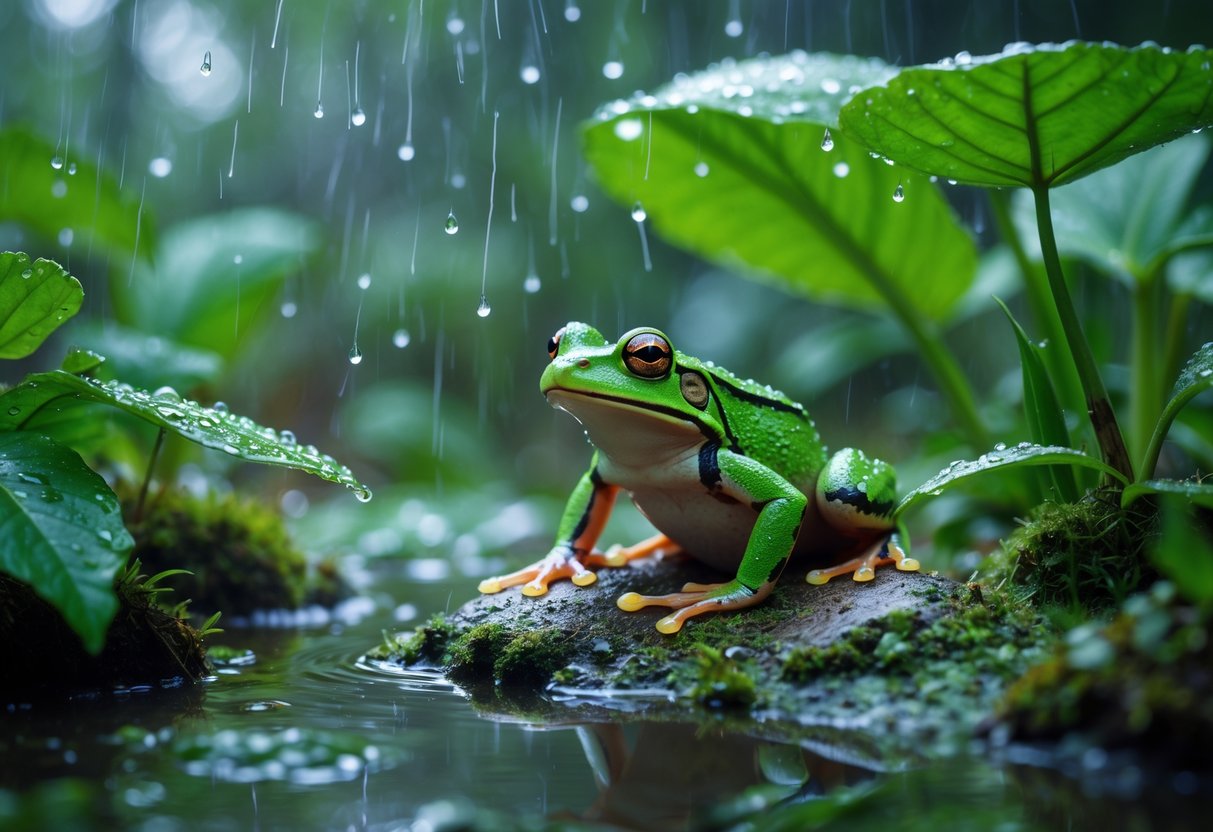
Rainy weather also calms down some of the predators that would normally be out hunting. That gives frogs a safer window to hop around. Plus, all those new puddles and ponds? Perfect for breeding.
When you hear frogs croaking after a storm, they’re usually calling for mates, making the most of the wet season.
If you’re curious about why frogs get so lively after it rains, you’re not alone. It’s not just a random thing—it’s a clever survival trick that fits their needs perfectly.
Why Frogs Emerge After Rain

When it rains, frogs jump at the chance to enjoy the wet conditions. The extra moisture helps them stay healthy and active.
Rain also makes it easier for frogs to move around and find safe places to breed. The whole environment just feels more welcoming for them.
Moisture and Hydration Needs
Frogs have skin that soaks up water, almost like a sponge. When things get dry, they risk losing too much moisture—and that can really hurt them.
Rain bumps up the humidity and soaks the ground, so frogs don’t have to worry about drying out. They can just soak up water from puddles, damp soil, and even wet leaves.
That moisture helps them breathe too, since frogs absorb oxygen right through their skin. You’ll spot more frogs out and about when it’s raining or just after.
Breeding and Egg-Laying Behavior
Rain plays a huge role in frog romance. Many species actually wait for rain before they start mating and laying eggs.
Fresh rainwater fills up temporary pools and ponds, giving frogs the perfect spot to lay their eggs. The cooler, wetter air helps the eggs develop safely.
Adult frogs use the rainy season to find mates, since it’s easier for them to move and call out. Without rain, they really struggle to breed and raise their young.
Easier Movement and Surface Accessibility
Rain turns dry, cracked ground into a soft, slippery playground for frogs. They can travel farther without worrying about drying out.
The wet ground also covers up rough or hot surfaces that might hurt their skin. Frogs often crawl out from under logs, holes, or leaves when the rain starts.
With fewer predators on the move and everything nice and slick, frogs get a chance to hunt and explore more freely. It’s like a temporary window where life just gets easier for them.
Rain’s Impact on Frog Survival and Ecosystems
Rain really shakes up the world for frogs. It changes where they find food, where they can live and breed, and even how they talk to each other.
All of these changes help keep frog populations healthy and balanced. Nature’s got a way of making things work out, doesn’t it?
Food Availability and Invertebrate Activity
When it rains, insects and little critters like worms get busy. They come out of hiding because the damp, cool air suits them.
Suddenly, frogs have an all-you-can-eat buffet right at their feet. You’ll see them hopping around, snatching up bugs with barely any effort.
This feast helps frogs grow stronger and makes it easier for them to survive through the year. Toads and other amphibians benefit too, keeping their energy up for hunting and breeding.
Habitat Expansion to Ponds and Puddles
Rain fills up ponds, puddles, and wetlands, creating new hangouts for frogs. These fresh water spots are perfect for laying eggs and raising tadpoles.
Temporary puddles, in particular, become safe breeding zones away from bigger predators. That helps frogs boost their numbers.
After a good rain, wetlands and ponds open up as new homes and shelters for frogs and toads. These spots also help other wildlife, keeping the whole ecosystem in balance.
Frogs’ Vocalizations and Communication
Rainy weather gets frogs croaking louder and way more often. They use these calls to attract mates during breeding season.
When rain falls and the air gets humid, frogs can send their croaks farther than usual. Ever notice how much more you hear them after a good downpour? That’s because it’s basically the perfect moment for frogs to find each other.
Frogs use these sounds to let others know where they are and to show they’re ready to mate. This calling behavior really matters for keeping frog populations going, no matter the habitat.
Curious for more details about why frogs show up when it rains? Check out this page on why frogs come out when it rains.


