
So, can you keep a frog at home? Absolutely, you can. Frogs can make fascinating pets if you’re willing to give them the right care.
If you set up proper housing, offer a good diet, and pay attention to their needs, frogs can thrive in your home.
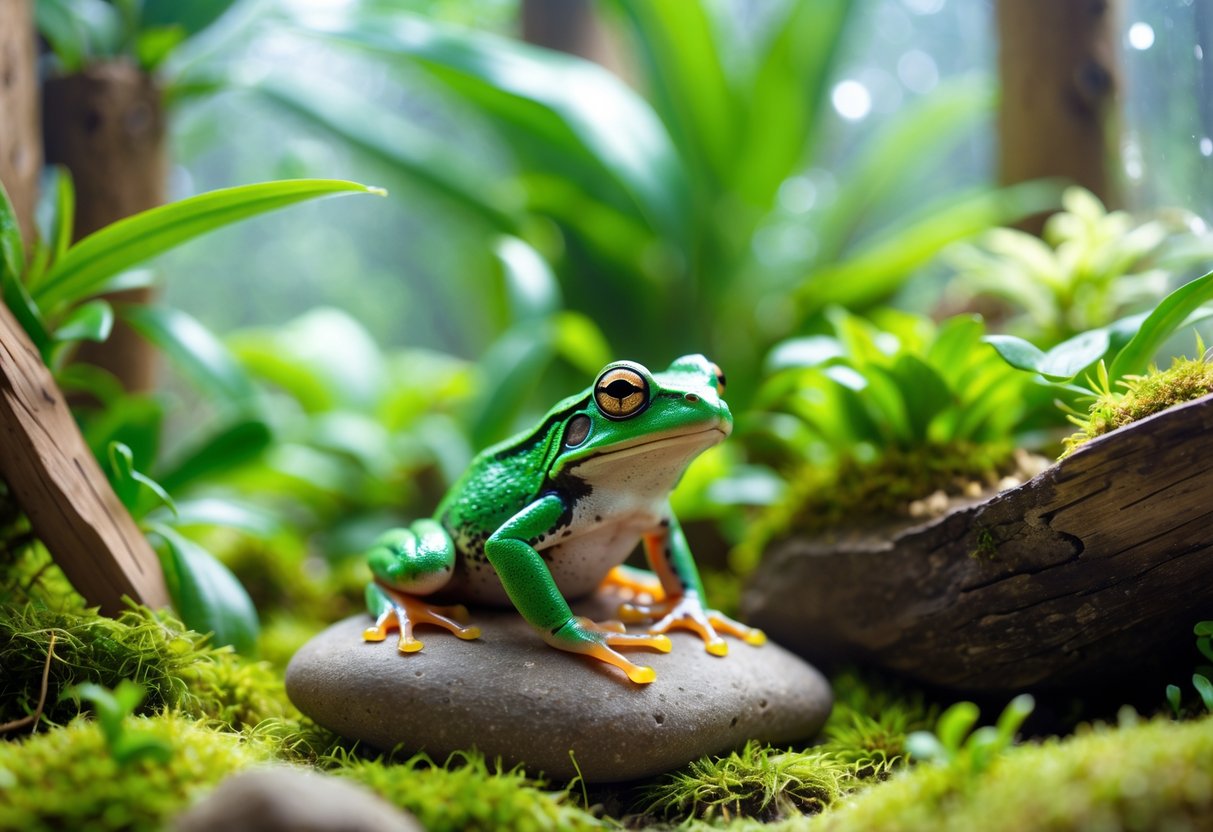
Honestly, keeping a frog isn’t as tough as it sounds, but you do need to create a safe space that feels like their natural habitat. This means you’ll set up a terrarium with the right humidity, temperature, and places to hide.
Every frog species is a bit different, so you should look up the needs of the one you want. Some frogs need more moisture, while others like it drier.
Frogs can bring a little piece of nature into your living room. Many people love watching their quirky behaviors.
If you’re curious about what it takes to keep a frog happy and healthy, stick around. I’ll share tips on care and help you pick the right species.
Can I Keep a Frog at Home?

When you decide to keep a frog at home, you have to think about laws, health risks, and if a frog fits your lifestyle. Frogs aren’t just decorations—they need real care and attention.
Legal and Ethical Considerations for Frog Ownership
Before you bring home a frog, check your local laws. Some wild frogs are protected, and you can’t legally catch or keep them.
This helps protect endangered species and keeps the environment balanced. Taking a wild frog can mess with its chances of survival.
Wild frogs rely on specific habitats and foods, which are tricky to copy at home. Frogs from pet stores or breeders usually do better because they’re used to living with people.
Skip poisonous frogs—they can be dangerous. Also, think about the long haul. Some frogs live more than 10 years, so it’s a real commitment.
Risks of Keeping Wild Frogs
Wild frogs sometimes carry diseases like salmonella. You could catch it, or your other pets might.
If you handle wild frogs, wash your hands every time. Wild frogs often struggle in captivity. They need the right temperature, humidity, and food.
If you don’t provide these, they get stressed or sick, and sometimes they die fast. When you take wild frogs out of their home, it stresses them out and hurts their survival skills.
If you find a wild frog, it’s usually better to help it back to its spot instead of keeping it.
Is a Frog the Right Pet for You?
Frogs need special setups to mimic their natural world. You’ll need a tank with the right humidity, temperature, and clean water.
Some frogs live in water; others prefer land. You’ll feed them live bugs, and their diet changes depending on the species.
Beginner-friendly frogs like African dwarf frogs or White’s tree frogs are easier to care for. You’ll have to clean their tank regularly and watch their health.
If you’re up for that and want a unique companion, frogs can be pretty rewarding. But if you want a pet that’s super low-maintenance, frogs probably aren’t for you.
For more info on frog care and good starter species, check out this 13 Best Frogs to Keep as Pets guide.
Choosing and Caring for Pet Frogs

If you want to keep a frog at home, you’ll need to know about its needs. This starts with picking the right species and setting up a good habitat.
You’ll also figure out how to feed your frog and care for special types, like nocturnal or aquatic frogs.
Beginner-Friendly Frog Species
If you’re new to frogs, go with species that are easy to care for. Popular choices include the African Dwarf Frog, White’s Tree Frog, and Pacman Frog.
-
African Dwarf Frogs live in water, stay small, and are pretty active. They’re happy in a simple aquatic tank.
-
White’s Tree Frogs like to climb, so they need tall tanks with branches. They’re usually calm and easy to handle.
-
Pacman Frogs are big and mostly sit on land. They like a roomy tank with moist soil to dig in.
Try not to get wild-caught frogs. Captive-bred frogs stay healthier, and you help protect wild populations.
Creating a Frog Habitat at Home
The habitat you set up depends on the frog you choose.
-
African Dwarf Frogs need an aquatic tank with clean, non-chlorinated water.
-
White’s Tree Frogs want a tall terrarium with plants and branches.
-
Pacman Frogs live on land, so give them a moist substrate like coconut husk or peat moss.
Keep the temperature between 75–85°F during the day. At night, don’t let it drop below 68°F for most tropical frogs.
Humidity should stay around 70% or higher, especially for tree frogs and dart frogs. Give your frog some hiding spots so it can feel safe.
Daily Care and Feeding
Feed your frog live prey like crickets, worms, or mealworms. Most frogs love them.
Larger frogs, like Pacman frogs, sometimes eat pinky mice, but don’t overdo it. Change the water every day for aquatic frogs and keep the tank clean.
Remove leftover food so bacteria doesn’t build up. Try not to handle your frog too much—their skin is delicate.
Watch for changes in appetite or energy. If your frog seems off, it might be sick, so keep an eye out.
Special Needs of Nocturnal and Aquatic Frogs
Nocturnal frogs like White’s Tree Frogs really come alive after dark. Keep the lighting low in their habitat, and make sure you add some good hiding spots for them to use during the day.
Aquatic frogs thrive when they have plenty of clean water and enough room to swim. African Dwarf Frogs seem to love tanks with plants and underwater hiding places.
Both nocturnal and aquatic frogs do best when you keep the temperature steady and the humidity high. Check their environment regularly—no one wants a stressed or sick frog, right?


