
Ever spotted a frog hopping around your yard and wondered if it’s dangerous? You’re not alone. The frogs you usually see aren’t poisonous to humans.
Most frogs do make tiny amounts of toxins on their skin. They use these chemicals to warn off predators, not to hurt people.
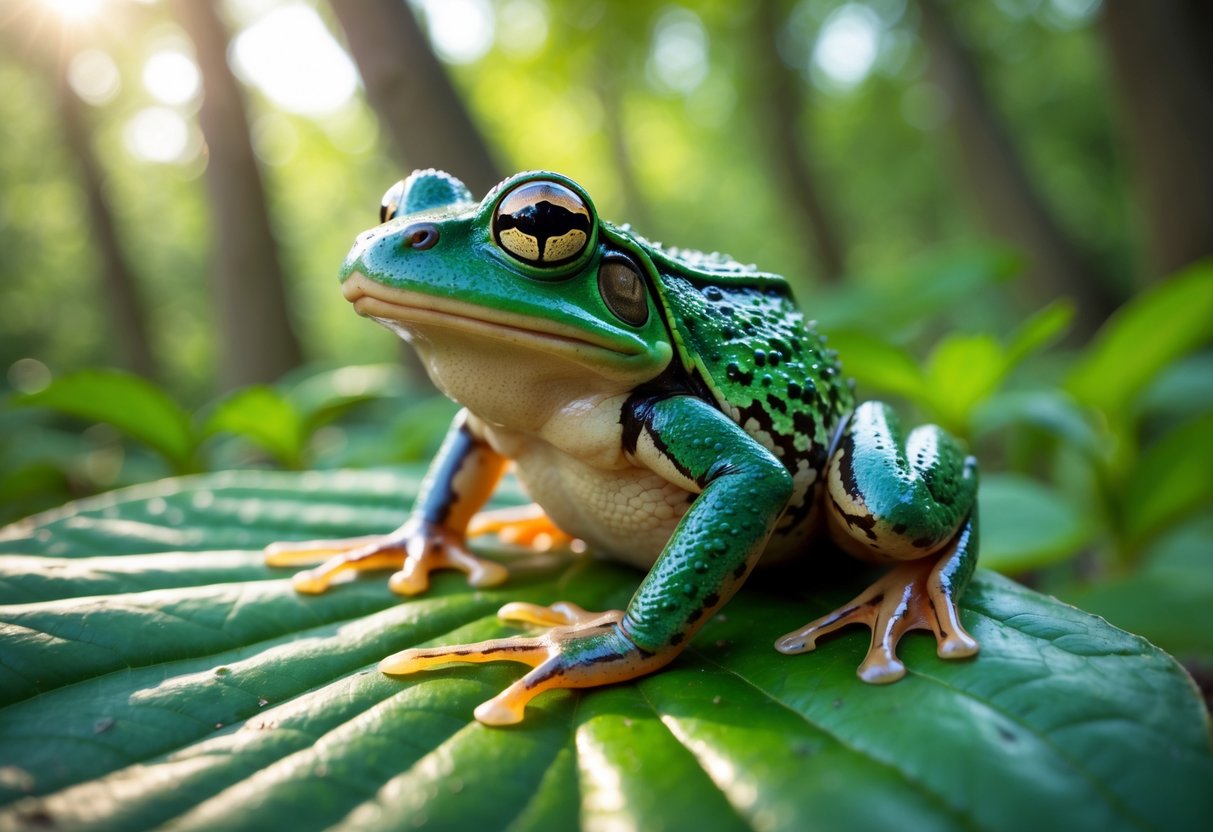
Frogs really are fascinating creatures. They rely on their skin secretions as a defense, but how dangerous they are depends a lot on the species.
Some tropical frogs pack a punch, but the ones you’ll find in your neighborhood? They’re safe to touch or watch.
It helps to know which frogs are actually risky, how their toxins work, and what you should do if you have pets.
Are Common Frogs Poisonous?

Most frogs you’ll see in your backyard or at the park aren’t dangerous to people or pets.
Sure, all frogs have some toxins on their skin, but the stuff you’ll find in common species is really mild. It’s not going to cause any serious harm.
Toxicity of Common Frog Species
Species like the American green tree frog have mild toxins on their skin. These secretions keep predators away.
But the toxins aren’t strong. They usually just taste bad or maybe cause minor irritation.
Toads, like the American toad and Fowler’s toad (Anaxyrus americanus), also have mild toxins. If a pet or person touches or licks them, they might drool or vomit a little, or feel minor discomfort.
Most of the time, these effects don’t need a doctor or vet.
Common frogs and toads in the U.S. are not dangerously poisonous. Their toxins can sometimes cause upset stomachs, but that’s about it.
Poisonous vs. Venomous Frogs
Let’s clear this up: poisonous frogs have toxins on their skin. If something eats or touches them, the toxins can cause problems.
Venomous frogs, on the other hand, inject toxins by biting or stinging. That’s super rare.
Bruno’s casque-headed frog is one of the few venomous frogs out there.
The frogs you see around are sometimes poisonous, but their secretions barely do anything to humans.
So, when you see a frog, it’s probably only got mild toxins on its skin. It’s just a natural defense, not a real threat.
Harmful Effects on Humans and Pets
If you touch a common frog or a green tree frog, you’ll almost never have any issues.
For most people, touching a common frog’s skin might cause a little irritation, but that’s pretty rare.
Pets like dogs and cats can be more sensitive, especially to toads. Toads such as the American toad might cause vomiting, drooling, or even seizures if a pet licks them.
Still, common frogs don’t have toxins strong enough to truly hurt your pet.
It’s smart to teach kids not to handle frogs or toads too much. And try to keep pets away from toads when you’re outside.
That way, everyone—including the frogs—stays safe.
You can get more info from guides like Are Frogs Poisonous? {How Dangerous are they?} » Birds & Wild.
How to Identify and Understand Poisonous Frogs

Poisonous frogs usually stand out thanks to their colors and where they hang out. Noticing these things helps you spot which ones might be risky.
Some frogs only use skin toxins to defend themselves. A few rare ones actually inject venom.
Bright Colors and Warning Signs
A lot of poisonous frogs show off bright colors—reds, blues, yellows, or greens. Scientists call this aposematic coloration, and it’s basically a big “stay away” sign for predators.
Take the strawberry poison dart frog (Oophaga pumilio), for example. It’s got those vivid red and blue shades.
But here’s the catch—not all colorful frogs are poisonous. Sometimes, they’re just trying to attract a mate.
Besides color, you might notice strange skin patterns or extra shiny, smooth skin.
Poison dart frogs from the Dendrobatidae family are tiny, super bright, and mostly live in Central and South America.
Cane toads aren’t as flashy, but they’ve got big parotoid glands behind their eyes. If something threatens them, these glands release bufotoxin.
The Most Poisonous Frog Species in the World
Some frogs are way more toxic than others.
The golden poison frog (Phyllobates terribilis) is probably the deadliest. It carries batrachotoxin, which can kill an adult human with just a tiny bit.
Its close relatives, like Phyllobates bicolor and the black-legged poison dart frog, also pack strong toxins.
Other dangerous frogs include mantella frogs from Madagascar. Bruno’s casque-headed frog is actually venomous and can inject toxins with spines on its head.
The Colorado river toad is well known in the U.S. for producing the hallucinogen 5-MeO-DMT. Its bufotoxin can be harmful if you handle it wrong.
How Frogs Produce and Use Toxins
Frogs don’t actually make all their own toxins. They pick up a lot of these poisons from what they eat—mainly ants and beetles.
These toxins build up in their skin glands. The granular glands spread across their bodies, while toads usually have parotoid glands behind their eyes.
Toxins help frogs defend themselves. If a predator bites a poisonous frog, the taste is awful and the toxin might irritate, paralyze, or even do worse.
Cane toads take it a step further and spray toxins straight from their glands. Some species, like the strawberry poison dart frog, pack alkaloids in their eggs, tadpoles, and embryos to give the young ones a fighting chance.
Honestly, most frogs aren’t dangerous if you just watch them. Still, it’s smart to avoid touching bright or unfamiliar frogs unless you know what you’re dealing with.
Always wash your hands after any contact.
For more details, check out how to identify poisonous frogs safely.


