
Ever spotted your cat eyeing up frogs in the garden and wondered if those little creatures could be dangerous? When it comes to frogs in the UK, you’ll be glad to know most aren’t poisonous to cats and don’t usually cause serious harm.
So, if your curious kitty happens to catch or even eat a frog, odds are they’ll be just fine.
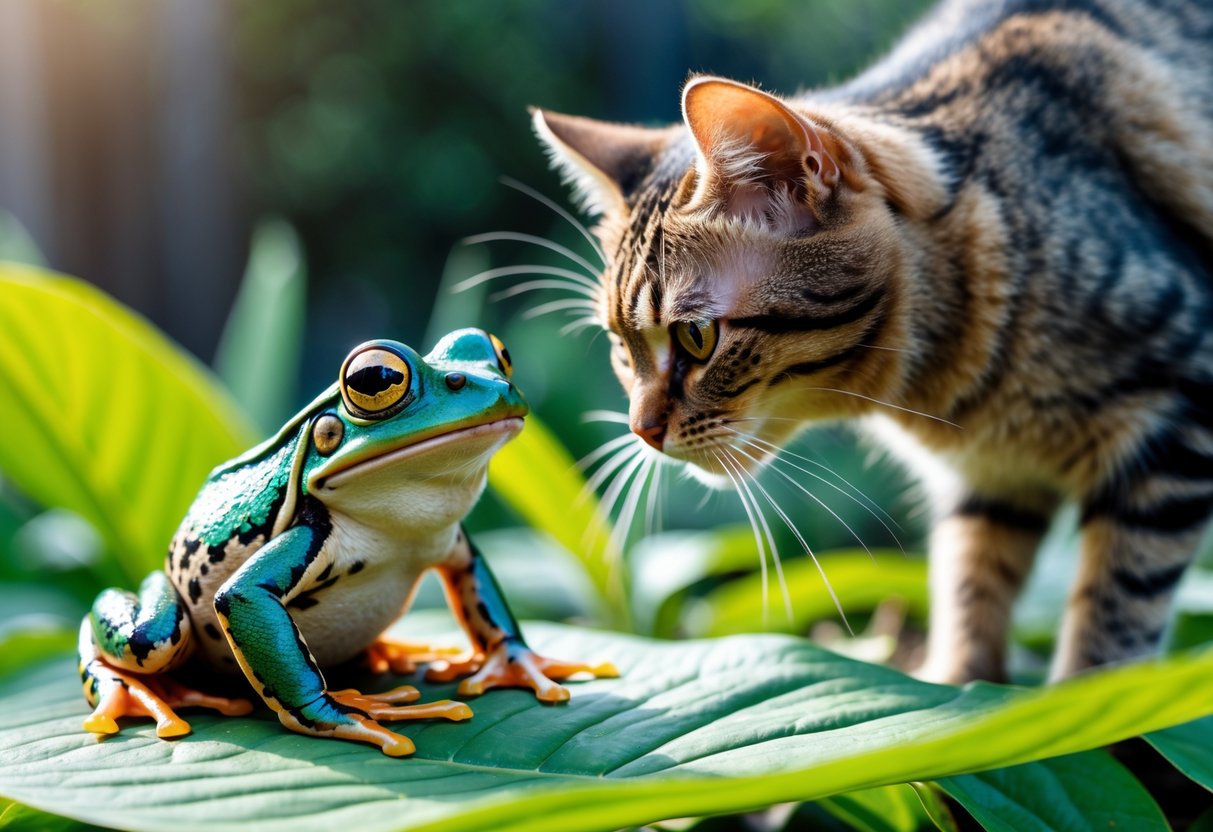
Still, some frogs might carry bacteria or trigger mild tummy troubles if your cat eats them. Allergic reactions do happen, but they’re really rare.
If you know what to look for, you can keep your cat safe and avoid panic if they get a little too close to an amphibian. Let’s get into the risks and how you can keep your cat out of trouble with UK frogs.
Are UK Frogs Poisonous to Cats?
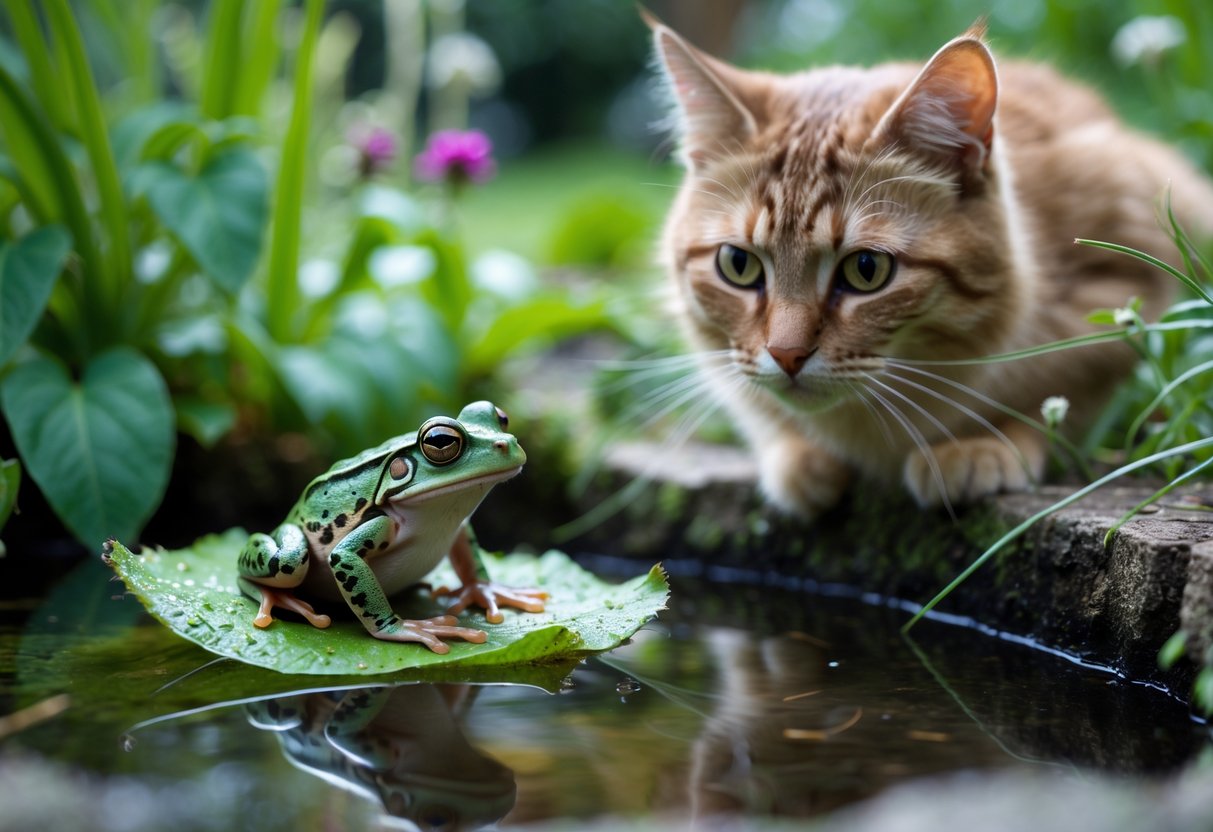
Cats love to explore gardens and hunt tiny things, so they’ll probably come across frogs or toads at some point. Some amphibians in the UK have mild toxins, but honestly, not all are a real threat.
If you know which ones are toxic and how cats usually react, it’s easier to keep your furry friend safe.
Toxicity of British Frogs and Toads
A lot of British frogs and toads use toxins to defend themselves. The common toad, for example, has parotoid glands behind its eyes that release bufotoxins.
These toxins can irritate your cat’s mouth or skin and might cause drooling, vomiting, or even seizures if your cat eats one. The common frog produces fewer toxins and is generally less of a problem.
Even so, some toxins can still make your cat uncomfortable if it licks or bites a frog. You won’t find super poisonous species like the cane toad in the UK—those are more of a problem elsewhere.
How Cats React to Encountering Frogs
Most cats stalk or paw at frogs just out of curiosity. If your cat licks or bites a toxic toad, you might notice:
- Excessive drooling
- Vomiting
- Diarrhea
- Pawing at their mouth
Seizures can happen, but it’s rare. Mild cases usually get better with rest and some water.
If symptoms pop up, call your vet right away. Toad toxins can also irritate your cat’s skin, so it’s a good idea to wash their paws if they’ve been near amphibians.
Differences Between Frogs and Toads
Frogs have smooth, moist skin and are less toxic than toads. They like to stay close to water.
Toads have dry, bumpy skin and glands that release stronger toxins. Their secretions taste bitter and can really bother predators.
Cats face more risk from toads than frogs. Toad toxins can cause anything from mild to severe reactions, especially if your cat bites or licks them.
Frogs are usually less of a concern, but they can still carry bacteria like salmonella.
| Feature | Frog | Toad |
|---|---|---|
| Skin | Smooth, moist | Dry, bumpy |
| Toxicity Level | Low to none | Moderate (bufotoxins) |
| Risk to Cats | Low | Higher |
| Behavior | Near water | Often on land |
Non-Toxic Amphibians Commonly Found in the UK
Not every amphibian in the UK is toxic. For example, newts like the palmate newt and smooth newt don’t have harmful toxins on their skin.
Your cat can usually be around these without risk of poisoning. Still, it’s smart to stop your cat from handling wild amphibians to avoid stress or accidental injuries.
Most UK amphibian toxins just make predators uncomfortable and aren’t deadly to cats, unless your cat eats a lot or is really sensitive. Always keep an eye on your cat after any frog or toad encounter.
You can read more about protecting your cat from amphibians at petscare.com.
Recognizing and Responding to Frog Encounters
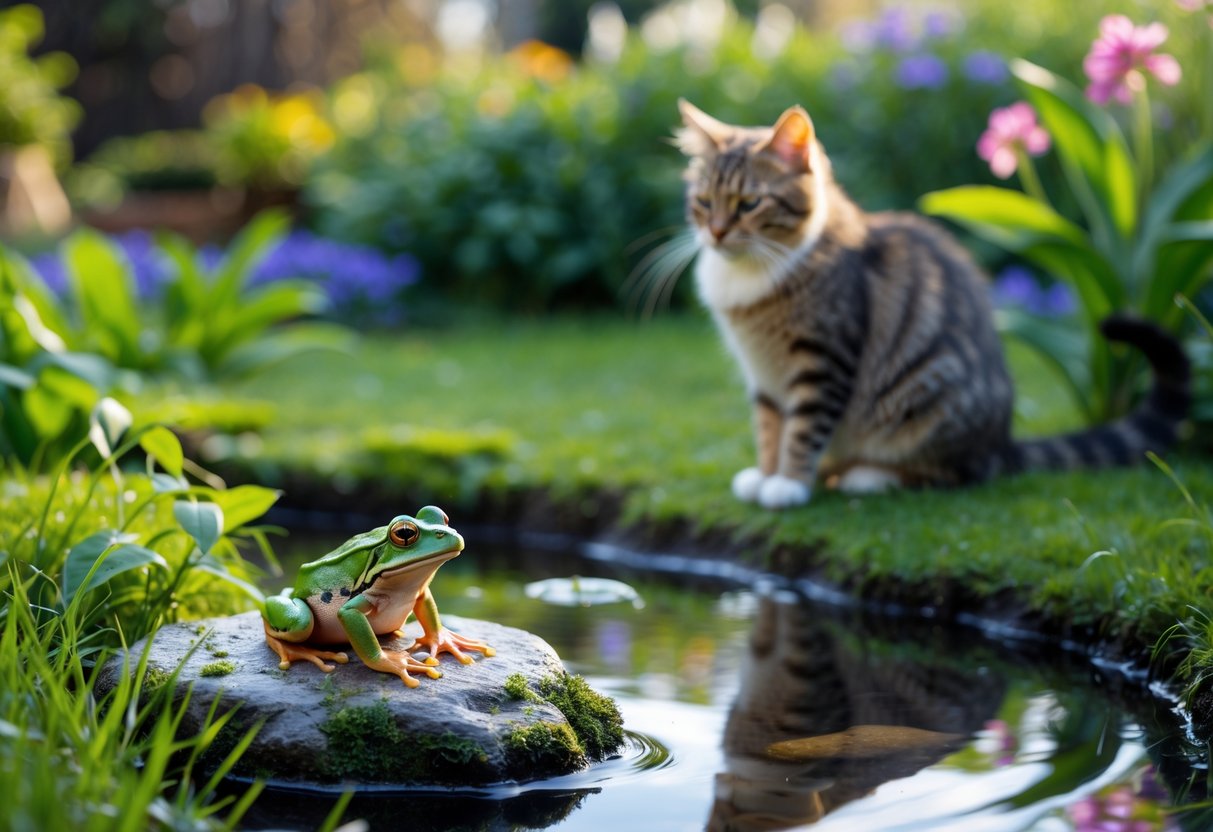
When your cat meets frogs or toads, it helps to know the signs of poisoning and how to act fast. Cats love to hunt frogs, and sometimes these amphibians can be toxic.
If you’re prepared, you’ll keep your cat safer and healthier.
Signs of Frog or Toad Poisoning in Cats
If your cat eats or licks a toxic frog or toad, you’ll probably notice signs of poisoning pretty quickly. Watch for excessive drooling or foaming at the mouth.
Your cat might paw at their face or mouth, trying to get rid of the irritation. Other signs include vomiting, diarrhea, or trouble breathing.
Some cats get weak, disoriented, or even have seizures. You might see bright red, sore gums or notice their heartbeat seems off.
These symptoms can show up in minutes. If you spot any of these, don’t wait around.
Immediate First Aid Actions
If you think your cat touched or ate a frog or toad, rinse their mouth with clean water right away. Use a damp cloth or gently pour water, but don’t let them swallow too much.
Move your cat away from the area with frogs. Call your vet and explain what happened.
If you can, snap a photo or identify the frog—your vet will find that helpful. Keep a close eye on your cat while waiting for advice.
Don’t give food or medicine unless your vet says it’s okay.
How to Prevent Frog-Related Risks
To protect your cat, try to limit their access to spots where frogs and toads hang out. These places include gardens with standing water, ponds, or damp corners.
Remove things that attract amphibians, like leaf piles or uncovered water bowls outside. Clean your yard regularly and fill in small holes to cut down on frog habitats.
If you can, supervise your cat outdoors, especially at dawn or dusk when frogs are most active. Fencing can help keep your cat out of frog-heavy areas.
Taking these steps can make it much less likely your cat will eat or play with toxic amphibians.
Outdoor Cats and Hunting Behavior
Cats are natural hunters. Lots of them seem to enjoy chasing frogs just for the thrill of it.
Even if a frog isn’t super toxic, it could still carry bacteria or parasites that might make your cat sick. That’s a risk some people don’t realize.
If your outdoor cat keeps going after frogs, try tossing them some toys or spend more time playing with them. It might help satisfy those hunting instincts a bit.
Watch their behavior and check their mouths now and then for any signs they’ve messed with frogs. You never know what they’ll get into.
Notice your cat bringing frogs inside or acting weird after being outdoors? Check for symptoms right away, and call your vet if something seems off.
Knowing your cat’s habits goes a long way in keeping them safe from the dangers of eating frogs.
For more details on how dangerous frogs can be to cats, you can explore information about frogs poisonous to cats.


