
At first glance, telling a frog from a toad feels confusing—they look pretty similar and both hang out near water. But honestly, a few details make it much easier. If you want the quickest clue, check the skin and legs: frogs have smooth, moist skin and long, strong legs for jumping. Toads? They’ve got dry, bumpy skin and shorter legs made for walking or tiny hops.
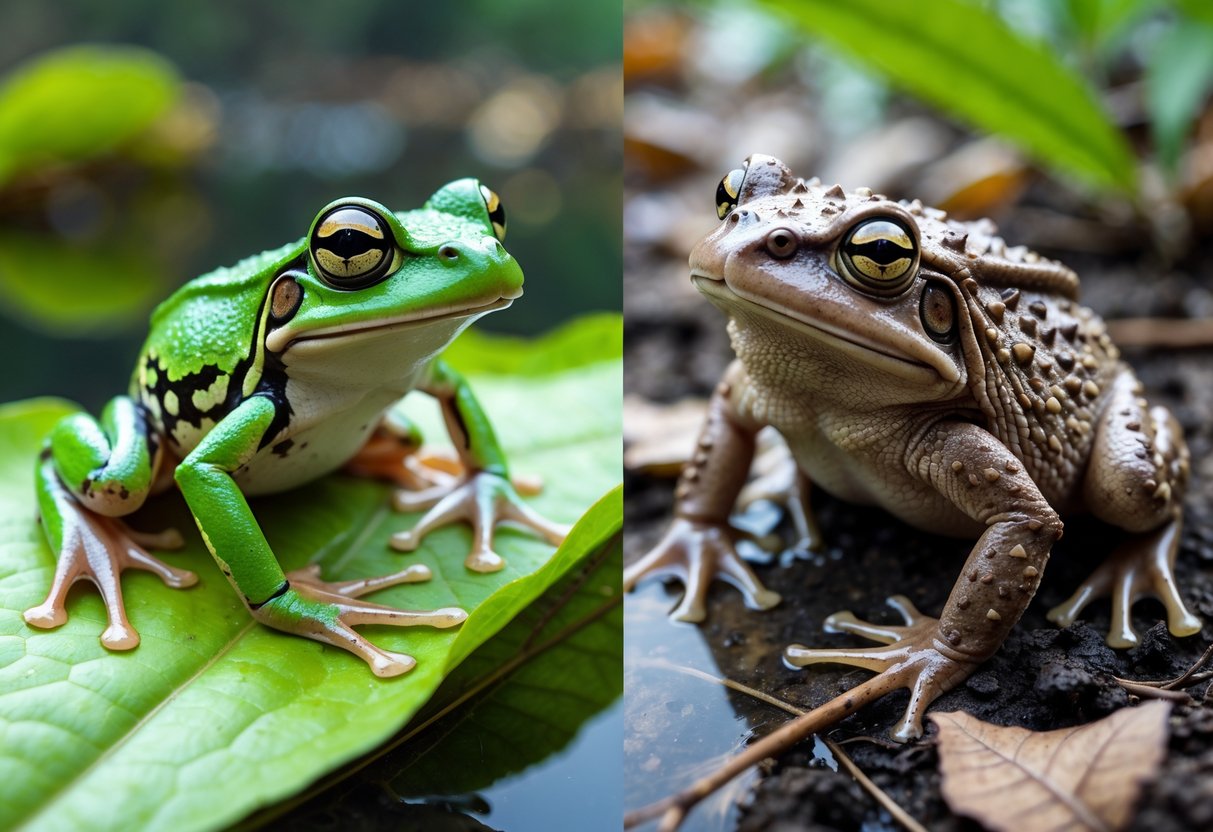
Frogs usually sport brighter colors and stick closer to water. Toads, though, blend in with dull browns or greens and spend more time on land.
If you’re curious about their eyes, calls, or even what their babies look like, stick around for a few simple tips. It’s not as hard as it seems to tell frogs and toads apart once you know what to look for.
Spotting the Key Differences Between Frogs and Toads

If you’re trying to figure out which is which, focus on their skin, body shape, movement, and those little bumps. These clues make it much easier to spot the difference in real life.
Pay attention to wetness, leg length, how they move, and whether they’ve got those special glands.
Skin Texture and Appearance
Frogs feel smooth and moist to the touch. Their slippery skin keeps them wet, which matters since they hang out near water so much.
Toads feel rough and dry, covered in bumpy skin. People call these bumps “warts,” but honestly, they’re just glands that help protect toads by releasing toxins.
That rough, bumpy skin means you’ll usually find toads farther from water than frogs.
Body Shape and Hind Legs
Frogs have long, slim bodies and really powerful hind legs. Sometimes their legs look longer than their whole body, which helps them leap far and swim fast.
Toads look squatter and wider. Their legs are much shorter, so they don’t jump much.
You’ll mostly see toads walking or making short, awkward hops.
Movement Styles
Watch a frog move and you’ll notice they leap and swim with a sort of grace. Those long legs let them cover a lot of ground fast, especially if they’re startled.
Toads, though, move slower and steadier. Their short legs mean they hop only a little or just walk.
It’s not exactly graceful, but it works for their lifestyle on land.
Warts and Parotid Glands
If you spot big bumps behind an amphibian’s eyes, you’re probably looking at a toad. Those are parotid glands, and they produce a toxin called bufotoxin to help keep predators away.
Frogs don’t really have visible parotid glands or big warts. Their skin stays much smoother.
So, if you see those big bumps, you’re almost definitely looking at a toad from the Bufonidae family.
Habitat, Breeding, and Tadpoles: How Environment Sets Them Apart

Frogs and toads don’t just look different—they live in different places and breed differently too. Their eggs and tadpoles also have some pretty clear differences.
Preferred Habitats and Where to Find Them
Frogs need to stay damp, so you’ll find them near ponds, lakes, or swamps. Their smooth, moist skin really depends on those wet spots.
You’ll probably see them jumping between water and land.
Toads can handle drier places like gardens, forests, or meadows. Their tough, bumpy skin helps keep them from drying out.
They still need water to breed, but spend way more time away from it than frogs do.
You might find toads hiding under leaves or logs. Frogs, meanwhile, tend to hang out right at the water’s edge or even in it.
Frog Spawn vs. Toad Spawn
Frogs lay their eggs in big, round clumps that float on the water. You’ll spot these jelly-like clusters in ponds or swamps pretty easily.
That jelly helps protect the eggs and lets oxygen flow through.
Toads do things differently. They lay eggs in long, stringy chains that wrap around underwater plants or stick to rocks.
The gelatin in toad spawn keeps the eggs safe and floating.
Both kinds need water for their eggs to develop, but the shapes of the spawn make it easy to tell which amphibian laid them.
Frog Tadpoles Compared to Toad Tadpoles
Frog tadpoles have streamlined bodies and long, thin tails. These features help them zip around in open water like lakes and ponds.
You’ll probably spot them darting about as they grow. They seem built for speed.
Toad tadpoles, on the other hand, have shorter tails and chunkier bodies. They do better in shallow, calm water.
You’ll often find them hanging out in clusters, staying close to the bottom instead of racing around.
Frogs usually spend more time in the tadpole stage than toads do, though it really depends on the species and water temperature.
If you notice these differences, you probably won’t mix up frog and toad tadpoles again. Want more info? Here’s a handy guide on toad vs. frog differences.


