
Ever wondered if frogs can see in the dark? The answer is yes—and honestly, it’s pretty wild. Frogs can actually see color even when it’s almost pitch black, something most animals, including us, just can’t pull off.
This skill lets them find food or spot a mate in places where you and I would be stumbling around.
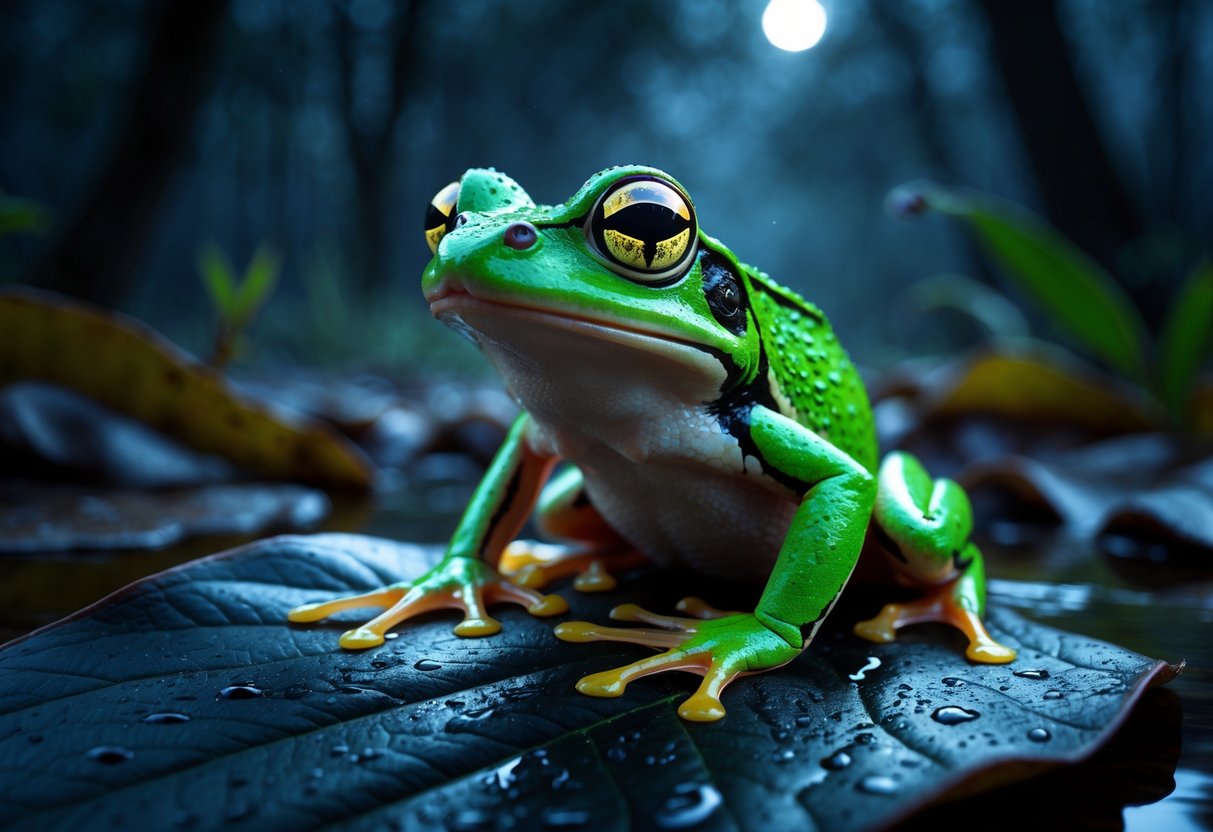
Your eyes rely on cones for color, but those don’t really work once the lights go out. Frogs, though, have special rods in their eyes that pick up color even in near-total darkness.
You could say frogs have a kind of color night vision that’s way better than ours.
So, when frogs move around at night, it’s not just luck keeping them safe. Their eyes help them see more than just shadows—they actually see colors.
Let’s get into how this all works and why it matters for frogs living their nighttime lives.
How Frogs See in the Dark
Frogs have some pretty clever tricks for seeing in the dark. Their eyes work differently from ours, letting them spot shapes and even colors in places where you’d barely see anything.
You might not expect it, but their vision really adjusts to darkness.
Night Vision Abilities
Frogs see at night better than most animals out there. While humans mostly lose color vision in low light, frogs use special cells that keep things clear.
Their eyes have two types of rods, each sensitive to different kinds of light. This lets them spot shapes and movement even when it’s super dim.
So, when it’s nearly pitch black, frogs still pick out details in their surroundings.
This skill helps them move through dark places—like under leaves or inside burrows—without bumping into trouble.
Color Vision in Low Light
Here’s something cool: frogs can see colors even when it’s really dark. Most animals, us included, lose that ability because cones need more light.
But frogs? They keep seeing colors thanks to those two types of rods in their eyes.
For example:
- Frogs can spot colorful prey while hunting at night
- They rely on color when looking for mates, even in low light
Basically, frogs have the kind of “color night vision” we can only wish for.
If you’re curious, there’s a study from Lund University that dives into how frogs pull this off.
Special Adaptations in the Frog Eye
Frog eyes come with some neat features for night vision. One is the transparent third eyelid, called the nictitating membrane.
This eyelid protects their eyes but still lets light through.
Their retinas also stand out. The retina holds rods and cones, but frogs have two types of rods—unlike most animals.
This setup helps their eyes work when it’s dark but colors still matter.
With these sensitive rods and that extra eyelid, frogs can hunt and move around at night—even when it’s almost totally dark out.
You can check out more details in research from the Natural History Museum on UV and night vision.
Tree Frogs and Unique Vision Features

Tree frogs have eyes built for the dark, leafy places they call home. Their vision isn’t quite the same as other frogs.
Let’s look at what sets them apart—and why their eyes can even pick up ultraviolet light.
Differences Between Tree Frogs and Other Frogs
Tree frogs usually have bigger, bulging eyes compared to ground-dwelling frogs. These big eyes give them a wider field of view, which helps when spotting food or danger up in the trees.
Unlike some frogs that mostly see in black and white, tree frogs keep seeing colors at night.
Another interesting thing? Their pupils often form horizontal slits instead of round shapes. This helps them control how much light gets in, letting them see in all sorts of lighting.
Plus, their eyes move a bit independently. That way, they can check out more of their surroundings without even turning their heads.
UV and Fluorescent Vision in Tree Frogs
Tree frogs can actually see ultraviolet (UV) light, which is something humans just can’t do. With this ability, they spot insects and even potential mates that reflect UV light after dark.
UV vision lets them hunt for food more easily. It also helps them recognize other frogs when it’s time to mate.
Some tree frogs show off fluorescent colors that glow under UV light. These glowing patches seem to send out signals to others in the dark rainforest.
Not every frog can do this, but for tree frogs, UV and fluorescent vision gives them a pretty unique advantage in their world.
Curious about how tree frogs use their UV vision? Check out this article on red-eyed tree frog vision.


