
So, you just found a frog. The best thing to do? Gently move it outside to a safe, damp spot like a garden or near a pond.
Frogs need a wet environment to stay healthy, so placing them where they can easily find water and shelter really matters. If you keep a frog indoors, it probably won’t make it for long—these little guys just can’t thrive outside their natural habitat.
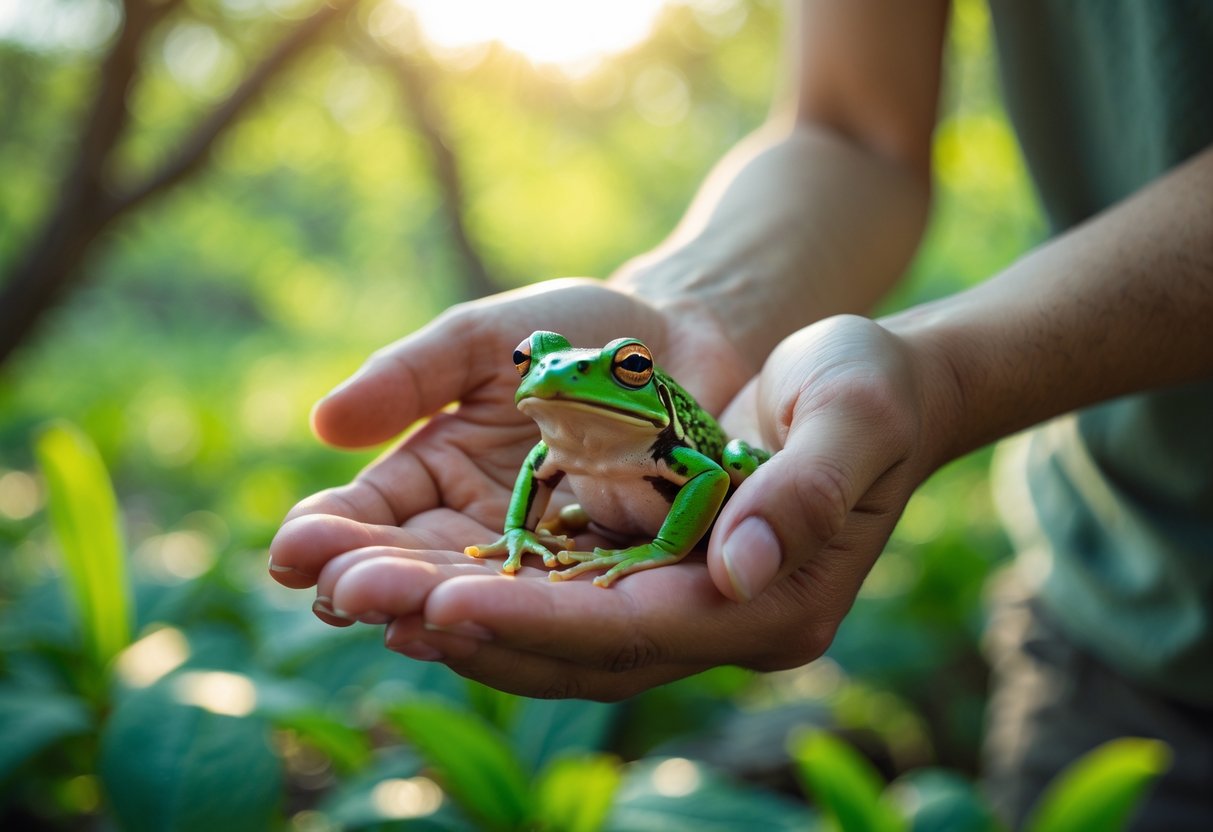
Honestly, frogs are surprisingly helpful in the yard. They chow down on bugs and mosquitoes, which is a win for everyone.
If you notice the frog seems hurt, reach out to a local wildlife expert for advice. Making your garden frog-friendly means you might see these visitors more often, and it’s a pretty cool way to keep things natural.
Finding a frog can be a fun little surprise, especially if you know what to do next. A few quick steps can help both you and the frog stay happy.
If you want more tips, check out this guide from the Toronto Zoo.
Immediate Steps When You Find a Frog
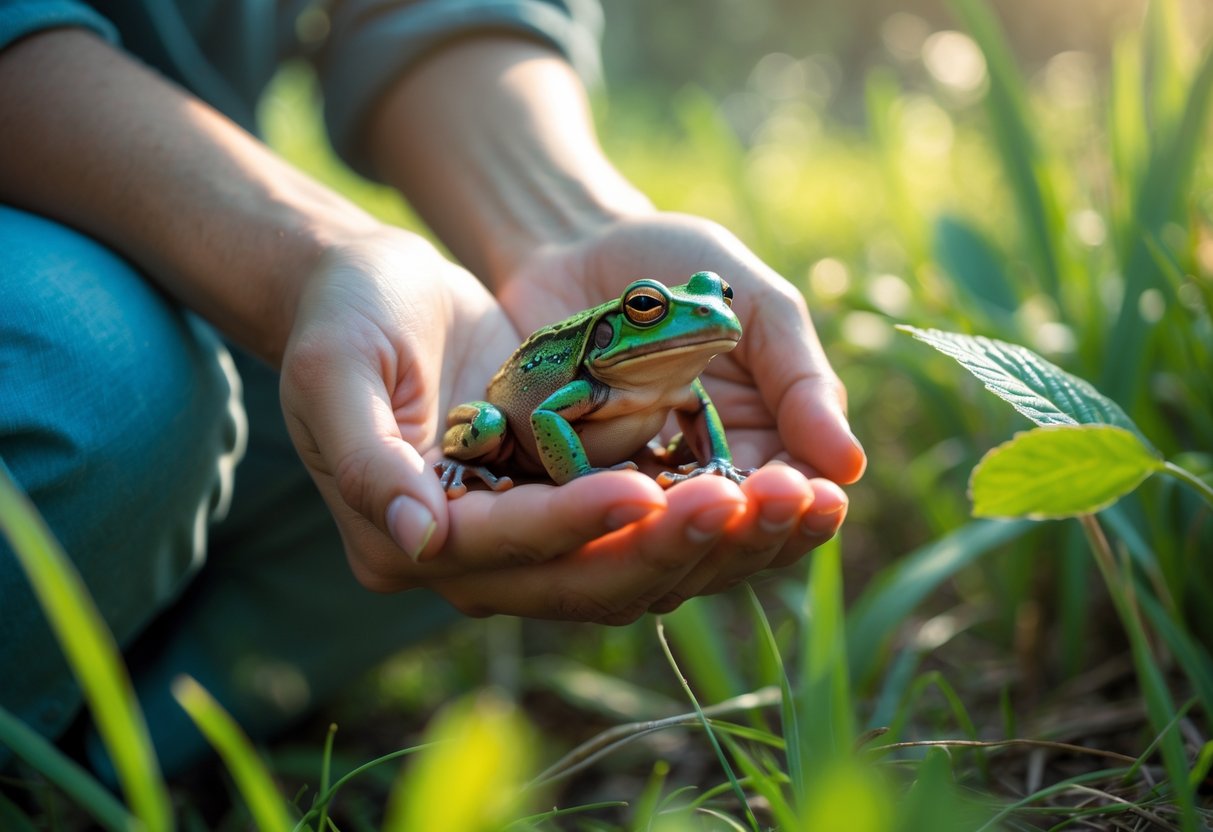
When you spot a frog, move carefully and think about what’ll keep the frog safe. Your main goal is to protect the frog and avoid stressing it out.
Where you find the frog—inside or outside—changes how you should handle things.
How to Safely Approach a Frog
Move slowly and quietly if you see a frog. Quick movements might spook it, and it’ll probably jump away or hide.
Try watching it from a short distance first to see if it looks healthy or hurt.
Don’t touch the frog with bare hands if you can help it. Their skin is super sensitive and soaks up oils or chemicals from your skin.
If you have to pick it up, rinse your hands with water (no soap), or use clean, damp gloves.
Handling Frogs Indoors Versus Outdoors
If you find a frog inside your house, your goal is to gently move it outside. Grab a small container or cup and use a bit of stiff paper or cardboard to scoop the frog up slowly.
Be careful not to squeeze or hurt it.
If you find a frog outdoors, leave it where it is unless it’s in danger. Frogs hang out in gardens, under plants, or near water.
If the spot seems risky, guide the frog to a safer place nearby, like under bushes or rocks.
Guiding or Relocating the Frog Safely
If you really need to move the frog, pick a spot close to where you found it. Frogs like to stick to familiar places, and moving them far away can cause trouble.
Choose a shaded spot with easy access to moisture, like under a shed, thick plants, or near a pond.
Stay away from areas with predators or lots of sunlight.
Let the frog go gently by setting the container down and tipping it slowly. Give the frog a moment to hop away when it’s ready.
Caring for Frogs and Their Habitats

If you find a frog, it helps to know which species you’re dealing with and how to keep it safe. Sometimes, it’s better to let the pros handle things.
Even small actions can make a big difference for the frog’s health.
Identifying Common Frog Species
Knowing the type of frog you have is the first step to helping it. You might see green frogs, gray treefrogs, or spring peepers.
Green frogs usually hang out near ponds and look dark green or brown. Gray treefrogs are smaller, can change color from gray to green, and often live in trees or bushes.
Spring peepers are tiny and super loud in early spring.
Each frog likes different things. Treefrogs need places to climb, while green frogs stick to water.
If you figure out which frog you have, you can give it better care.
Creating a Frog-Friendly Environment
Frogs need clean, damp spots to stay healthy. You can make a frog-friendly area with fresh water and some plants.
Put out a shallow dish of dechlorinated water and keep it filled. Add plants or branches so frogs can hide or climb, especially if you have a treefrog.
Skip gravel or rough surfaces to keep frogs from getting hurt.
Keep things shady and moist, but not soaked. Clean the area often and remove leftover food or waste so bacteria doesn’t build up.
If you want to keep the frog for a bit, learn what temperature and humidity it needs. Spring peepers like cooler, wet places, while green frogs prefer it warmer and swampy.
When to Call Wildlife Rescue
Sometimes you’ll spot a frog that’s hurt, sick, or just somewhere it really shouldn’t be—like on a busy road or inside your house. If you notice wounds, weird behavior, or the frog seems weak, go ahead and reach out to wildlife rescue.
If you stumble upon a frog that looks lost or you’re not sure how to help, it’s a good idea to ask the professionals. They’ll know what to do. Most of the time, it’s best to release wild frogs near where you found them, unless the spot isn’t safe.
Try not to handle frogs much, though. Their skin’s super sensitive and can soak up stuff from your hands that might harm them.
If you absolutely have to touch one, splash a bit of water on your hands first.
For more details, check out this guide to caring for frogs.


