
Ever hear frogs singing at night and wonder what’s really going on? It’s not just random noise—there’s actually a purpose behind all that croaking.
Frogs sing to attract mates and claim territory, especially near ponds where females lay eggs. Most of the time, it’s a bunch of males trying to show off and be noticed.
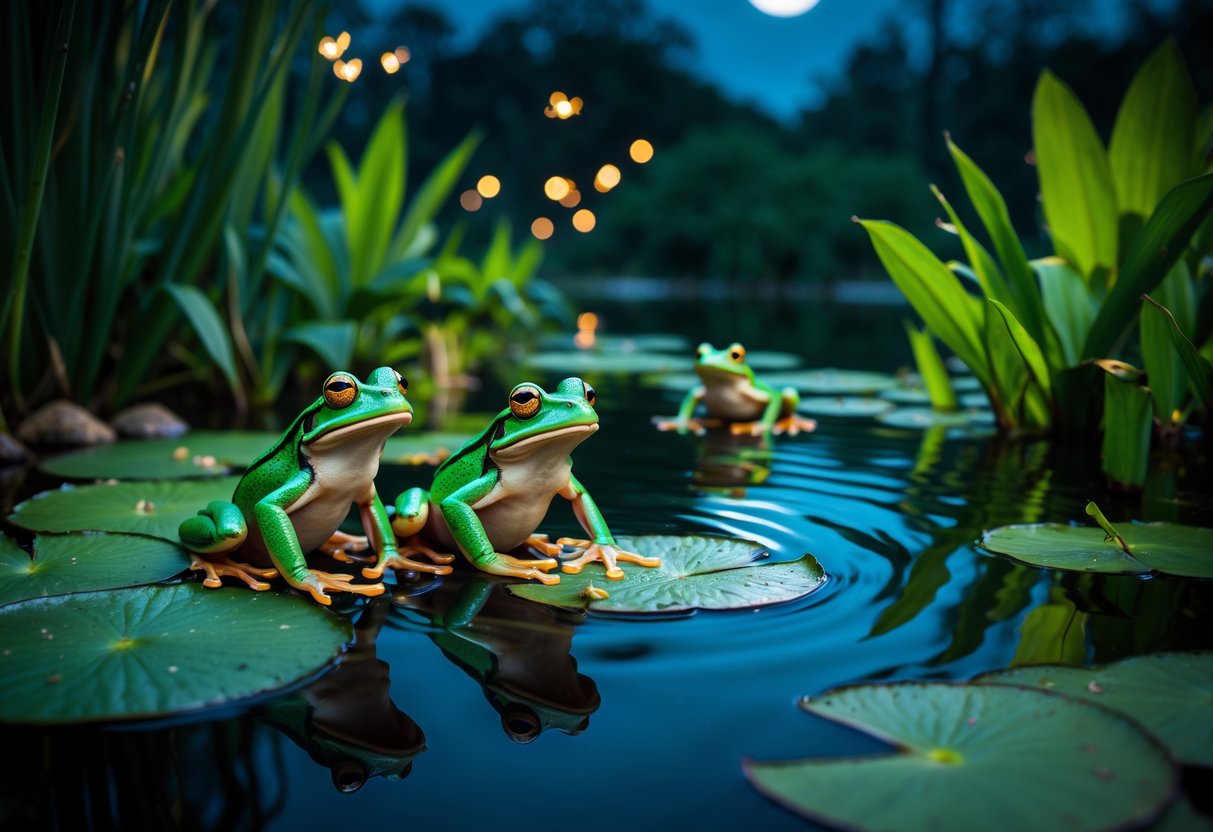
Frogs rarely sing alone. They usually gather in groups called “leks,” where lots of males call out together.
This group singing actually helps them stay safer—if a predator comes by, it’s harder to single one out in the crowd. Plus, the louder the group, the better the odds for each frog to find a mate.
So, next time you hear a bunch of frogs croaking, picture it as a busy dating scene full of competition and excitement. Their calls are more than just background noise; they’re signals that help frogs survive and keep their species going.
If you’re curious about why frogs sing together, this explanation about frogs singing around ponds is worth a look.
What Frogs Singing Means

When frogs sing, they use different sounds to send important messages. These calls help them find mates, guard their space, or even signal distress.
If you listen closely, you can start to pick up what the frogs around you are saying.
Mating Calls and Attraction
Frogs mostly sing to attract mates. Male frogs belt out loud, steady calls to let females know they’re ready to breed.
Each species has its own unique tones and patterns, so not all frog songs sound the same.
When a bunch of frogs sing together, each one tries to make his call stand out from the crowd. That way, females can pick the strongest or healthiest male.
Group singing also means predators have a harder time catching any single frog.
If you want to hear these calls, try listening near ponds or wetlands at night. The chorus frogs are a classic example of this kind of group singing.
You can check out their sounds in this video about chorus frogs singing.
Territorial and Aggressive Calls
Frogs don’t just sing for romance. They also use their voices to protect their territory.
Male frogs will make sharp or louder calls to warn others to keep their distance. This helps cut down on fights between males who want the same spot.
If you get close to a frog’s territory during breeding season, you might hear these more aggressive calls.
These sounds are usually sudden and much harsher than the regular mating calls.
By paying attention, you can tell when frogs are defending their turf. It’s an important part of keeping order around busy breeding ponds.
Release and Distress Calls
Sometimes, frogs sing because they’re in trouble. If a frog gets caught or is struggling, it might let out a sharp call to scare off a predator or call for help.
These distress calls are short and really loud. You might hear them if a frog is grabbed by something like a heron or a snake.
Frogs also use release calls if another frog gets too rough or mistakes them for a mate. It’s their way of saying, “Hey, let me go!”
If you know what to listen for, you’ll start to recognize these sudden, odd noises.
You can learn more about why frogs sing together in this article about frogs singing around the same tiny pond.
How and Why Frogs Sing Together

When frogs all croak around a pond, they’re doing more than making noise. They compete, attract mates, and try to stay safe.
The way frogs sing together follows certain patterns and depends on what’s happening around them. Singing in a group can bring both risks and rewards.
The Lek: Group Calling Behavior
A lek is a spot where lots of male frogs gather to sing near water. It’s kind of like a crowded stage, with each frog trying to get noticed.
The males call to bring in females, who come to lay eggs in the water.
Every frog’s song does two things: it warns other males to back off and invites females to come closer.
If two males call at the same time, things can get tense—they might switch to aggressive sounds or even fight over the best spot.
Group singing helps because the more frogs there are, the less likely any one frog will get eaten by a predator.
That’s why you’ll often hear ponds packed with frogs all singing at once.
Environmental Triggers for Singing
Frogs usually start their chorus when the conditions feel just right. You’ll notice the singing picks up in spring, when things warm up and there’s plenty of water.
Female frogs need water to lay eggs, so males gather there, hoping for the best shot at finding a mate.
Temperature, humidity, and rain all play a part in getting frogs to sing more. When it’s warm and wet, their bodies get ready for mating.
After a rain shower, you might hear a sudden burst of croaks. Light and the time of day matter, too—most frogs prefer to call in the evening or at night.
Risks and Benefits of Vocalizing
Singing uses up a ton of energy. If you’ve ever shouted for hours, you know how exhausting it feels. Frogs really wear themselves out when they sing, and that can take a toll on their health.
When frogs call, predators like herons can spot them pretty easily. Still, if a bunch of frogs sing together, it’s harder for a predator to single one out.
Here’s the upside: the more nights a male frog belts out his song, the better his odds are of attracting a mate. Frogs constantly juggle the danger of getting caught with the need to find a partner.
So, when you hear a whole pond croaking at once, you’re basically listening in on this nightly gamble.
If you’re curious and want to dig deeper, check out this article on frogs croaking in groups.


