
Ever wondered how frogs stay hydrated? Their method is honestly kind of wild.
Unlike most animals, frogs don’t gulp down water with their mouths. They actually absorb water straight through their skin, mostly from a special spot called the “drinking patch” on their bellies and thighs.
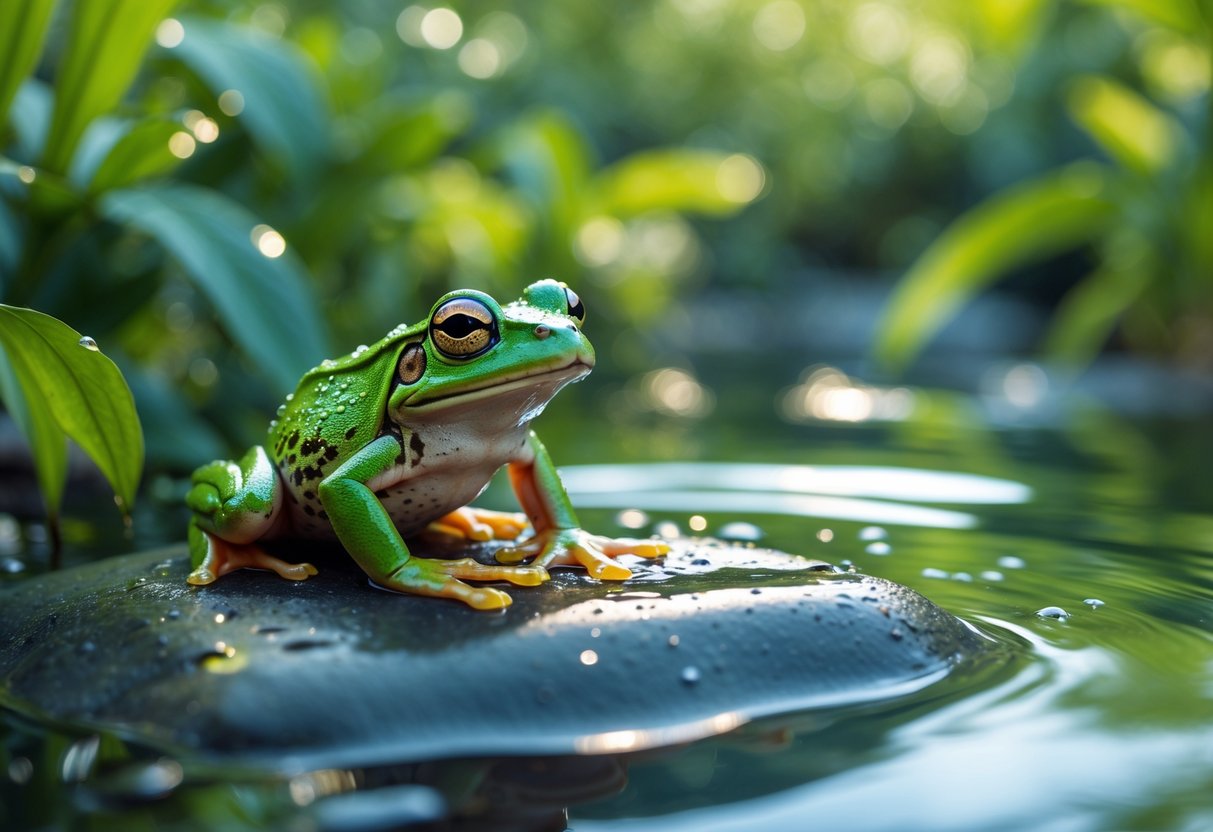
This approach keeps frogs moist and healthy, especially since they usually hang around wet places.
When you learn how frogs get water, you might start to see them in a whole new light. They’re just so perfectly made for their watery world.
Let’s dig into why frogs count on their skin to hydrate, and why it matters so much for their survival.
How Do Frogs Drink Water?

Frogs don’t drink water like humans do.
They use their skin and some specialized body parts to soak up water. This lets them stay hydrated, even though you’ll never catch them lapping up water like a cat or dog.
Cutaneous Absorption Explained
Frogs pull water right through their skin—a process called cutaneous absorption.
Water moves from the outside, through their skin cells, and into their bodies. They don’t need to swallow a drop.
Their skin acts almost like a sponge, drawing in moisture from wet ground or humid air nearby.
This trick is a lifesaver, especially in places where standing water gets scarce.
Instead of sipping, frogs just let their skin soak up the water they need to keep everything running smoothly.
Their skin stays soft and thin, which makes it easy for water to pass through. But here’s the catch: they have to keep their skin moist, or they’ll dry out fast.
The Role of the Drinking Patch
Frogs have a “drinking patch”—a smooth, thin patch of skin on their bellies and hind legs.
This spot works as their main water-absorption zone.
When a frog sits on something wet, it presses this patch right against the surface. The skin here is super permeable, so water flows in quickly.
This patch lets frogs rehydrate in a hurry, especially after a dry spell.
It’s kind of like a built-in water portal—nature’s way of giving frogs a shortcut to hydration.
Frog Skin and Permeability
Frog skin is incredibly permeable. Water and gases pass through with ease.
That’s not just for hydration—some frogs even breathe through their skin.
Their skin’s permeability depends on a layer of mucus that glands produce. This slimy film keeps their skin healthy and moist.
Without that mucus, water wouldn’t soak in nearly as well.
But there’s a downside. Pollutants and chemicals slip in just as easily, so dirty water can really harm frogs.
Clean water isn’t just nice for them—it’s crucial.
Since their skin does so much, frogs need to stick close to wet or humid places. That’s how they survive and thrive.
If you want to read more, check out How Do Frogs Drink Water.
Frog Hydration Needs and Habitats

Frogs need water to survive, but they get it in ways that are, well, pretty different from most other animals.
Their homes are usually damp, which helps them stay hydrated.
Different habitats and frog species affect how much water they need, and how they hang onto it.
Importance of Moist Environments
Frogs depend on moist environments to absorb water through their skin.
Their skin is thin, almost see-through, and it needs to stay wet for water to get in.
If things get too dry, frogs lose water fast and risk dehydration.
Places like ponds, puddles, and streams give frogs the moisture they need.
Even damp soil works in a pinch.
If you keep a frog as a pet, you’ll want to keep the humidity between 50% and 60%. That way, their skin stays healthy.
Common Water Sources for Frogs
Frogs don’t lick or swallow water.
They soak it up through their skin.
You’ll spot wild frogs near shallow water—think puddles, streams, or the edge of a pond. These spots let them sit and soak up moisture.
Moist soil and wet leaves also help.
If you have a pet frog, always give them a bowl of clean, dechlorinated water. Make sure it’s big enough for the frog to sit in, so their “drinking patch” touches the water.
Hydration in Terrestrial Frogs
Terrestrial frogs live mostly on land, away from lakes or rivers.
They still need wet or humid places to stay healthy.
These frogs look for little water patches—like wet leaves or damp soil—to absorb water.
They don’t spend much time in water, so they need more humidity in their homes.
If you’re keeping one, mist the tank every day or use a fog machine. That’ll help mimic their natural, moist environment and keep their skin ready to absorb water.
Adaptations for Water Conservation
Some frogs have figured out clever ways to save water when things get dry. A lot of them grow a waxy coating on their skin, which actually slows down water loss from evaporation. That simple trick helps frogs hang on in places where finding water isn’t always easy.
You’ll notice some frogs will change up their routine, too. They might hide out in cool, damp spots during the hottest part of the day. That move helps keep their skin from drying out.
If you’re keeping a frog, you can help out by making sure its home has the right mix of moisture and airflow. That way, you avoid both dehydration and annoying skin infections.
Curious about how frogs stay hydrated? Check out Frog Hydration Basics.


