
Salt can really mess up a frog’s day. When it touches a frog’s skin, it actually pulls water right out of their body.
This dehydrates them and damages their skin, which can cause some pretty serious health issues—or even kill them over time.
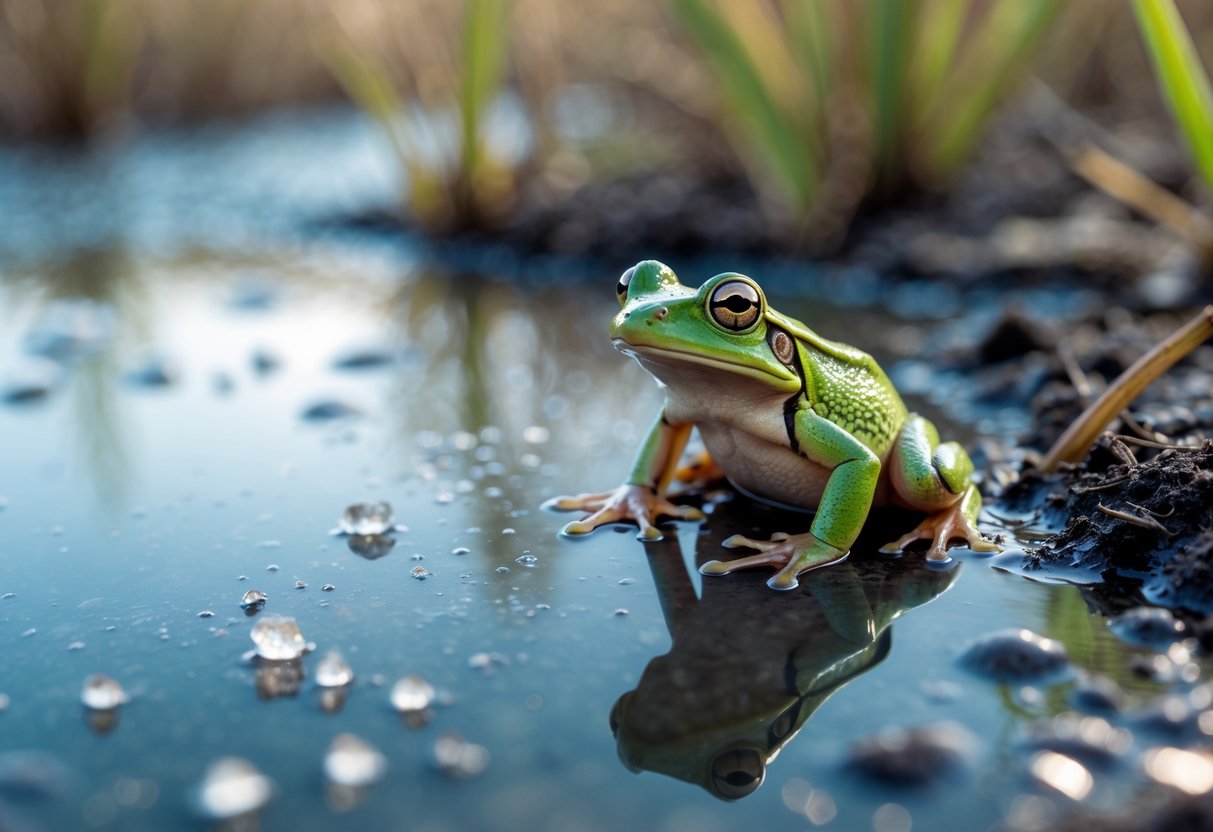
Frogs have super delicate and permeable skin, so they soak up water and nutrients directly from their surroundings. Salt throws this balance way off, making it tough for frogs to stay healthy.
Honestly, it’s kind of wild how frogs react to salt. Some species don’t seem to mind it as much, but none of them are really safe if there’s too much salt around.
How Salt Affects Frogs and Amphibians

Salt messes with frogs and toads by throwing off their water balance and body functions, especially when they’re young. If amphibians run into salt, they can get dehydrated, have trouble handling water and salt, and even see their eggs and tadpoles get hurt.
Salt Exposure and Dehydration
When frogs touch salt, it pulls water out through their skin. Salt makes the outside of their bodies more concentrated, so water leaves their cells to try to even things out.
If you keep exposing frogs to salt for a while or use a lot, they’ll get really dehydrated. That kind of dehydration can damage their organs and eventually kill them.
Since frogs and toads have thin, sensitive skin, they’re at extra risk. Even a little salt can make frogs lose too much water.
This can leave them sluggish, less able to hunt, or unable to get away from predators.
Disruption of Osmoregulation in Frogs
Frogs depend on osmoregulation to keep their water and salt levels just right. When they end up in salty places, their bodies struggle to keep things in balance.
Salt exposure can mess up this system. Too much table salt (sodium chloride) confuses their cells and organs, especially the kidneys, which work overtime to get rid of extra salt.
This can throw off important electrolytes like sodium and potassium, which frogs need for muscles and nerves. When osmoregulation breaks down, frogs might not grow well and their immune systems get weaker.
Impacts on Frog Eggs and Tadpoles
Salt hits frog eggs and tadpoles even harder than adults. Eggs in salty water might not hatch at all, or they might die before becoming tadpoles.
Tadpoles that get exposed to salt can grow slower or develop weirdly. Extra salt in their bodies hurts their organs and messes with how they function.
Some frog species can handle a little salt, but most eggs and tadpoles can’t. If salt levels get too high, fewer frogs survive, and whole populations can start to shrink.
If you want to dig deeper into the science, check out Effects of Salt on Frogs: Can Salt Kill Them?.
Salt as a Frog Repellent and Environmental Concerns

Salt affects frogs in a few ways, both as a repellent and through environmental fallout. Knowing how salt works—and what problems it causes—can help you make smarter choices around your yard or local wetlands.
How Salt Repels and Gets Rid of Frogs
Salt keeps frogs away by pulling moisture from their skin. Since frogs need moist skin to breathe and survive, salt is a big problem for them.
If salt touches a frog, it dehydrates them fast. That’s painful and, honestly, can be deadly.
People sometimes sprinkle salt around yards or ponds to keep frogs away, but it’s not a humane method. Most experts say salt isn’t very effective or kind for repelling frogs.
There are definitely safer ways to keep frogs away if you need to.
Salt Runoff and Environmental Pollution
Salt runoff comes from things like road salt and other sources where salt dissolves and washes into the land or water nearby. This runoff raises salt levels in places where frogs live.
Frogs react badly to salty water, and this can mess with their growth and health. High salt pollution makes frog populations weaker.
You’ll see things like bloating, slow growth, and deformities in tadpoles. Road salt, which people use in winter, is a huge reason for this pollution.
It sticks around in the environment for years, so the effects don’t just go away after winter ends. Salt runoff also hurts other animals and plants, making pollution a tough problem to manage.
Freshwater Habitats and Conservation Efforts
Frogs really depend on freshwater spots like ponds and wetlands. If these places get too salty, frog populations can take a hit, so keeping salt levels low matters a lot.
People working in conservation try to cut down on salt pollution. They push for better ways to manage road salt and encourage using alternatives for de-icing.
You can actually make a difference, too. Try using less salt around your home, and maybe back local policies that protect these watery habitats.
When you help keep these environments clean and not so salty, frogs get a better shot at thriving. Plus, all the other critters that live there benefit as well.


