
You can totally keep a frog in your house, but honestly, it’s not as simple as just bringing one home. Frogs really need the right environment—think humidity, temperature, and enough space—if you want them to stay healthy indoors.
If you’re considering a frog as a pet, you’ll need to set up a tank that feels like their natural habitat. There’s no shortcut here.
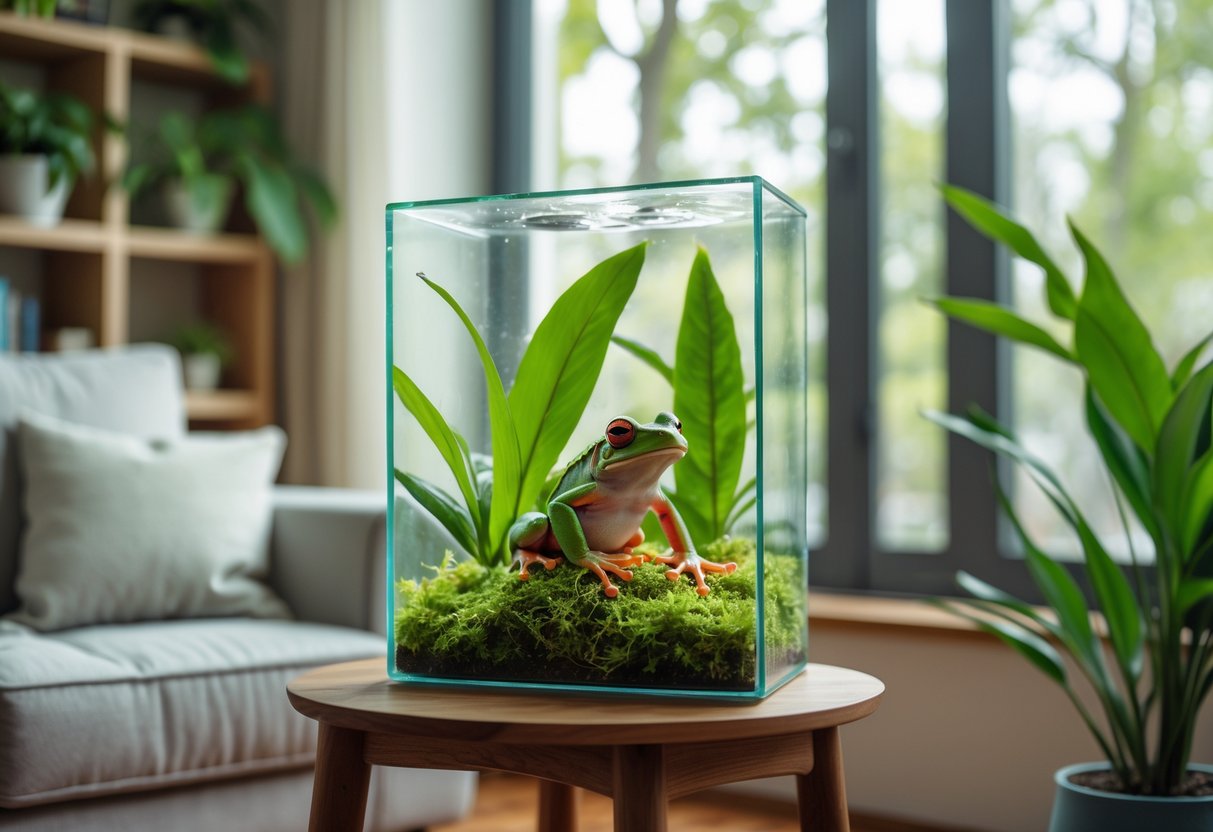
Frogs can be fascinating little creatures, and they’ll even help out by eating bugs. But don’t expect them to be low-maintenance like a goldfish or a hamster.
You’ll have to get familiar with their needs—clean water, the right food, and a safe spot to live. If you get these basics down, you’re way more likely to enjoy having a frog at home.
Can I Keep a Frog in My House?

You can keep a frog indoors, but you’ll need to plan ahead. Think about local laws, which type of frog you want, and where you’ll get it from.
These things matter if you want your frog to thrive and want to avoid headaches down the road.
Legal and Ethical Considerations
Before you bring a frog home, check your local rules. Some frogs, like cane toads, are actually banned in a lot of places because they’re bad news for native wildlife.
Others, like bullfrogs, might require a permit. It’s kind of a hassle, but it’s important.
Ethics come into play, too. Try not to take frogs from the wild—it’s rough on their populations and not great for the environment.
Go for captive-bred frogs instead. They’re usually healthier and don’t hurt wild populations. Always check guidelines for your area so you don’t get into legal trouble.
Choosing the Right Frog Species
Different frogs need different care setups. Tree frogs love humidity and vertical space for climbing, since they spend most of their lives off the ground.
Bullfrogs, on the other hand, want a bigger tank with both water and dry spots, since they hang out near ponds and streams.
Cane toads are huge and can actually secrete toxins, so only experienced folks should try keeping them. It’s worth taking time to research the size, diet, and habitat for the frog you’re interested in.
That way, you’ll set them up for a happier life.
Wild-Caught vs. Captive-Bred Frogs
Wild-caught frogs often bring diseases and usually don’t settle well into home life. They also put extra pressure on wild populations.
Captive-bred frogs, though, are much safer for you and better for conservation. If you’re picking a frog, go with a reputable breeder.
Captive-bred frogs grow up in clean environments and usually handle captivity better. This is especially true for popular pets like tree frogs.
You’ll probably deal with fewer health issues and less stress if you make this choice.
Choosing captive-bred frogs means you’re doing your part for responsible frog care and helping wild populations at the same time.
For more info, check out this guide on Can You Keep a Frog in an Aquarium.
How to Create a Safe and Healthy Environment for Frogs
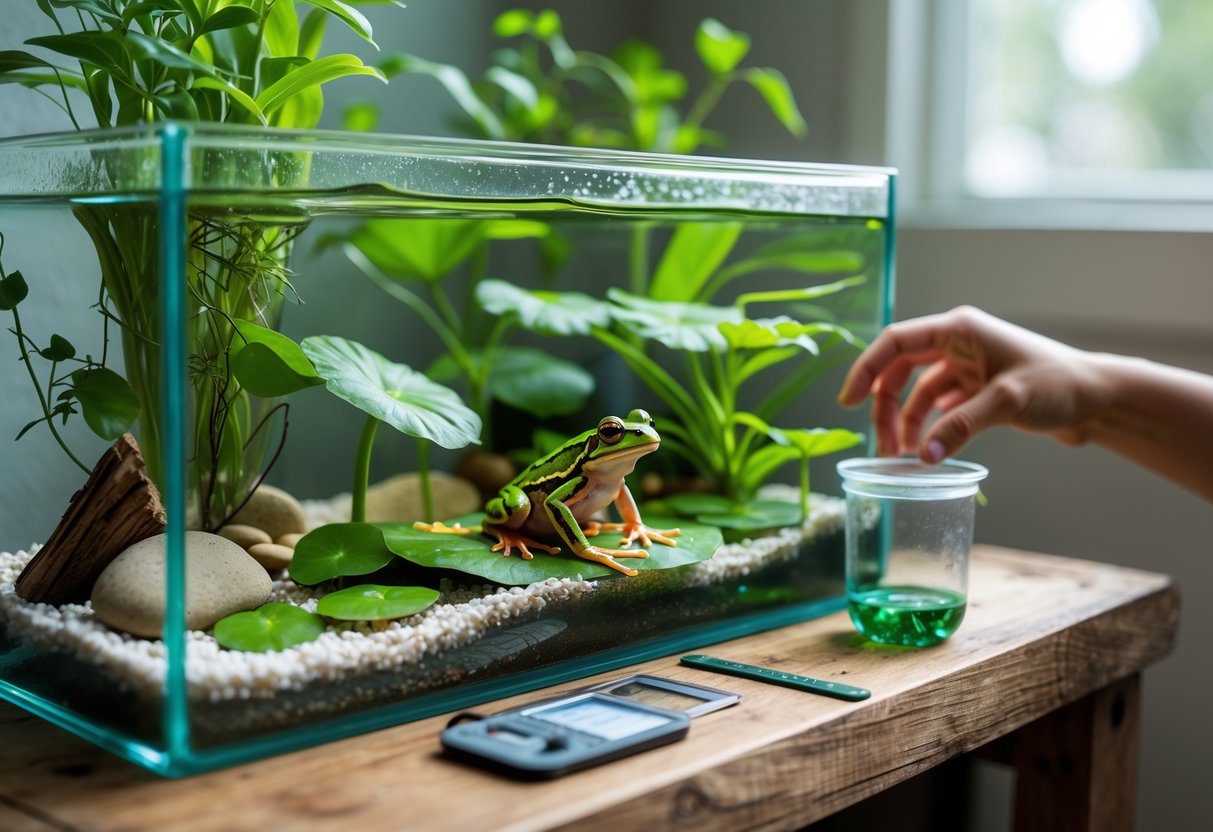
If you want your frog to be happy, you’ll need to nail the home setup, keep the temperature and humidity in the right range, and provide the right food and clean water.
All of these things matter a lot for a healthy frog.
Enclosure Setup and Size
Match your frog’s enclosure to its species and size. Tree frogs do best in tall tanks with branches and plants so they can climb.
Bullfrogs like wide, shallow tanks with plenty of room to move.
A 10-20 gallon tank works for one frog, but if you want more than one, go bigger to avoid crowding. Use natural stuff like moss, bark, or coconut fiber for the substrate.
Give them hiding spots—plants, logs, or smooth rocks work well. These spots help your frog feel safe and less stressed.
Make sure you use a tight lid so your frog doesn’t make a break for it.
Temperature and Humidity Requirements
Frogs need steady temperatures. Most like it warm during the day—75-85°F (24-29°C) is the sweet spot.
At night, you can let it drop to around 65-75°F (18-24°C). Use a low-wattage heat lamp or a heating pad to keep things steady.
Humidity is a big deal, too. Tree frogs want 50-60% humidity.
Bullfrogs and other land frogs do better with 60-70%. Mist the enclosure every day or set up a small automatic mister if you want to make life easier.
Live plants like ferns or moss help keep things moist. Use a hygrometer to check humidity levels.
If it’s too dry, mist more often. Too wet? Open things up for more air to stop mold from growing.
Diet and Water Quality
Frogs love to eat live insects like crickets, mealworms, or flies. Try to feed your frog small, healthy insects a few times a week, and make sure you gut-load them with nutritious food.
Don’t use wild insects—those might carry pesticides or who knows what else.
Water matters a lot. Always use dechlorinated water. Chlorine and other chemicals in tap water can really hurt frogs.
If you’ve got a terrestrial frog, swap out the water in its shallow dish every day.
Bullfrogs usually like having a little water area to soak in. Tree frogs, on the other hand, get their moisture from misting and a humid environment.
Make a habit of cleaning the water dish often. That way, bacteria won’t build up and your frog stays safe.


