
If you spot a frog in your garden or even inside your house, you usually don’t need to do much. Frogs are harmless, and they actually spend a surprising amount of time on land.
Unless the little guy’s in immediate trouble, you can just let it be. They show up in gardens because, well, there’s food and maybe a nice spot to hide.
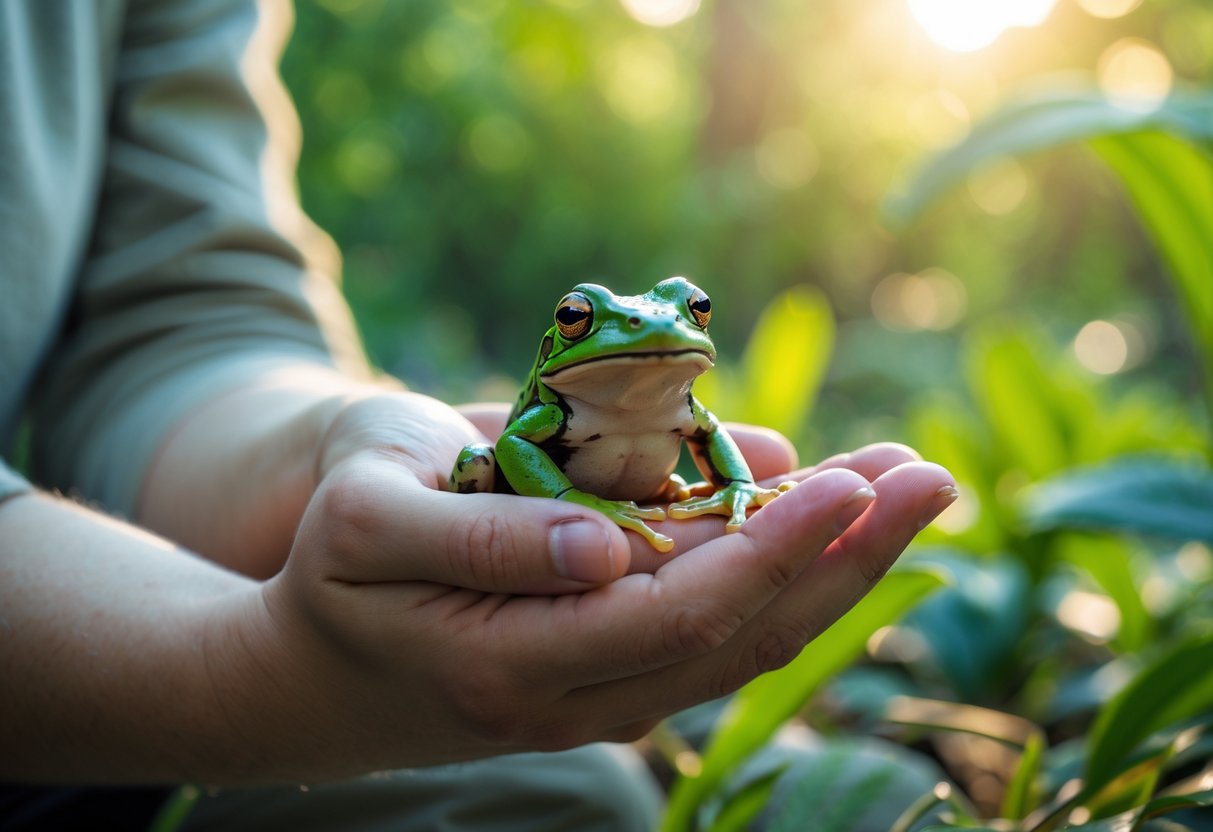
If you notice the frog stuck in a risky spot—maybe near a busy road or smack in the middle of your yard—just move it gently to a quieter area with some cover. You can actually make your garden more frog-friendly with things like log piles or a pond; they’ll feel right at home and stay safer.
Finding a frog can be a cool way to connect with the wildlife in your neighborhood. When you know what to do, you can help protect these small visitors and enjoy seeing them around.
Immediate Actions If You Find a Frog
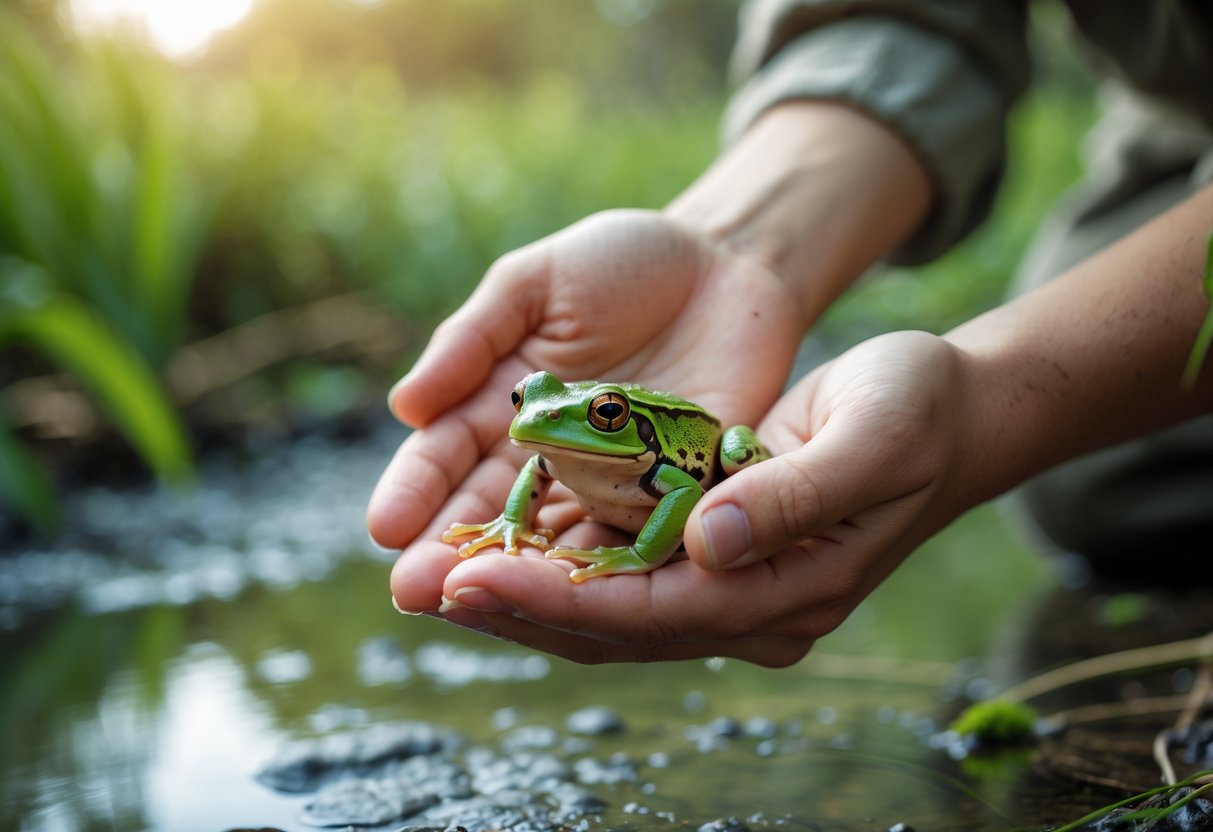
When you come across a frog, your first moves should keep both you and the animal safe. Figuring out what kind of amphibian you’ve found, handling it gently, and making sure it has a safe spot all help.
Stay Calm and Assess the Situation
Take a second and breathe. If you startle the frog with quick movements or loud noises, it’ll probably panic.
Look around. Is the frog in any real danger? Check if it’s close to a road, a spot with lots of predators, or trapped somewhere it can’t escape.
If the frog looks healthy and safe, just leave it be. If it’s hurt or stuck, get ready to help—but try not to stress it out.
Only pick it up if you absolutely need to move it somewhere safer.
Distinguish Between Frog, Toad, and Other Amphibians
Frogs usually have smooth, moist skin and long legs that help them jump. Toads, on the other hand, have bumpier, drier skin and shorter legs, so they tend to walk or take little hops.
You might see other amphibians too, but frogs and toads are the usual visitors in gardens.
If you know whether it’s a frog or a toad, you’ll get a better idea of what kind of place it prefers.
Frogs stick closer to water, while toads are more comfortable on dry land.
Create a Safe Environment for the Frog
If the frog or toad looks exposed, just find a quiet, sheltered spot for it.
Try placing it under thick bushes, in a pile of leaves, or near damp ground where it can hide and snack on bugs.
Skip putting it in bright sunlight or wide open spots—birds and cats might notice it there.
Make sure there’s water nearby, but avoid ponds packed with predators.
This gives the frog a chance to rest and recover if it needs to.
Safely Capture and Handle the Frog
If you have to move the frog, use clean hands or damp gloves. That way, you won’t hurt its sensitive skin.
Gently cup the frog, but don’t squeeze. They’re fragile, so be extra careful.
Keep handling brief to lower the frog’s stress.
Set it down in a shady garden spot or somewhere close to water.
Don’t move frogs or toads far from where you found them—doing that can spread diseases or mess up local populations. For more advice, check out I found a frog – FAQ.
Releasing, Caring, and Preventing Frog Encounters
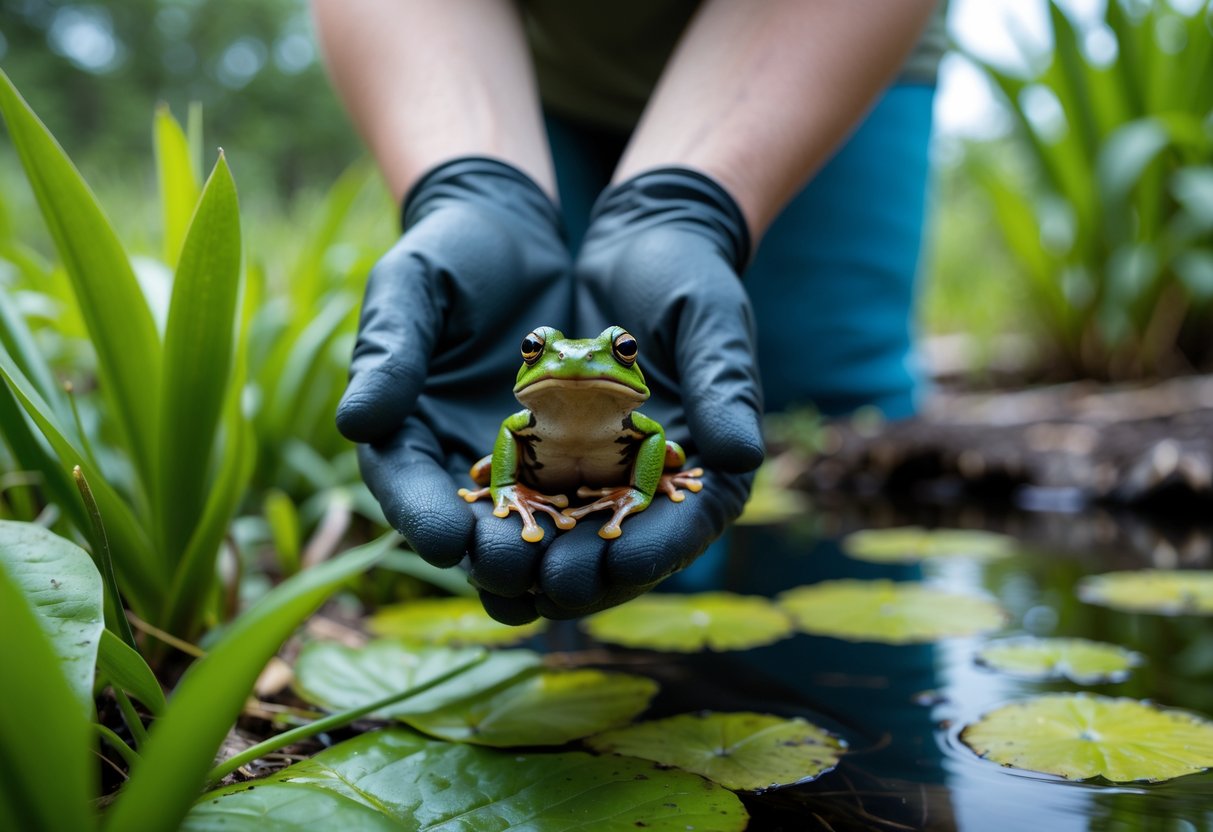
When you find a frog or toad, handle it gently and put it back somewhere safe. If you know how to care for injured frogs and keep them out of your house, you’ll help these amphibians and keep things comfortable at home.
You can even attract frogs to your garden if you want to see more of them around.
Where and How to Safely Release the Frog
Let the frog go near where you found it. If it was in danger, just move it to a spot close by with lots of cover—think thick plants, under a log, or near water.
Keep it away from roads or open spots where predators hang out.
Always let frogs go in a place that’s similar to where you picked them up. That way, they can find food and shelter on their own.
If you release frogs from somewhere else, they might carry diseases or get lost trying to find their old home.
Helping Injured or Vulnerable Frogs
If you find an injured frog, place it in a calm, shaded spot where predators and harsh weather can’t get to it.
Good places include under leaves, in thick bushes, or by a compost pile.
For small scrapes, a quiet spot like that helps the frog heal up.
If the frog looks badly hurt, reach out to a vet who knows about amphibians. Some towns actually have vets who treat wild frogs.
Sometimes, even with help, a badly injured frog might not make it.
Discouraging Frogs From Entering Your Home
Frogs can wander inside by accident while looking for food or shelter.
To keep them out, check doors, windows, and vents for little gaps and seal them up.
Try to keep outdoor lights low or off at night, since lights attract bugs—and bugs attract frogs.
Don’t leave standing water near your house, since frogs love damp places.
Cleaning up piles of leaves and outdoor clutter also cuts down on hiding spots right next to your home.
How to Attract Frogs Responsibly to Your Garden
If you want to attract frogs, try making a natural pond or a damp spot in your yard. Toss in some reeds or lilies—frogs love hiding under those.
Skip the chemicals and pesticides. They really mess with frogs and can hurt more than just them.
Scatter a few logs, stones, or thick plants around the water. Frogs need places to duck out of sight, especially when they’re feeling shy or threatened.
You’ll probably notice most frogs showing up during their breeding season, which usually happens in spring or early summer. Honestly, it might take a year or two before frogs start calling your pond home, so don’t get discouraged if it’s quiet at first.
Let the frogs come on their own terms. That way, you’ll help them stay healthy and give your local ecosystem a little boost too.
For more details, check out I found a frog – FAQ – The Frog Lady.


