
When you spot a frog, the best thing to do is usually just leave it alone—unless it’s actually in danger. Frogs tend to wander through gardens or yards, and honestly, they help out a lot by eating pesky bugs.
If you notice a frog that looks trapped or at risk, go ahead and gently move it to a safer spot nearby, somewhere with good cover.
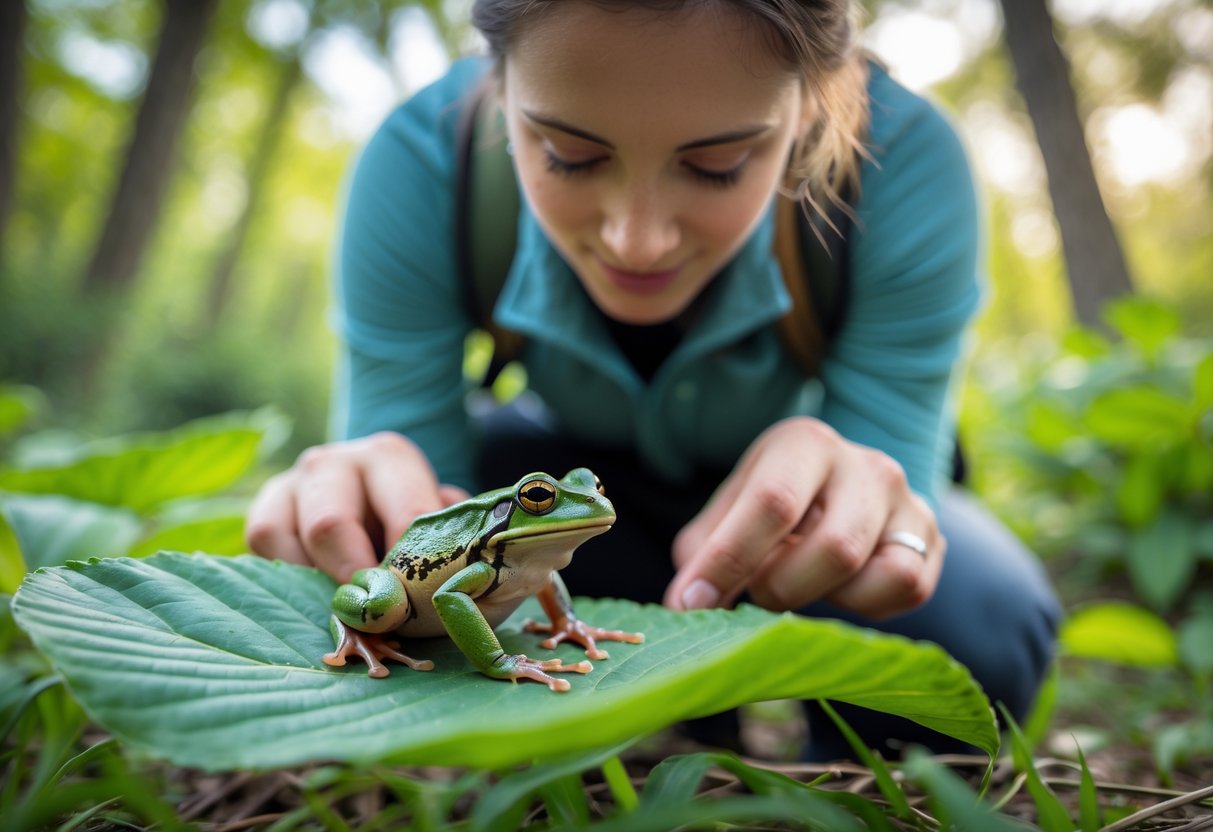
You might come across frogs in all sorts of places—maybe your garden, maybe even inside your house, especially during certain times of the year.
Frogs like cool, damp spots and often tuck themselves under leaves or hang out near water. If you know what to do, you can help keep the frog safe and your space friendly at the same time.
Frogs are honestly kind of fascinating, aren’t they? Seeing one can feel like a tiny bit of magic in your day.
Whether it’s hopping across your path or hiding out in a shady corner, knowing how to react means you can help out without causing any trouble.
Immediate Steps to Take When You See a Frog
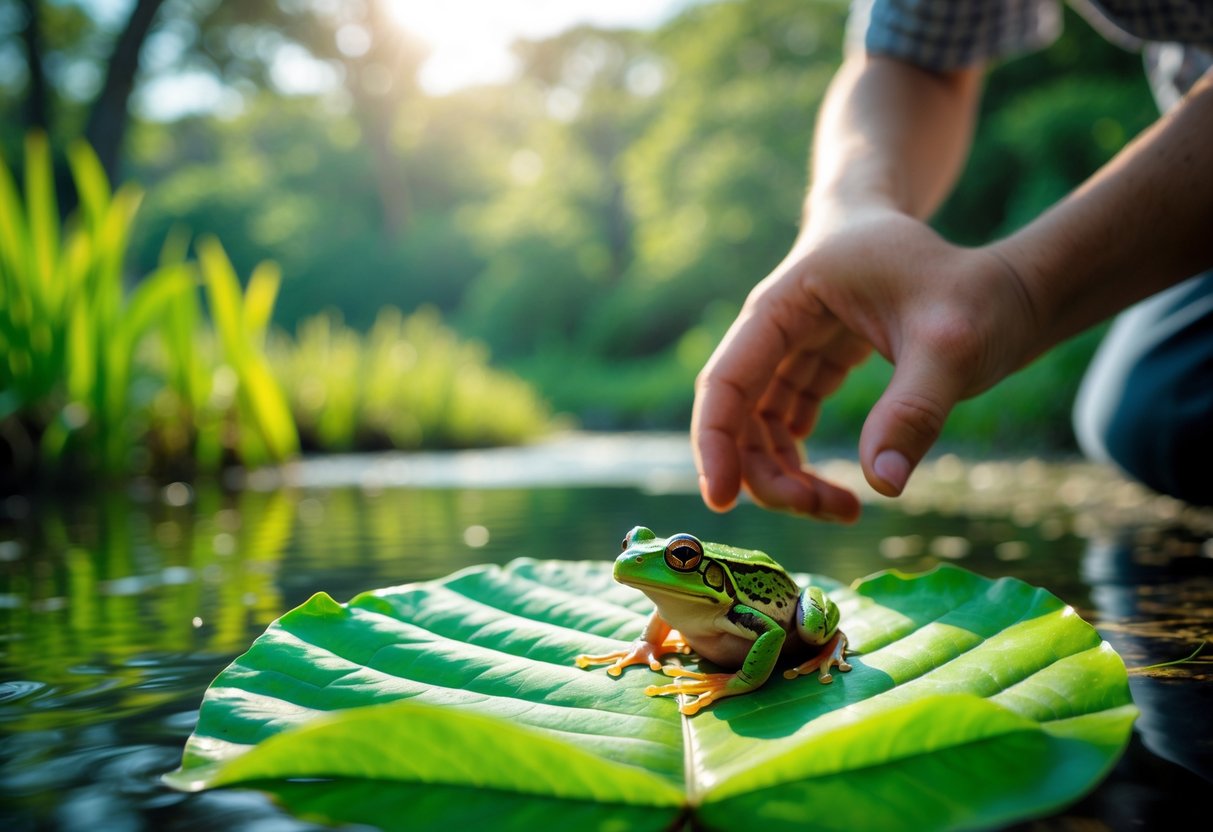
When you see a frog, your first move should be to keep both you and the frog safe. Try to stay calm and approach the situation with care.
It helps to pause for a second and think about what makes sense before getting closer.
Stay Calm and Observe From a Distance
Don’t make any sudden moves that could scare the frog off. Just stand still and watch from a comfortable distance.
Frogs get stressed out pretty easily and might bolt if you rush up to them.
Take a moment to see exactly where the frog is and, if you can, what kind it might be. Not every frog is safe to touch—some can release stuff that irritates your skin.
By just watching quietly, you give yourself a chance to figure out your next step. If you do need to move the frog, staying calm really helps.
Keep Pets and Children Away
Pets—especially dogs and cats—often see frogs as toys or snacks. That’s not good for the frog, and honestly, it could be risky for your pet if the frog is toxic.
Make sure kids know not to pick up or chase the frog. Children are curious by nature, but rough handling can hurt frogs or spread germs.
If the frog wandered inside, keep pets and kids away from that room. You could close a door or just move everyone to a different space until you sort things out.
Decide if Intervention Is Needed
If the frog is outside and nothing’s threatening it, just let it be. Frogs do a great job keeping insect numbers down.
If you find a frog indoors, you should gently help it get outside. Grab a container with holes or simply open a door and try to guide it out.
Try not to touch frogs with your bare hands. If you have to pick one up, be gentle and remember to wash your hands afterward to avoid spreading bacteria.
For more details on getting frogs out of your house, check out this guide on what to do if there is a frog in your house.
Safe Handling, Relocation, and Attracting Frogs

If you need to handle a frog, do it gently and move it carefully. Picking the right place to release it outdoors really matters for its safety.
If you actually want frogs to visit your garden, there are some pretty easy ways to make your space more welcoming.
Guidelines for Safe Frog Removal
Use clean, damp hands or disposable gloves when you handle frogs. Their skin is super sensitive, so skip any lotions or soaps before touching them.
Move slowly and quietly so you don’t startle the frog. If you catch it, loosely cup your hands around it—don’t squeeze.
If the frog’s tricky to reach, you could use a soft net, but be gentle. Put the frog in a container with holes and something damp inside, like moss or a wet paper towel, to keep it comfortable during the move.
Don’t leave the frog out of water for long, and definitely keep it away from direct sunlight or extreme heat.
Where and How to Release Frogs Outdoors
Pick a natural, damp spot near water—ponds, streams, or wetlands are perfect. Look for places with plants, logs, or rocks, so the frog has somewhere to hide from predators and weather.
Release the frog close to the water’s edge, but not right into a fast-moving stream. Set the container down and tip it so the frog can hop out by itself.
Try to find a spot far enough from your home that the frog won’t just come back, but close enough that it can easily find food and shelter. That way, the frog can settle in quickly and safely.
Tips to Attract Frogs to Your Garden
Try adding a small pond or just keep a water feature that stays nice and moist. Frogs need water around to breed and stay hydrated, so a little splash zone goes a long way.
Put in plenty of leafy plants and tall grasses for hiding spots. Frogs love sneaking away during the day, and these plants give them a safe place to chill. Skip the pesticides or harsh chemicals—those can hurt frogs and wipe out the bugs they snack on.
Scatter a few logs, rocks, or even some garden debris for extra shelter. Shaded, cool spots help frogs rest and dodge predators.
Grow native flowers to attract more insects. The more food hopping around, the more likely frogs will stick around your garden.
If you want to learn about catching and relocating frogs safely, check out RidMyCritters.com.


