
Did people really put frogs in milk to keep it fresh? Actually, yes—back in the day, folks in parts of Russia and Finland would drop live frogs into milk to slow spoilage before fridges were a thing. It sounds a little bizarre, and maybe a tad gross, but this old tradition has some roots in both folklore and, weirdly enough, science.
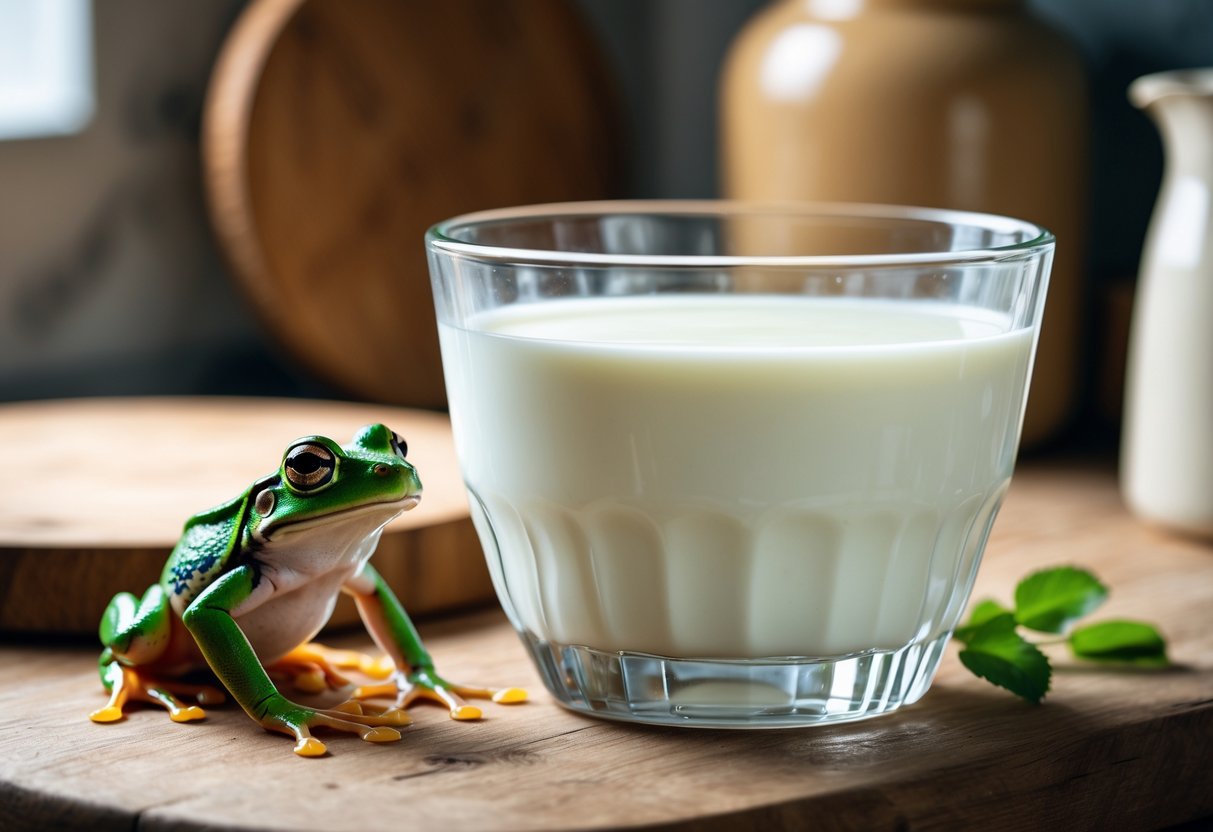
So, how could a frog possibly help preserve milk? Well, frogs release natural compounds that fight certain bacteria, which is probably why this odd trick worked better than you’d think.
It’s not exactly something you’d want to try at home now, but learning about this strange habit gives us a glimpse into how people leaned on nature to solve everyday problems.
If you’ve ever wondered about weird food customs or how people kept things fresh without modern tech, the story of frogs in milk is a pretty wild example.
Let’s get into how this tradition popped up and what science says about it.
The Practice of Putting Frogs in Milk

It might seem odd, but a long time ago, people used a pretty strange method to keep milk from going bad.
They’d actually put live frogs right into their milk containers and noticed that the milk soured more slowly.
This wasn’t just a quirky superstition—they relied on the natural properties of certain frogs to protect their milk before fridges came along.
Russian and Finnish Folk Traditions
In some Russian and Finnish communities, tossing a live brown frog into a bucket of milk was just normal.
People realized the milk stayed fresh longer with a frog inside, even if they didn’t know why.
They just kept passing the trick down, generation after generation.
The European brown frog, the usual choice, has skin that releases substances fighting bacteria.
That meant milk didn’t spoil as fast. It’s kind of amazing how folk wisdom and nature teamed up to solve a daily hassle.
The whole thing was simple and surprisingly effective, especially where people didn’t have cool storage.
Milk Preservation in Pre-Refrigeration Times
Before fridges, keeping milk from turning was a real headache.
People tried things like storing milk in springhouses or fermenting it, but not everyone had those options.
In some rural spots, frogs offered a natural fix.
The frog’s skin makes antimicrobial peptides—basically, chemicals that stop bacteria from growing.
With a frog in the milk, spoilage slowed down. The frog acted like a tiny, living shield against the germs that make milk sour.
That was a big deal in cold places where fresh milk was essential and refrigeration was rare.
Historical Anecdotes and Farmers’ Experiences
Farmers used to share stories about frogs “guarding” their milk.
Many said their milk didn’t go sour as fast when a frog was in the bucket.
Some even noticed the trick worked best in summer, when spoilage happened quickest.
These old stories gave scientists a reason to dig deeper.
Researchers now see these frogs as tiny, natural pharmacies—helping in ways nobody expected.
It’s wild to think how much practical experience shaped food safety before science caught up.
If you want more on this quirky tradition, check out the story of the European brown frog’s role in milk preservation.
Scientific Explanations and Modern Insights
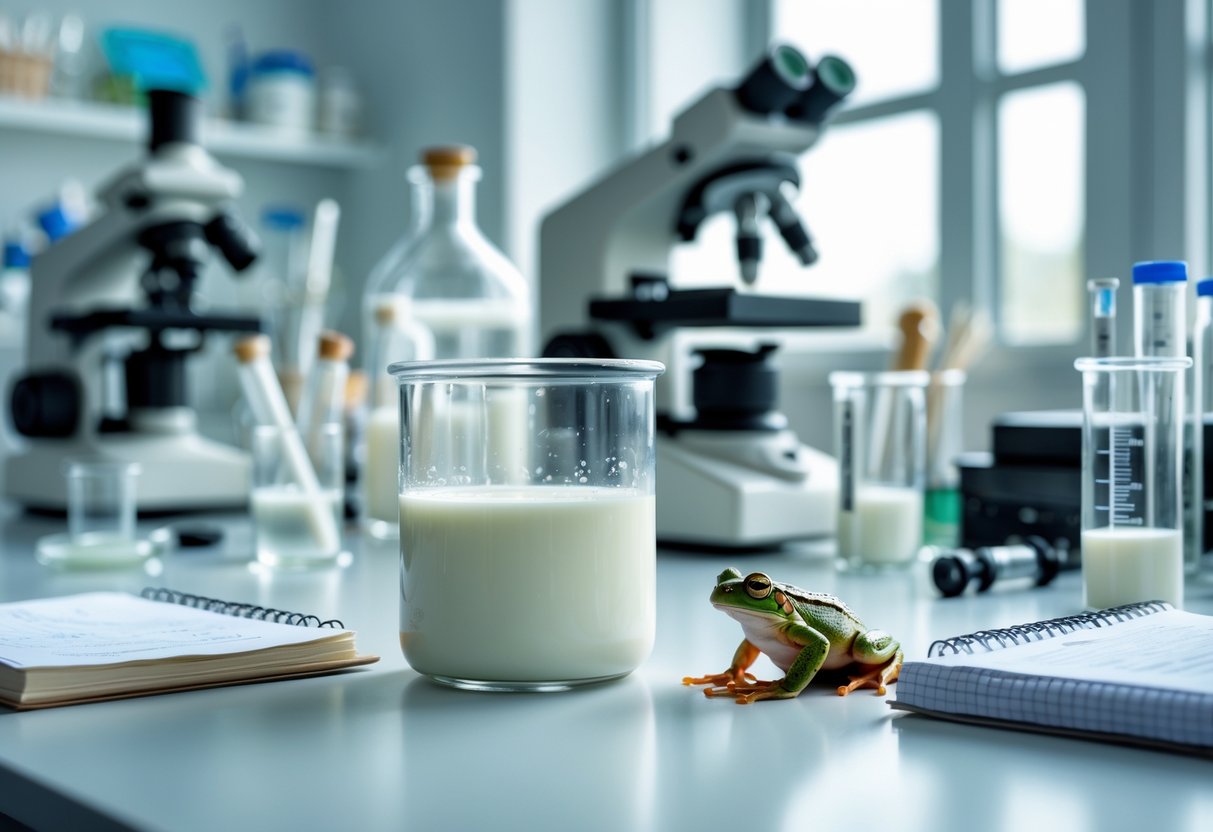
So, how did frogs actually keep milk fresh? The secret’s in the special stuff on their skin.
These natural chemicals fight off bad bacteria and have even inspired new ideas for medicine and hygiene.
Antibacterial Properties of Frog Secretions
Some frogs have skin that makes unique secretions—basically, natural antibiotics.
These secretions have tiny protein fragments, called peptides, that either stop bacteria from growing or kill them.
The European brown frog (Rana temporaria) produces especially powerful antimicrobial peptides.
These peptides can break down bacterial cell walls or mess with how bacteria work, making it tough for them to survive.
One of these, called Brevinin 1Tb, is especially good at fighting the bacteria that spoil milk.
That’s why people in Russia and Finland dropped frogs into milk—those peptides gave them a simple way to slow down spoilage.
Rana temporaria and Its Role
The common frog, or Rana temporaria, played a starring role in this old-school milk hack.
You’ll find this frog all over Europe, usually hanging out in clean, fresh water.
Its skin acts like a natural defense system against germs.
The Rana temporaria is small and blends in with its brown, mottled skin.
But beneath that low-key look, its skin is busy making a mix of antimicrobial compounds.
These peptides keep the frog safe, but they also protect milk when the frog is in the bucket.
Scientists have found over 70 different peptides from Rana temporaria’s skin, each with its own antibacterial punch.
This wild mix of natural chemicals made it possible for rural folks to keep milk fresh before anyone had even heard of a refrigerator.
Potential Medical Applications Beyond Milk
Scientists uncovered Rana temporaria’s antibacterial peptides, and honestly, that’s opened up some surprising possibilities for medicine. With antibiotic resistance getting worse every year, people are really starting to pay attention to these natural compounds as possible alternatives.
You might actually spot these frog-derived peptides popping up in creams, wound dressings, or even disinfectants before long. They attack a wide range of bacteria, including those stubborn strains that make doctors nervous, so hospitals see real value in them.
Some of these peptides even seem to work against fungi and viruses, which just makes them more interesting. Maybe this natural defense system will help us fight infections, cut down on antibiotic use, and shake up the way we handle disease in clinics.
It’s kind of wild to think about—frog skin, once just a bit of old folk wisdom, now inspiring real scientific advances.
For more on how the European brown frog helped preserve milk, you can explore Russians once dipped this frog in their milk jars—here’s why.


