
So, you just spotted a frog in your house? That’s definitely surprising, but honestly, it’s not a huge deal. The easiest way to handle this is to calmly get the frog into one room, close the doors behind you, and then gently guide or pick it up to take it outside. That way, you and the frog both stay safe.
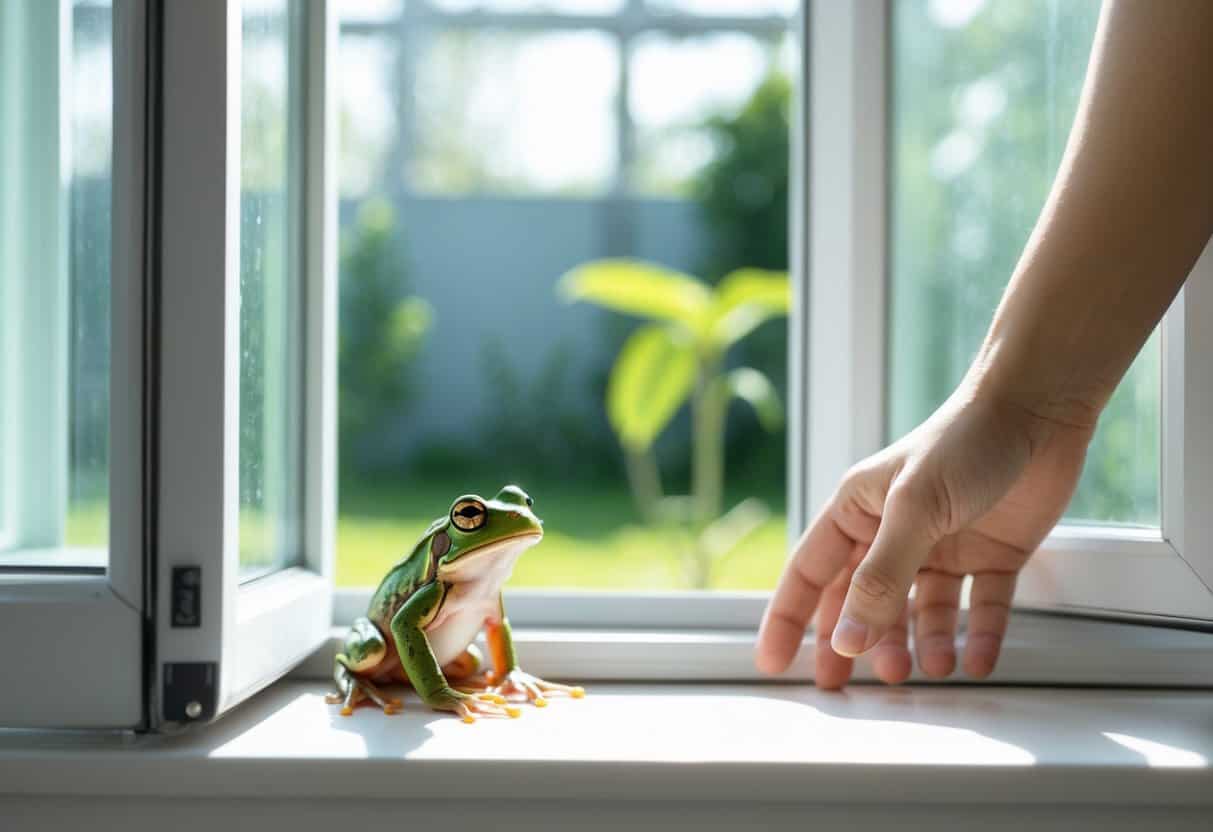
You don’t need any fancy gear for this. If you’ve got pets, just move them to another room so they don’t freak the frog out or get hurt.
Open a door or window to give the frog a clear escape route. That makes the whole process a lot less stressful for everyone.
If you’re after a quick, gentle way to handle it, this guide’s got you. It’s honestly easier than it sounds, and you’ll have your house back to normal before you know it.
How to Safely Handle and Remove a Frog Indoors
Getting a frog out of your house takes a little care, but you can totally do it. If you know what kind of frog you’re dealing with and use safe handling, things go much smoother.
Sometimes, you might run into a stubborn frog or just feel unsure. That’s when calling in a pro makes sense.
Identifying the Type of Frog in Your House
Start by figuring out which kind of frog wandered in. Most frogs you find indoors are harmless—think little tree frogs or the ones that hang out near water.
Occasionally, you might see something bigger, like an American bullfrog, and that can be a bit more concerning.
Check the frog’s size, color, and how it acts. Big, greenish bullfrogs stand out, while smaller frogs are usually easier to handle.
Knowing what you’re dealing with helps you decide how careful you need to be, especially if you’ve got kids or pets.
Step-by-Step Guide to Catch and Relocate a Frog
Grab a small container, a piece of cardboard, and maybe some gloves if you want to be extra safe. Walk up to the frog slowly and quietly—no sudden moves.
Gently place the container over the frog, then slide the cardboard underneath to trap it inside without hurting it.
Hold the lid loosely on top, or use a cloth so the frog can breathe. Take the container outside, somewhere near water if you can.
Let the frog go and watch it hop off. You both get to go on with your day, no harm done.
Precautions When Handling Frogs
Wash your hands before and after you handle a frog or its container. Frogs soak up stuff from your skin, and that can hurt them.
If you wear gloves, you protect their sensitive skin and keep yourself safe from any germs.
Keep kids and pets out of the room while you’re catching and releasing the frog. That way, nobody gets hurt or stressed out.
Never squeeze the frog or try to force it. If it jumps away, just take a breath and try again in a bit.
Don’t mess with frogs that look sick or injured—you don’t want to risk spreading anything.
When to Call Pest Control for Help
If you just can’t catch the frog, or if you keep finding frogs inside, it’s probably time to call pest control.
Pros have the right gear and know-how to get frogs out safely. They can also help you figure out how the frogs are getting in.
If you spot a big frog, like a bullfrog, or you’re worried about poisonous species, let the experts handle it.
They’ll give you advice on keeping frogs out for good without harming your home or the wildlife.
Preventing Future Frog Intrusions and Keeping Frogs Away
If you want to stop frogs from coming in, you’ve got to make your house and yard less appealing to them. Block their paths, dry up their water sources, and deal with bugs.
This protects your family and pets, too.
Seal Entry Points to Your Home
Frogs sneak in through tiny cracks around doors, windows, vents, and pipes. Walk around your house and look for gaps or holes.
Seal them up with caulk, foam, or weatherstripping.
Focus on spots under doors and around plumbing. Check your window and vent screens for holes or tears.
Adding door sweeps can block frogs from slipping in under doors. After storms or wild weather, double-check these spots to make sure nothing’s opened up.
Eliminate Water Sources and Damp Areas
Frogs need water, so drying up standing water is a big step. Check for buckets, plant saucers, clogged gutters, or random puddles around your place.
Dump out water or cover up containers. Fix leaks and make sure your yard drains well.
Inside, don’t overwater your plants. Watch for damp basements or crawl spaces, and use a dehumidifier if you need to.
When you cut off their water, frogs are way less likely to hang around.
Reduce Indoor and Outdoor Insects
Frogs show up where the bugs are. Keep things clean and try out natural pest control to cut down on insects.
Outside, rake up leaf piles, mow tall grass, and get rid of clutter where bugs like to hide.
Inside, wipe up crumbs, fix your window screens, and store food in sealed containers.
Some people use citrus peels or vinegar sprays to keep bugs away, which means fewer frogs.
If you keep the bug numbers down, frogs won’t see your place as an all-you-can-eat buffet.
Pet and Family Safety Tips
Sometimes frogs show up, and honestly, they could be risky for pets—especially if they’re poisonous. Remind everyone in the family not to touch frogs when they’re outside.
Watch your pets when they’re in the yard. Make sure there aren’t any gaps in fences or doors where frogs (or pets) could sneak through.
If a frog slips inside, just catch it gently and let it go outside. Clean up any droppings right away to avoid bacteria.
You can try pet-safe frog repellents if things get out of hand, but double-check the instructions to keep your pets safe.


