
Ever wondered if frogs eat spiders? The answer’s pretty straightforward: yes, lots of frogs snack on spiders when they get the chance. Frogs make skilled hunters—they’ll grab almost anything that moves and fits in their mouths, and spiders definitely fit that description.
Depending on their size and habitat, frogs will eat spiders along with all sorts of other insects.
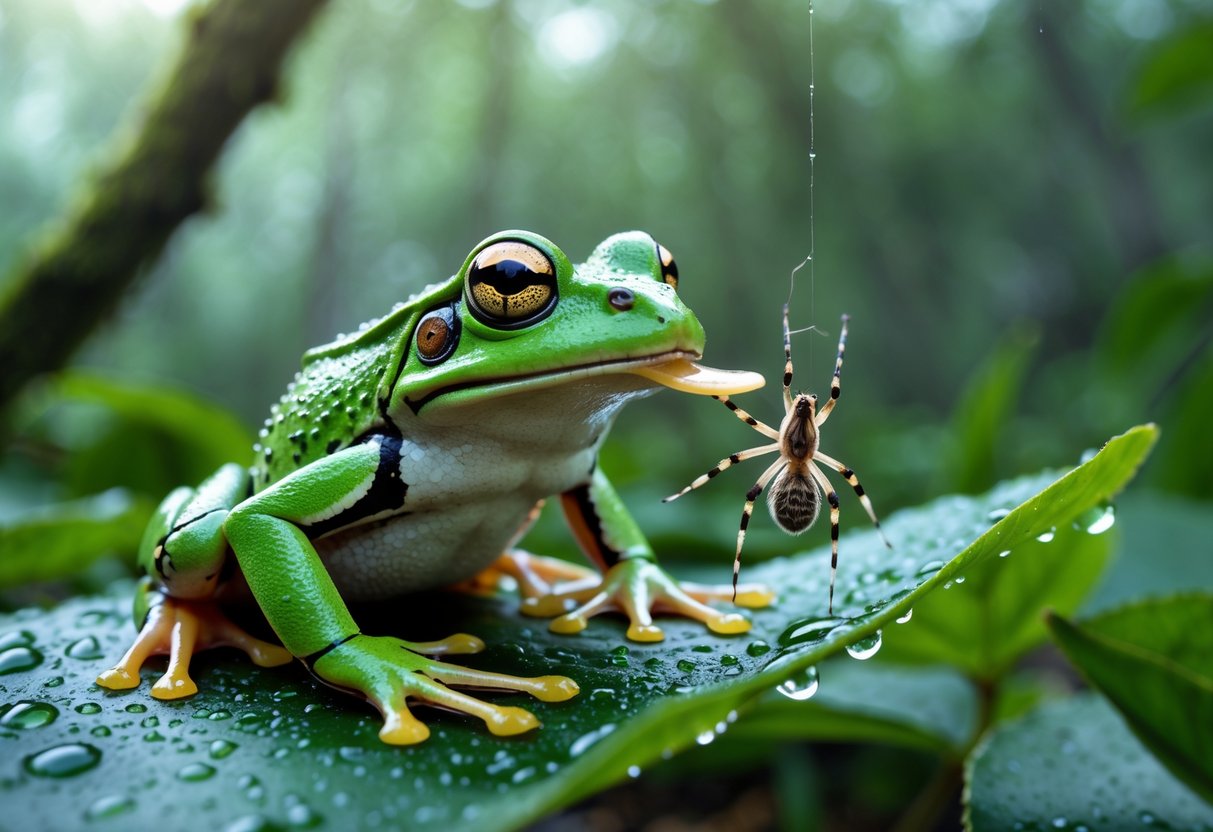
It might surprise you, but frogs of all sizes sometimes munch on spiders. Some frogs eat spiders pretty often, especially if those spiders are everywhere in their environment.
If you’re curious about what frogs eat, it’s worth knowing they aren’t picky. This helps them survive in the wild and makes things easier if you’re keeping frogs as pets.
How and Why Frogs Eat Spiders

Frogs don’t overthink their meals. They hunt whatever’s available and small enough to gulp down. Their hunting skills let them catch spiders and other bugs that give them the nutrition they need.
The kind of spiders frogs eat really depends on where they live and how big they are.
Predatory Behavior and Hunting Methods
Frogs can catch spiders with surprising speed. They use their long, sticky tongues to snatch spiders before the spiders even know what’s happening.
Their eyes spot movement fast, and their reaction time is almost instant.
Frogs usually sit still and wait for prey to come close. When a spider gets near enough, the frog flicks out its tongue and grabs it in one quick move.
This works best for spiders that crawl on the ground, since frogs spend most of their time on land or right by the water.
Some frogs that live mostly on land run into spiders more often. Frogs that stay in the water eat more fish or aquatic bugs.
Types and Sizes of Spiders Eaten
Most frogs go for small or medium spiders. House spiders and other little arachnids make easy meals.
Pacman frogs, for example, sometimes eat bigger spiders, but most frogs avoid really large ones.
Frogs don’t eat every spider they see. They usually skip spiders that are too big or might be dangerous.
Venomous spiders like black widows or brown recluses could be risky, so frogs try to avoid them if they can.
Frogs eat spiders that fit in their mouths and are easy to catch. Spiders living close to the ground or near water end up as targets more often.
Spider Venom Risks for Frogs
You might wonder if spider venom poses a problem for frogs. Some spiders, like widows, have strong venom for hunting and defense.
A lot of frogs seem to handle spider venom pretty well, though. It’s not always a huge threat.
Venomous spiders can still be dangerous, especially if a frog gets bitten during a struggle. Frogs usually try to avoid or quickly kill venomous spiders to stay safe.
Their skin and natural defenses help, too, by protecting them from small amounts of venom.
Sometimes, frogs figure out which spiders are trouble and learn to avoid them. It really depends on what’s common in their habitat.
Nutritional Benefits of Spiders in a Frog’s Diet
Spiders offer a good shot of protein and nutrients for frogs. Frogs are generalist predators, so eating spiders helps them out when other food is hard to find.
Having spiders in their diet adds some variety. That’s a good thing—it helps balance out the nutrients they get.
Along with insects, worms, and little aquatic critters, spiders help frogs stay healthy.
In places where spiders are everywhere, frogs might eat them pretty often. Spiders might not be the main course, but they’re still a useful food source.
If you want to dig deeper, check out detailed studies on frog diets at Wildlife Informer.
Frog Species and Environmental Factors Affecting Spider Consumption
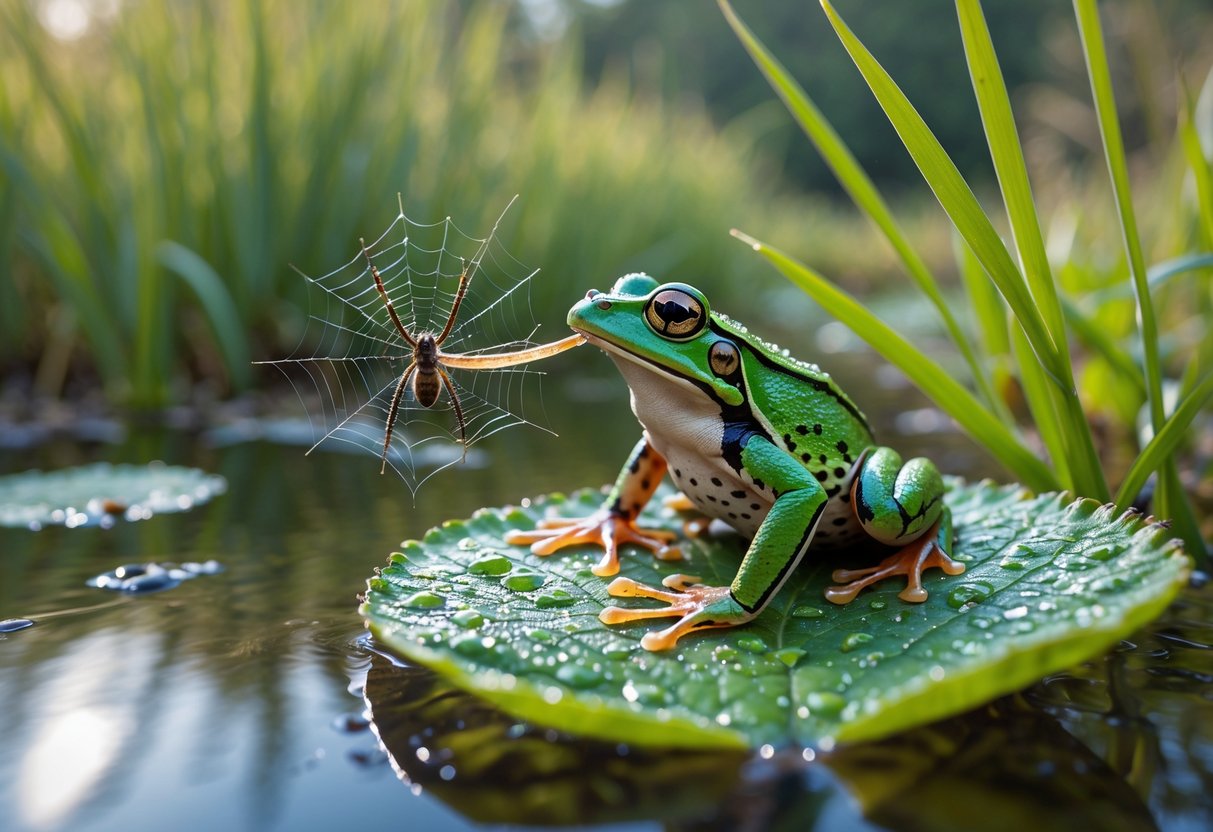
Different frog species eat spiders depending on their environment and what else they like to eat.
Local frogs might add spiders to their menu, but it depends on what’s around and what’s easiest to catch.
Common Frog Species That Eat Spiders
You’ll spot spider-eating frogs in all sorts of groups. Bullfrogs, for instance, are big enough to eat spiders along with fish and worms.
Tree frogs often catch spiders like jumping spiders and wolf spiders since they share the same leafy hangouts.
Toads eat spiders too, especially on land where they also find ants and beetles. Pacman frogs chow down on spiders, insects, and sometimes even small snails.
Aquatic frogs grab spiders that get too close to ponds, lakes, or streams.
Different frogs have different spider preferences. Tree frogs catch spiders on plants, while bullfrogs might go for bigger spiders near water.
Habitat and Diet Variations
Where a frog lives affects what it eats. Frogs in marshes or by rivers eat a mix of bugs like flies, crickets, moths, and spiders.
Frogs in forests or gardens catch more spiders and other small critters like centipedes or scorpions.
If spiders are common in the area, frogs will eat them as long as they’re small enough to swallow.
In drier spots, frogs might eat more grasshoppers, ants, or worms.
Water frogs near ponds or streams sometimes catch fish or even small reptiles, but they’ll eat spiders when they get the chance.
A frog’s diet shifts with the seasons and whatever prey is easiest to catch.
Other Prey and Dietary Preferences
Besides spiders, frogs love to munch on all sorts of insects and invertebrates. You’ll probably catch them chasing down crickets, flies, beetles, or even moths.
They don’t stop there. Worms and snails show up on the menu, too.
Bigger frogs? Well, they sometimes go after small mice or even other frogs. That puts them right in the thick of the food chain alongside birds and reptiles.
Frogs eat whatever’s around. Sometimes that means wasps or centipedes—pretty bold, honestly.
Your frog’s taste for spiders depends a lot on its size and how dangerous the spider is. Frogs usually steer clear of the really venomous ones, but they’ll eat the harmless spiders without much hesitation.
This variety in their meals keeps their diet balanced. It also helps the environment where they live.
Curious about which frogs eat spiders? Here’s a detailed list of frog species and their diets.


