
Frogs are honestly some of the most fascinating amphibians out there. You’ve probably spotted them in ponds or gardens, or maybe you’ve just heard their chorus on a rainy night.
There are over 7,000 frog species worldwide, and they come in all sorts of shapes, sizes, and colors.
Frogs start off as tadpoles living in water and then turn into air-breathing adults. Watching that transformation feels like seeing nature’s magic trick in real time.
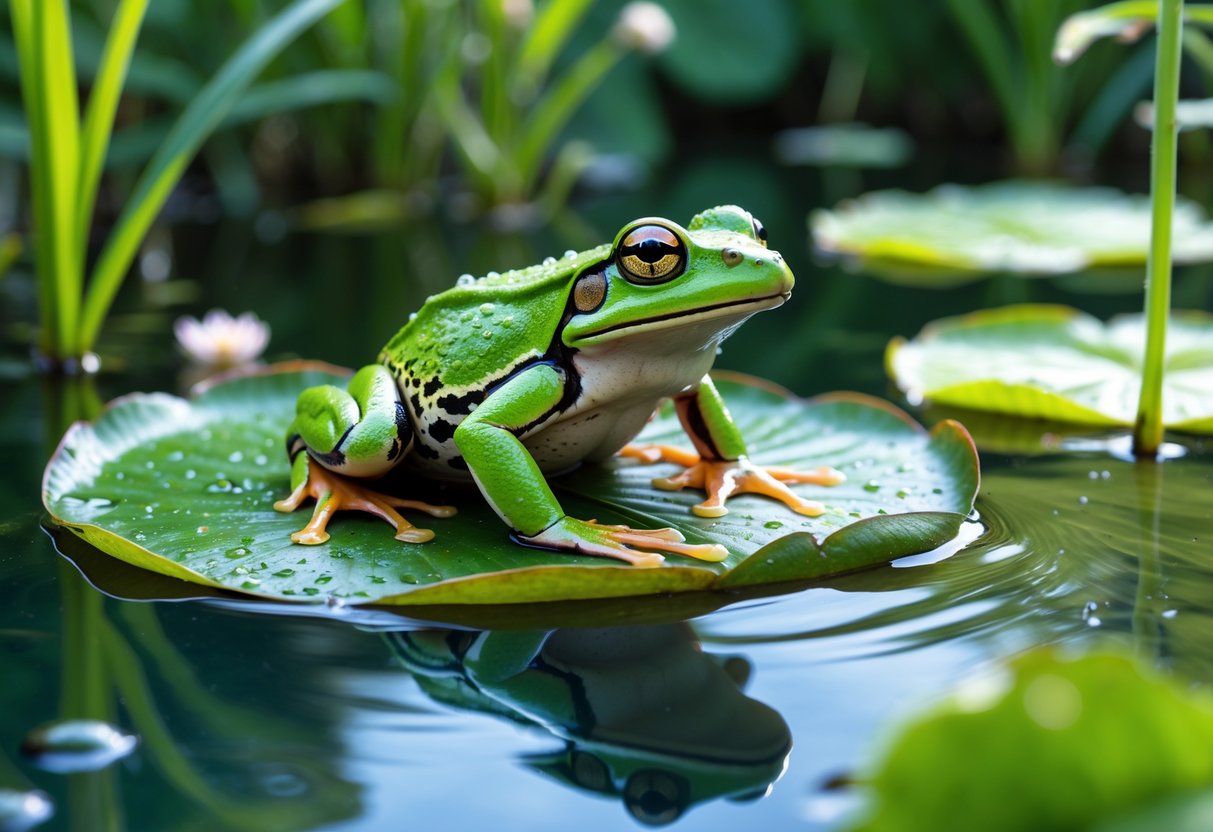
Did you know frogs can breathe through their skin as well as their lungs? Some even stick to glass with tiny pads on their toes.
Frogs live pretty much everywhere except Antarctica, which is wild when you think about it. They really know how to adapt.
Curious about what makes frogs so special? From their odd ways of moving and eating to their surprising roles in nature, these 10 facts will give you a whole new appreciation for these little creatures.
You’ll find out about their colors, their calls, and even how they survive when things get tough. If you want to dig deeper, check out more details about frogs at ThoughtCo.
10 Amazing Facts About Frogs

Frogs have some truly surprising traits. They come in all sizes, live just about everywhere, and have some pretty unique ways to breathe, move, and communicate.
Their lives also show how fragile nature is, especially as frogs deal with threats like habitat loss.
Frogs Are Amphibians with a Unique Life Cycle
Frogs belong to a group called amphibians. These are animals that split their lives between water and land.
Their life cycle stands out as something unique. Frogs start as eggs in water.
Those eggs hatch into tadpoles, which look more like little fish with tails and gills than anything else.
As tadpoles grow, they become froglets. They start to develop legs and lungs.
Scientists call this process metamorphosis. Froglets then turn into adults who can live mostly on land, though they still need water nearby to keep their skin from drying out.
This whole cycle really shows how frogs manage to bridge two worlds.
Frog Species Range from Tiny to Giant
Honestly, frog sizes can be pretty shocking. The paedophryne amauensis is the world’s smallest frog—and vertebrate.
It’s less than half an inch long and could sit right on your fingertip.
On the flip side, the Goliath frog can reach 12.5 inches long and weigh over 7 pounds. That’s bigger than some house cats.
Tiny tree frogs usually stick to the treetops, while the giants hang out near rivers or ponds. The size differences show just how much frogs have adapted to their different homes.
Frogs Transition from Tadpoles to Adults
Watching a tadpole turn into an adult frog feels almost magical. Tadpoles start off breathing with gills and swimming like fish.
Their back legs show up first, then the front ones. At the same time, their tails shrink and lungs develop so they can breathe air.
Tadpoles switch from eating algae to hunting tiny insects. Depending on the species and where they live, this whole change can take weeks or even months.
It’s a wild transformation and a key moment for survival.
Breathing Through Skin, Lungs, and Gills
One of the coolest things about frogs has to be their breathing. Sure, they have lungs, but frogs also absorb oxygen right through their skin.
Their skin needs to stay wet for this to work, which is why you’ll often find frogs in damp places.
Young frogs, or tadpoles, breathe with gills. As they grow up, they start using lungs, but their skin still helps them breathe.
Some frogs don’t even have lungs—they rely completely on their skin for oxygen. Nature’s pretty creative, isn’t it?
Frogs Use Vocal Sacs for Loud Calls
Ever hear frogs singing on warm nights? That’s mostly the males, using their vocal sacs to call out for females.
These vocal sacs are stretchy skin pouches that puff out from their throats when they call.
Each frog species has its own special call. The Puerto Rican coquí, for example, can be heard from miles away.
Some frogs can get as loud as a rock concert—over 100 decibels! These calls help frogs find mates and claim their territory.
Diverse Adaptations: From Camouflage to Venom
Frogs have some clever tricks to stay safe. Some, like the glass frog, use camouflage to blend in with leaves and branches.
Their skin has special cells called chromatophores that let them change color.
Others, like poison dart frogs, show off bright colors to warn predators they’re toxic. The golden poison frog is actually one of the most poisonous animals on Earth.
These toxins keep predators away. All these adaptations help frogs make it in all sorts of different places.
Frogs Live in Nearly All Ecosystems
You can find frogs almost everywhere on Earth except Antarctica. They’re in rainforests, deserts, and even some pretty cold spots.
The wood frog is a standout—it can survive being frozen in the winter. Desert frogs dig underground and sleep in a cocoon for months or even years to survive when there’s no water.
Frogs’ ability to live in so many different environments really shows their adaptability.
Frogs Are Important Bioindicators
Frogs actually tell us a lot about how healthy the environment is. Their skin is super sensitive to pollution and changes in their surroundings.
Scientists keep an eye on frog populations for this reason. If frogs vanish from an area, it usually means there’s trouble—maybe pollution or habitat loss.
That’s why people call frogs bioindicators. They’re like living warning signs for ecosystem health.
Webbed Feet and Nictitating Membranes
Frogs have webbed feet that make them great swimmers. Some, like rocket frogs, use their feet to leap crazy distances.
It’s almost like they’re wearing built-in flippers. Frogs also have a clear eyelid called the nictitating membrane.
Think of it as nature’s version of swimming goggles—it protects their eyes underwater but still lets them see. These features help frogs thrive both in water and on land.
Frogs Face Threats From Habitat Loss
Frogs are really struggling these days, mostly because people keep destroying the places they need to survive.
Wetlands, ponds, and forests—humans just keep chipping away at them. Pollution doesn’t help either, and climate change keeps making things worse.
A lot of frog species now face the risk of disappearing for good.
If we don’t protect their habitats, frog populations will keep dropping. And honestly, when frogs vanish, the rest of nature feels it too.


