
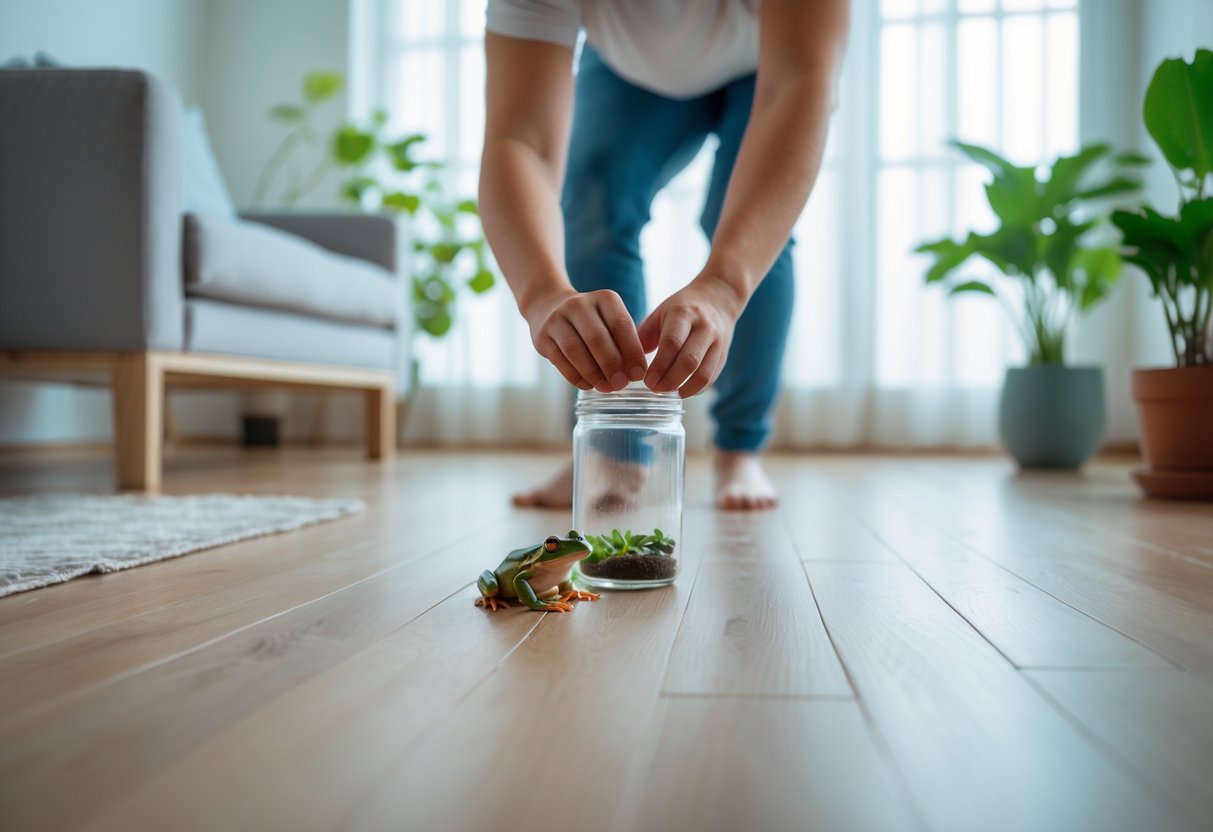
So, you’ve just found a frog hopping around your house. That’s a surprise, right? Here’s the thing: the easiest way to handle it is to gently catch the frog with a container and set it free outside, somewhere a bit away from your house. That way, you both stay safe and nobody gets hurt.
You might wonder why frogs end up indoors at all. Honestly, they just love moisture and will go wherever they can find it.
If you want to avoid more frog visits, close up little gaps and get rid of any standing water. It’s a simple fix, but it works.
Got pets? You’ll want to be extra careful. Some frogs can be toxic or just too interesting for a curious dog or cat.
Try using pet-friendly repellents and keep things dry. That way, your pets and your home stay safe.
Steps to Safely Remove a Frog From Your Home

You can remove a frog from your house without hurting it or stressing out your pets and family. First, you’ll need to find the frog and make sure your pets can’t get to it.
Guide or catch the frog gently. If it feels overwhelming, you can always call in a professional.
How to Locate and Isolate the Frog
Start by searching quietly in spots frogs like to hide. Check damp corners, under furniture, basements, or near doors.
Frogs stick close to moisture, so those are your best bets.
Once you spot the frog, close the door to that room. Keep pets out—they might go after the frog on instinct.
You want to keep the frog contained in one place. Close other doors in your house to give the frog a clear path to an exit.
This makes it easier for you to guide the frog outside.
Humane Methods for Guiding or Catching Frogs
Try opening a door to the outside near where the frog is. Then, open the room door too.
You can gently tap behind the frog to encourage it toward the exit. No need to chase—just a nudge works.
If you’d rather catch it, grab a small plastic container with air holes. Place it slowly over the frog, then slide some cardboard underneath.
Lift it carefully, and head outside. Release the frog near some plants or water.
Go easy on the handling, so the frog doesn’t get hurt.
Protecting Pets and Household Members
Put pets in another room during all this. Dogs and cats might try to catch the frog, and that’s not good for either.
Frogs can get stressed out by pets, which makes them harder to catch.
Tell your family, especially kids, not to touch frogs with bare hands. Some frogs, like bullfrogs, can secrete toxins that irritate skin or eyes.
Always wash your hands after handling frogs or anything they’ve touched. Better safe than sorry.
When to Seek Professional Assistance
If you find a bunch of frogs or one that’s in a tricky spot, call a wildlife removal expert. These folks know how to handle all kinds of frogs and keep everyone safe.
If you’re not sure what to do or have pets that might get in the way, it’s worth getting help. Removal services usually cost between $100 and $600, depending on what’s going on.
A pro can get the job done quickly and humanely, so you don’t have to stress about it.
For more details, check out guides on what to do if there’s a frog in your house.
How to Keep Frogs Away and Prevent Them From Returning

Keeping frogs out means figuring out what draws them in and blocking those entry points. You can use natural repellents that won’t bother your pets.
If you spot frog eggs or tadpoles around your yard, it helps to manage those too.
Eliminating What Attracts Frogs Indoors
Frogs come inside for food, water, and shelter. Since insects are their main meal, cutting down on bugs can really help.
Put screens on your windows and doors to keep insects out. Don’t leave food crumbs or standing water around.
Try turning off outdoor lights or switch to yellow bulbs. Bright lights bring in bugs, and bugs bring in frogs.
Get rid of damp, dark spots where frogs might hide. Fix leaks and dry up any wet areas, since frogs love moisture.
Stagnant water is a big draw for frogs. Empty buckets, plant saucers, or pet bowls when you’re not using them.
That cuts down on places where frogs and bugs can breed.
Natural and Pet-Safe Frog Repellents
A vinegar spray works as a natural way to make frogs leave. It irritates their feet just enough to make them move on.
Mix white vinegar with water and spray it where frogs like to hang out.
Coffee grounds can help too. Scatter them on your porch or in the garden—the texture and smell keep frogs away.
You can buy pet-safe repellents made from natural stuff if you’d rather go that route.
Skip harsh chemicals that could hurt pets or the environment. Use repellents along doors, windows, and porch edges for extra protection.
Home Modifications to Block Entry
Seal up any gaps or cracks where frogs could sneak in. Check around windows, doors, vents, and pipes for holes.
Use weather stripping or caulk to close them up.
Make sure doors and windows shut tight, with no gaps underneath. A door sweep on outside doors stops small animals like frogs.
Keep your yard and porch tidy. Trim back overgrown plants and move mulch away from your house walls.
Frogs love hiding in those spots, so clearing them out helps a lot.
Dealing With Frog Eggs and Tadpoles
Frog eggs and tadpoles almost always lead to more frogs down the road. I usually check for frog eggs in places like ponds, birdbaths, or those random garden pools that collect water.
If I spot any, I grab a net or scoop and take the eggs out, then get rid of them somewhere far from my house.
Got a small pond? Try putting in a water pump or even a simple fountain. Frogs generally don’t like laying eggs in moving water.
I also try to keep my yard as dry as possible and get rid of any stagnant water. This helps cut down on insects too, which means frogs won’t have much reason to hang around.


