
Ever wondered if frogs lay eggs? Well, the answer’s pretty straightforward: yes, they do—and some species lay thousands at once. Most frogs drop their eggs in water or damp spots, which helps keep the eggs safe and gives them a better shot at hatching into tadpoles.
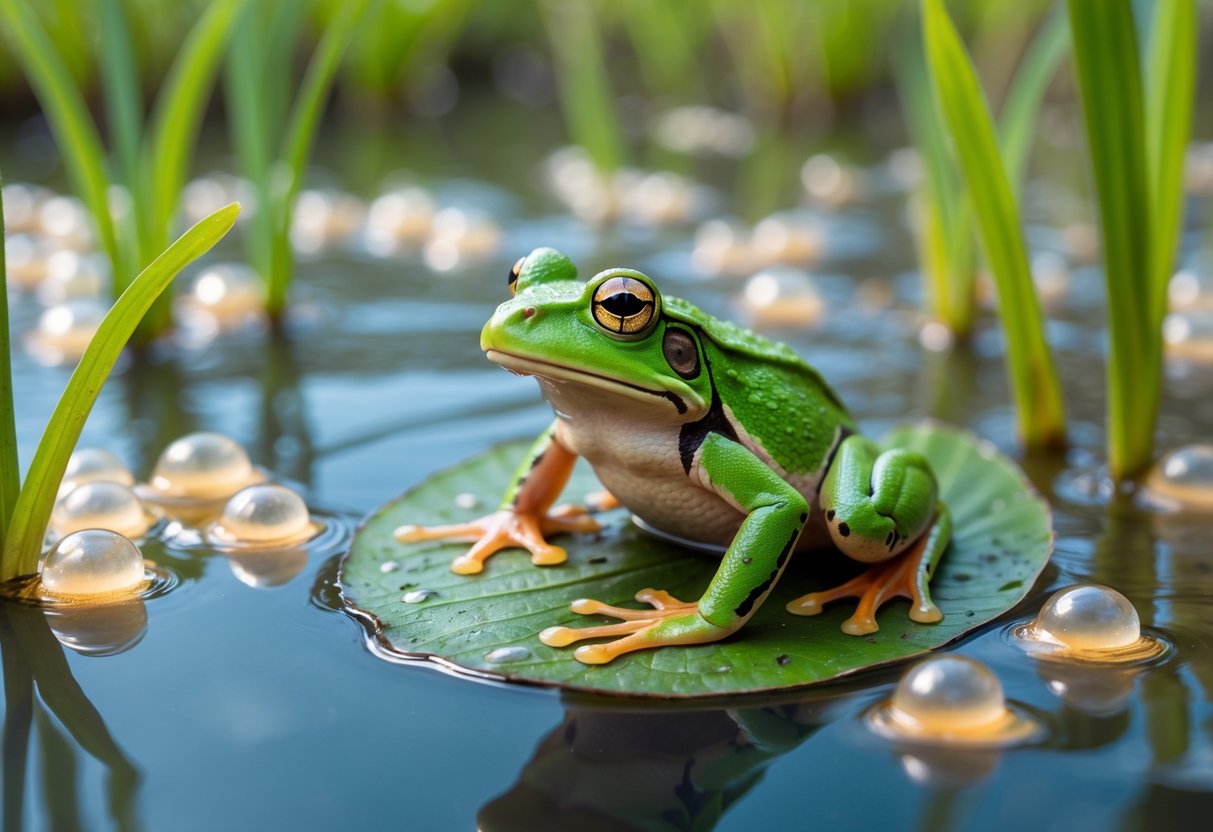
Maybe you’re curious about how many eggs frogs actually lay, or where they put them all. Frogs have all sorts of interesting strategies for egg-laying and caring for their young.
Not every frog lays the same number of eggs, and their methods can get pretty creative. Once you learn a bit more, you might never look at frogs the same way again.
There’s a surprising variety in how frogs handle their eggs and raise their young. It’s not just about dropping eggs in water—there’s a whole world of frog reproduction that’s honestly kind of fascinating.
Do Frogs Lay Eggs? Essential Facts

Frogs reproduce by laying eggs, but the details really depend on the species. Some frogs lay thousands at a time, while others stick to just a few.
Where and how frogs lay eggs depends on what works best to keep their young safe. Frogs seem to make these choices based on their environment.
How Frogs Lay Eggs
Most frogs lay their eggs in water. Breeding usually happens during the rainy season, when ponds and streams are full.
The female lays the eggs, and then the male fertilizes them outside her body. We call this external fertilization.
Frog eggs come wrapped in a jelly-like coating—people call this frogspawn. That jelly keeps the eggs moist and sticks them together in clusters or strings.
Some frogs, like the spadefoot toad, lay eggs in temporary puddles that appear after heavy rain. Others get a bit more creative.
A few frogs lay eggs on land, but they always pick spots close to water or with plenty of moisture. Poison dart frogs, for example, move their eggs to tiny pools in plants after they hatch.
Egg-Laying Methods by Frog Species
Different frogs have their own unique ways to lay and protect eggs. American bullfrogs and European common frogs, for example, lay thousands of eggs in big floating clumps.
Once they lay the eggs, the parents usually just leave them. No babysitting here.
Some frogs go for special techniques. Red-eyed tree frogs lay their eggs on leaves above water, and when the tadpoles hatch, they just drop into the pond below.
Certain species make foam nests out of secretions, placing the eggs above water or on plants for extra protection.
Poison dart frogs do things differently. They lay only a few eggs—sometimes as few as two—and the parents actually stick around to guard them.
Sometimes, these parents even carry the tadpoles on their backs to safer places. That’s some real dedication.
How Many Eggs Do Frogs Lay at a Time
The number of eggs can be pretty wild. Cane toads lay over 20,000 eggs in a single go, while American bullfrogs lay somewhere between 12,000 and 20,000.
On the other hand, poison dart frogs only lay a few eggs at once.
Here’s a quick look at average clutch sizes:
| Frog Species | Average Eggs per Clutch |
|---|---|
| Cane Toad | 8,000 – 25,000 |
| American Bullfrog | 12,000 – 20,000 |
| European Common Frog | Around 1,500 – 4,000 |
| Red-Eyed Tree Frog | 40 – 60 |
| Poison Dart Frog | 2 – 12 |
| Spadefoot Toad | 1,000 – 6,000 |
Most frogs lay eggs once or twice a year, depending on the species and the local weather. They lay so many because, let’s be honest, most won’t make it—predators and tough conditions get a lot of them.
Still, laying lots of eggs means at least a few will survive and grow up.
From Eggs to Frogs: The Remarkable Life Cycle

Frog eggs hatch into tadpoles, and those little swimmers slowly transform into young frogs. Each stage brings its own changes and hurdles.
You’ll see how eggs develop, how tadpoles turn into froglets, and what kinds of dangers frog eggs face along the way.
Development from Egg to Tadpole
Frog eggs start out in water, laid by females during mating. Males hang on tight in a process called amplexus, fertilizing the eggs as they’re released.
The eggs look like clear jelly blobs with tiny black dots inside.
After a few days, the eggs hatch. Tadpoles wiggle out and start swimming.
Tadpoles breathe with gills and use their tails to move around. They munch on algae and grow pretty quickly if the pond’s safe.
As tadpoles get bigger, they start changing. Legs begin to sprout, and lungs develop so they’ll be ready for life outside water.
This shift from egg to tadpole is a big deal in the frog’s life. If you want more details, check out the frog life cycle on World of Frogs.
Froglet and Adult Frog Stages
Once tadpoles grow legs, they become froglets. Froglets have legs but still drag around a small tail.
During this stage, they lose their tails bit by bit. They also start using lungs instead of gills to breathe.
Froglets leave the water and start hopping around. Their diet changes, too—they go from eating algae to snacking on insects and other tiny critters.
When the tail finally disappears, you’ve got an adult frog. Adult frogs live on land but return to water when it’s time to breed and lay eggs all over again.
If you’re curious about froglets and adults, you can read more at Earth Rangers.
Survival Challenges for Frog Eggs
Your frog eggs deal with all sorts of dangers out there. Frogs lay hundreds, sometimes even thousands, of eggs, but honestly, only a handful will ever make it.
Predators—think fish, birds, and even insects—snack on eggs and tadpoles all the time.
Environmental stuff matters too. Eggs really need clean water and the right temperature, and pollution can ruin everything fast.
If the water dries up or heats up too much, most eggs just won’t hatch.
The jelly around each egg offers some protection, but let’s be real—it can’t stop every threat.
That’s why frogs have to lay so many eggs, just hoping some will survive and keep the species going.
You can check out more about these struggles on Science Notes and Projects.


