
Ever wondered where frogs disappear to during those chilly UK winters? You’re definitely not alone. Frogs can’t generate their own body heat, so when the temperature drops, they need to hunt for a snug, safe spot to ride out the cold. Most frogs spend winter hibernating underground or tucked away in places like burrows, compost heaps, or under logs. These hideouts keep them protected from frost and dryness.
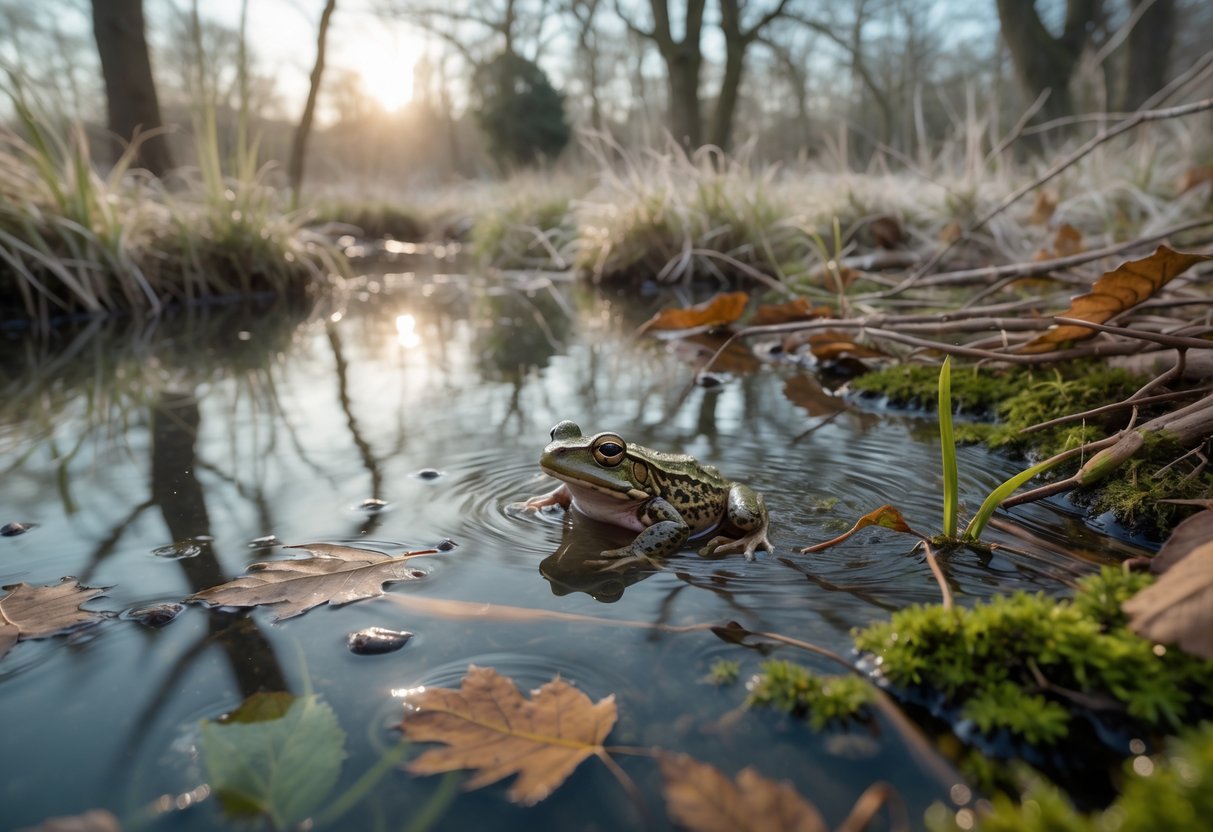
Some frogs actually stay in ponds, hiding among mud and leaves at the bottom. That can get risky if the pond freezes or runs low on oxygen. When spring finally arrives, frogs crawl out from their hideouts and head back to ponds and gardens, ready for the new season.
Knowing where frogs go in winter can help you make your garden a safer haven for them. It’s kind of fascinating how much their quiet winter break depends on the weather and climate, which makes their survival during these months even more crucial.
How Frogs Survive Winter in the UK

Frogs in the UK get through winter by finding safe, sheltered spots where they can stay mostly inactive. They look for cool, moist places that guard them from freezing and drying out.
Some frogs pick water, while others choose land—like hiding under leaves or logs. It really depends on the frog.
Hibernation Habits of UK Frogs
In winter, common frogs and other amphibians like toads and newts slow their bodies down a lot. That’s hibernation for you. They usually start this around November and wake up in February.
Since frogs are cold-blooded, they can’t keep themselves warm and have to rely on the outside temperature. When they hibernate, frogs stop eating and barely move to save energy.
Their skin needs to stay moist, so they avoid dry places. If you want to help, leave piles of leaves or wood in your garden. Those make great hiding spots for them.
Aquatic Frogs in Ponds and Waterways
Some adult frogs decide to hibernate underwater, especially in garden ponds or natural waterways. They bury themselves in mud or tuck under leaves at the bottom.
This keeps them safe from the cold air, but it gets dangerous if the pond freezes solid or runs out of oxygen. If you want to help these aquatic frogs, add oxygenating plants like willow moss to your pond.
You can also leave something floating on the pond’s surface so it doesn’t freeze over completely. But don’t break the ice with hot water or tools—frogs can get hurt that way.
Terrestrial Frogs and Land-Based Hiding Places
Most frogs and toads go for land when it’s time to hibernate. You might find them under log piles, in compost heaps, inside animal burrows, or beneath thick leaf litter.
These damp, sheltered spots shield frogs from predators and nasty weather. In your garden, leaving a messy corner with natural debris helps a lot.
You could even build a rock pile or a special frog shelter called a hibernaculum using logs, branches, bricks, and pipes with holes. These make cozy places for amphibians to get through winter.
Life Cycle and Seasonal Behaviors After Winter

Once winter ends, frogs and other amphibians slowly wake up as things warm up. They wander back to ponds and other water spots to start breeding.
You’ll often spot common frogs and toads gathering near ponds, getting ready to lay spawn and kick off the next generation.
Emergence and Return to Breeding Sites
When temperatures climb above about 5°C, frogs start leaving their winter hideouts. You might catch them coming out of compost heaps, from under logs, or even out of pond mud.
Males usually show up at breeding sites first. Frogs and toads return to the same ponds they used before.
This includes garden ponds or natural water bodies. Newts often join the crowd, using pretty similar habitats.
You may see frogs shuffling toward the water, sometimes during a mild spell before winter is even over. That migration can be quite a sight in early spring.
Breeding, Spawn, and Tadpoles
When frogs and toads reach the pond, they start breeding by laying eggs right in the water.
Common frogs usually drop big clumps or “rafts” of spawn, and you’ll spot these in shallow, sunny patches around the pond’s edge.
Toads do things a bit differently—they lay their spawn in long, stringy lines that twist around underwater plants.
Tadpoles hatch soon after, swimming around and growing in the pond for several weeks.
They sprout legs and slowly change into froglets or young toads before heading out of the water.
Most froglets leave the pond in summer, wandering into gardens or even the woods nearby.
They’ll spend the next couple of years growing up before they’re ready to breed too.
Sometimes, you might find your garden pond absolutely packed with tiny froglets as they start to spread out!


