
Ever wondered how strong a frog’s bite actually is? You’re definitely not alone. Frogs look small and innocent, but some of them have pretty powerful jaws. The strength of a frog’s bite really depends on the species. Horned frogs and African bullfrogs, for example, can bite hard enough to hurt and even leave a mark.
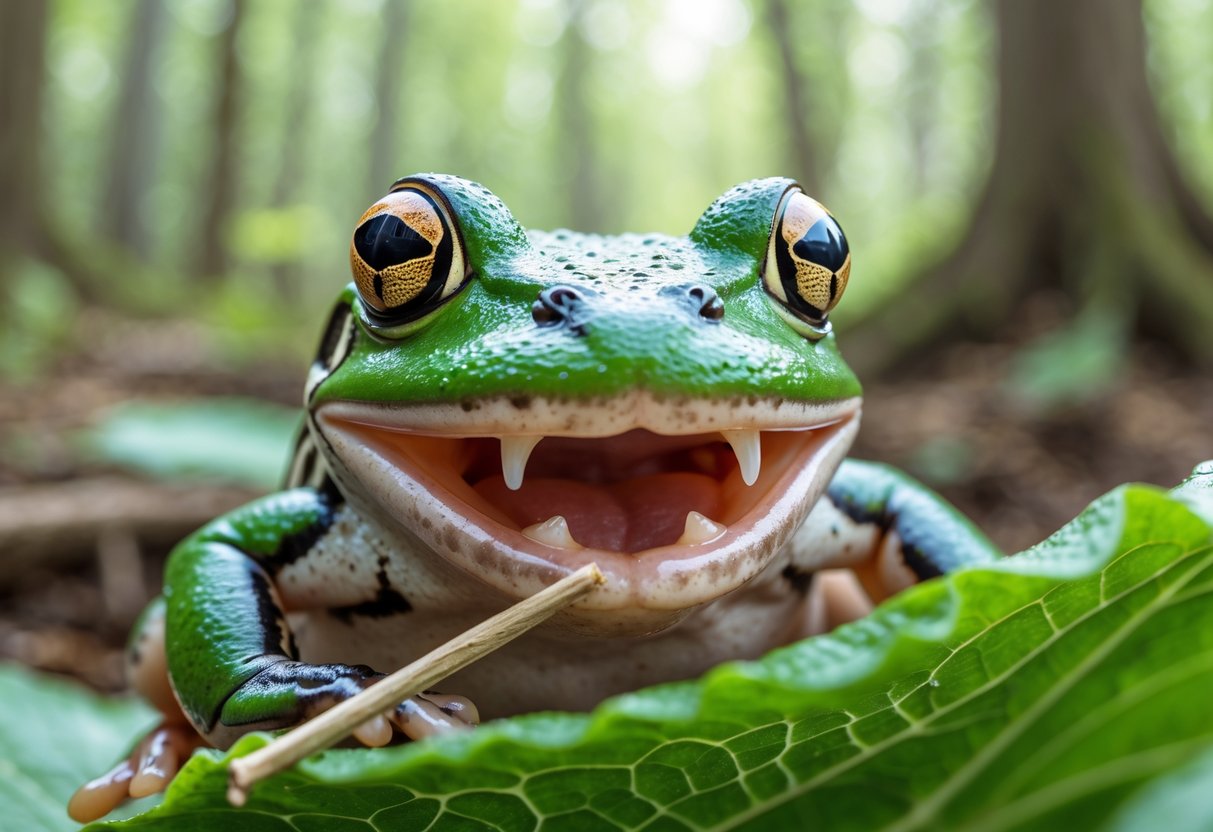
Most frogs have tiny teeth that help them hang onto prey. Still, their bite force can be surprising.
Many frogs won’t hurt you much, but some can grip pretty firmly if they feel threatened or think your finger looks like food. If you handle frogs, knowing about their bite can keep you safe—and maybe help you appreciate these weird little amphibians a bit more.
Frog Bite Force And Biting Behavior

Frogs use their jaws—and sometimes their teeth—to catch and hold prey. Bite strength varies a lot, depending on what each species eats and how they hunt.
Some frogs bite mostly for food. Others bite to defend themselves.
How Strong Is A Frog’s Bite Force?
Most frogs have just enough bite force to catch insects or small animals. Small South American horned frogs, for instance, can bite with about 30 Newtons of force.
That’s about the same as holding three liters of water in your hand. Larger horned frogs can bite even harder—sometimes harder than other amphibians and some small predators.
Some giant extinct frogs could bite even stronger. Their bite force matched that of medium-sized mammalian carnivores.
If you’re curious, there’s a detailed study on horned frog bite force that goes into all the numbers.
Why Do Frogs Bite?
Frogs mostly bite to catch and hold prey. After they grab prey with their sticky tongues, they clamp down with their jaws to keep it from escaping.
Frogs that eat bigger or tougher animals need a stronger bite to hang on. Some frogs will also bite if they feel threatened.
Usually, they let go quickly, but the bite can sting or leave a little irritation. Biting gives them a way to protect themselves without having to leap away.
Do Frogs Have Teeth?
Not every frog has teeth, but a lot of them do. Frog teeth are usually tiny and found on the upper jaw and on the vomer bone in the roof of their mouth—these are called vomerine teeth.
They use these teeth to grip prey and stop it from getting away before they swallow it. Horned frogs have sharper teeth with strong bases and even fangs near the middle of their jaw.
Their teeth help them hold onto big, wriggly prey. That’s pretty different from most frogs, which either have weaker teeth or none at all.
Venomous And Poisonous Bites
Very few frogs have venomous or poisonous bites. Most poison dart frogs, for example, use toxic skin secretions to protect themselves.
These toxins scare off predators, but they don’t come from a bite. Some frogs might have mild toxins in their mouths, but true venomous frog bites are super rare.
Most frogs rely on bite strength and skin toxins as separate ways to defend themselves. If you want to dig deeper, here’s a vet-reviewed article on frog biting behavior.
Notable Frog Species And Their Bites

Frogs really differ when it comes to bite strength and how likely they are to bite you. Some have sharp teeth and strong jaws.
Others are pretty gentle and almost never bite. If you know which species you might run into—or keep as pets—you’ll have a better idea of what to expect.
Horned Frogs And South American Horned Frogs
Horned frogs, especially the South American horned frogs (Ceratophrys), have some of the strongest bites among small frogs. Their bite force can hit around 30 newtons, which is wild for their size.
They have sharp teeth that curve inward, which helps them hold onto prey. Their bite isn’t as painful as a human’s, but it can still break skin or leave a mark.
These frogs can get territorial and bite if they feel stressed or threatened. It’s smart to handle them as little as possible.
If you do need to pick one up, try to be calm and gentle to avoid getting bitten.
Pacman Frogs And African Bullfrogs
Pacman frogs are famous for their huge mouths and strong bites. They’re quick to bite when they’re eating or if you annoy them.
Their bite usually isn’t super painful, but they can snap onto your finger in a flash. Try handling them from the side or behind to avoid the risk.
African bullfrogs have even sharper, spiky teeth and stronger jaws. Their bites can really hurt and even cause bleeding.
These frogs defend themselves pretty aggressively if they feel trapped. If you keep one, always be careful when handling it and never put your fingers near its mouth.
Tree Frogs: Red-Eyed And Green Tree Frogs
Red-eyed tree frogs and green tree frogs almost never bite. They don’t have strong jaws or sharp teeth.
Usually, they’ll just freeze or run away if they get scared. Red-eyed tree frogs use their bright colors to scare off predators instead of biting.
Green tree frogs are super gentle and make great pets for beginners. If you handle them, just be gentle and calm, and you shouldn’t have any problems.
Handling Frogs Safely
When you handle any frog, staying calm and gentle really matters. Frogs usually bite if they feel scared or threatened.
Try these tips to steer clear of bites:
- Move toward frogs slowly, without rushing.
- Grab some feeding tongs or wear gloves if your frog has a reputation for biting.
- Don’t make sudden moves near their mouths.
- Wash your hands before and after you handle them—it’s better for you and your frog.
These steps go a long way toward keeping both you and your frog a lot more comfortable.


