
Frogs might seem quiet and kind of basic, but honestly, their flirting game is pretty wild. You might expect just croaks or some bright colors, but nope—lots of frogs use sounds, quirky gestures, and even blinking to catch a mate’s eye.
If you start paying attention, you’ll see frogs aren’t just sitting there—they’re communicating in all sorts of clever ways. Watching them flirt almost feels like you’re getting a peek at a secret code.
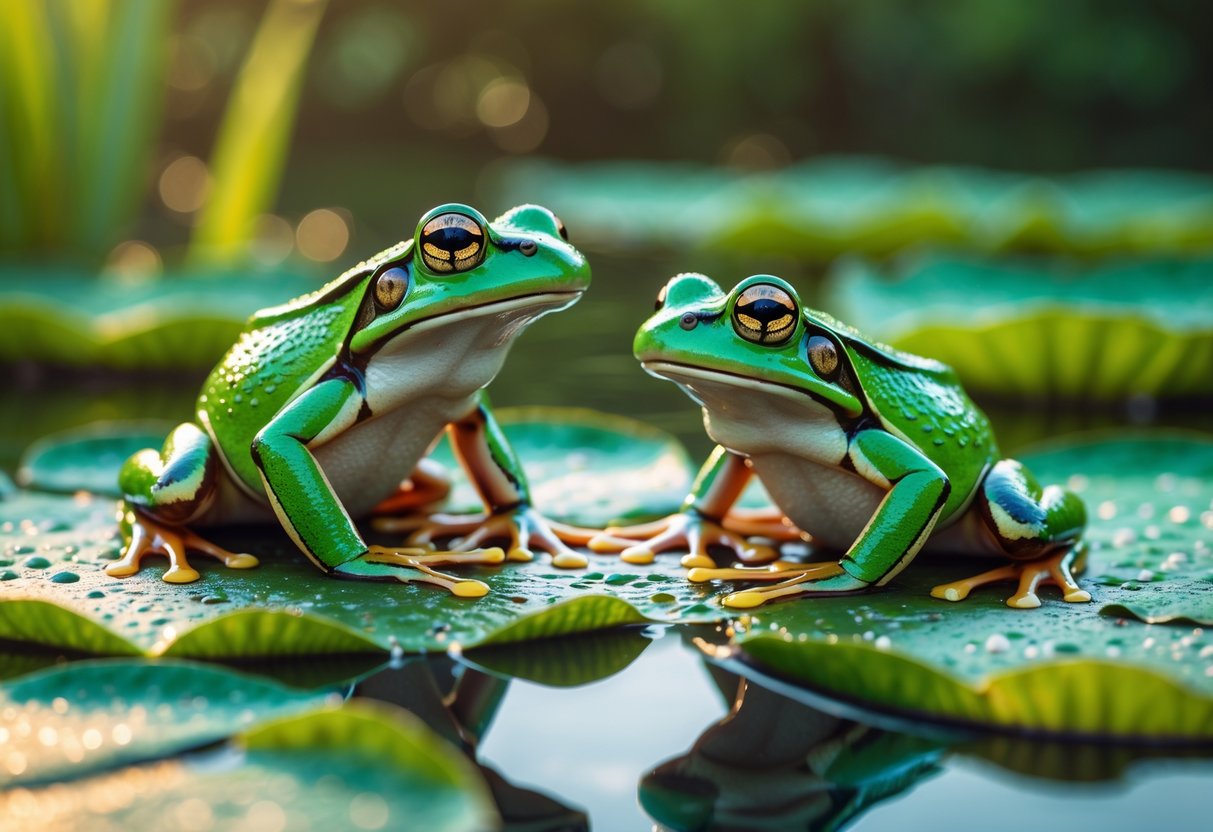
Frogs flirt by calling with unique sounds, using body signals like blinking or waving, and sending out chemical signals to attract partners. Each species has its own style, which is honestly kind of cool. These tricks help frogs find the right match, even when things get pretty loud and crowded.
If you’re curious about those special calls male frogs make, or the way some female frogs use subtle winks, you’re in the right spot. These methods prove frog romance is way more interesting than you’d expect. Let’s get into how these little charmers pull off their moves.
Frog Flirting Communication Methods

Frogs have all sorts of ways to show they’re interested. Most of their flirting is about sound, but they’ve got some unexpected moves too.
These signals help frogs stand out in noisy places and grab the right partner’s attention.
Mating Calls and Vocalizations
When you picture frogs flirting, you probably hear those classic mating calls in your head. Male frogs make specific calls to attract females.
The pitch, rhythm, and length of these calls change depending on the species. Each call acts like a signal showing off the male’s strength and health.
If a call is loud and stands out, it’s more likely to get noticed. These calls also tell other males to back off.
During breeding season, males keep calling, sometimes almost nonstop, just to make sure their message gets through.
Visual Signals and Blinking Behavior
Some frogs don’t just rely on sound. In noisy places, they use visual signals to flirt.
Certain species show off with flashy moves or display colorful body parts to catch attention. One quirky thing—some female frogs blink to signal interest.
That blink is almost like a little “hey there” to the male, inviting him closer. It’s not common in animals without eyelids, but a few frogs have figured it out, even near loud streams where sound doesn’t travel well.
Physical Gestures and Body Movements
Gestures play a big role too. You might spot frogs waving their legs or kind of “dancing” to get noticed.
Some species have this thing called foot flagging—basically, they lift and wave their feet to send a message. These movements work well when it’s too noisy for calls or when a frog wants to stand out even more.
Body signals also show off the male’s health and energy, giving females clues about who might be a good match.
Environmental and Social Influences on Frog Flirting

Frogs actually change how they flirt depending on where they live and who’s nearby. Their calls and signals shift depending on the dangers around and the other frogs sharing their space.
These things can make their mating behaviors louder, longer, or just more showy.
Urban vs. Wild Courtship Behaviors
If you listen to city frogs, you’ll notice their calls sound different than those from the forest. Urban frogs, like túngara frogs, add extra “chucks” to their calls, making them more complex and, honestly, more attractive.
They do this because there aren’t as many females around, so the competition’s tougher. Out in the wild, male frogs keep their calls simpler to avoid attracting predators or parasites.
City lights scare off some of those threats, so urban frogs feel free to get a bit flashier with their calls. If those city frogs head back to the forest, they switch to simpler sounds again.
You can check out more details on this change in urban and wild frog behavior.
Predator and Parasite Pressures
Wild frogs deal with a lot more threats while they’re trying to flirt. Predators like fringe-nosed bats get drawn in by loud frog calls.
Tiny bloodsucking midges also find frogs by their croaks and can spread nasty parasites. Because of these risks, frogs often keep their calls short or less flashy in dangerous places.
In cities, where predators and parasites avoid bright lights, frogs can afford to call more. Environmental threats really shape how frogs go about flirting.
Species-Specific Flirting Strategies
Frog species flirt in all sorts of ways, depending on where they live and how they interact. Some blink their eyes to catch a mate’s attention—honestly, who would’ve guessed? Most people think only primates use blinking for communication.
Other frogs focus on the frequency and timing of their calls. Body size and habitat shape these calls, so it really varies.
A few frogs even hang out in small social groups. They pick their company, and that choice affects their chances for romance.
Every species seems to mix and match signals that fit their world. It’s honestly impressive how frogs adapt.
If you want to dive deeper, check out this research on flirting female frogs blinking and frog social life.


