
Ever watched frogs hopping around at night and wondered if they ever actually sleep? Turns out, frogs do sleep at night, but their sleep isn’t much like ours. They slip into a quiet, still state that lets them save energy, but they’re alert enough to bolt if something startles them.
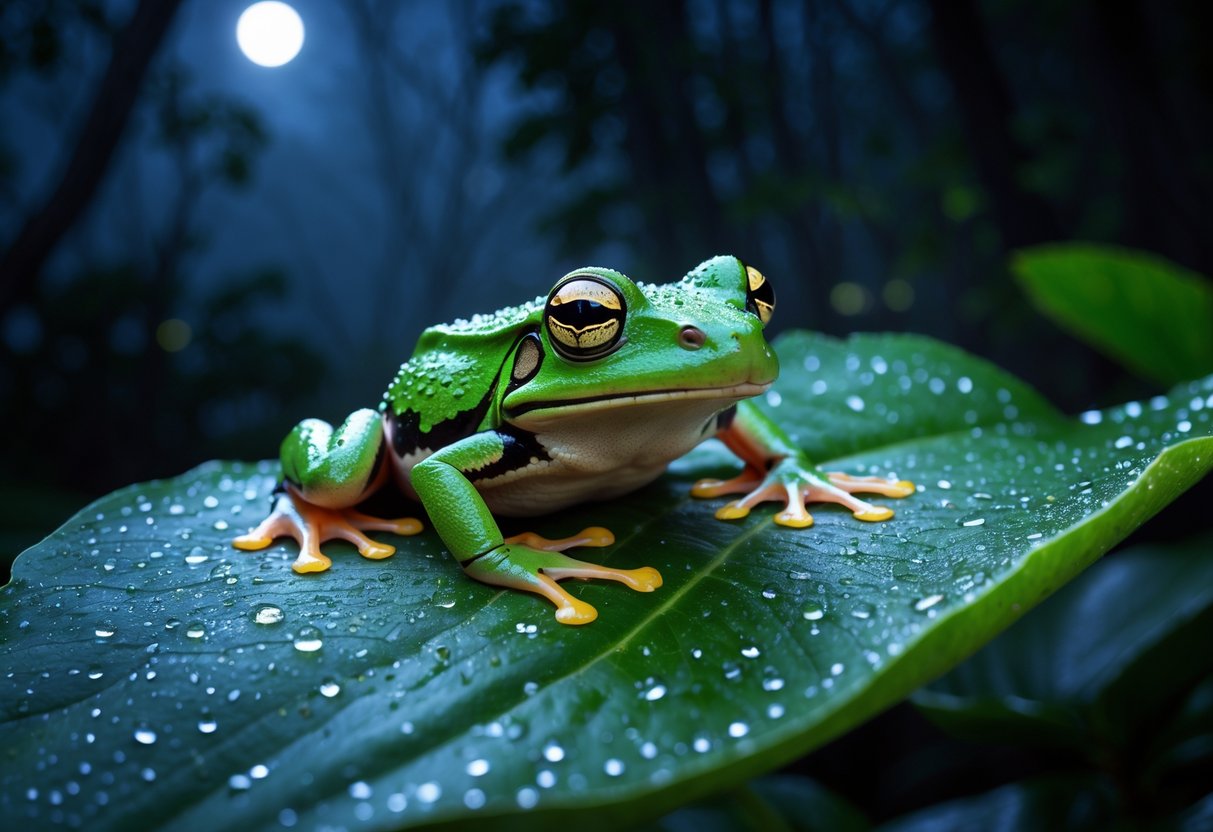
Frogs don’t go through long, deep sleep cycles like humans. They take short rest breaks throughout both day and night. Sometimes, you might not even notice they’re resting because their eyes might stay open or they’ll just tuck their legs under and sit still.
Curious about how frogs manage to rest and stay ready for action at the same time? Stick around. Their balancing act between wakefulness and rest is honestly pretty fascinating.
Do Frogs Sleep at Night?
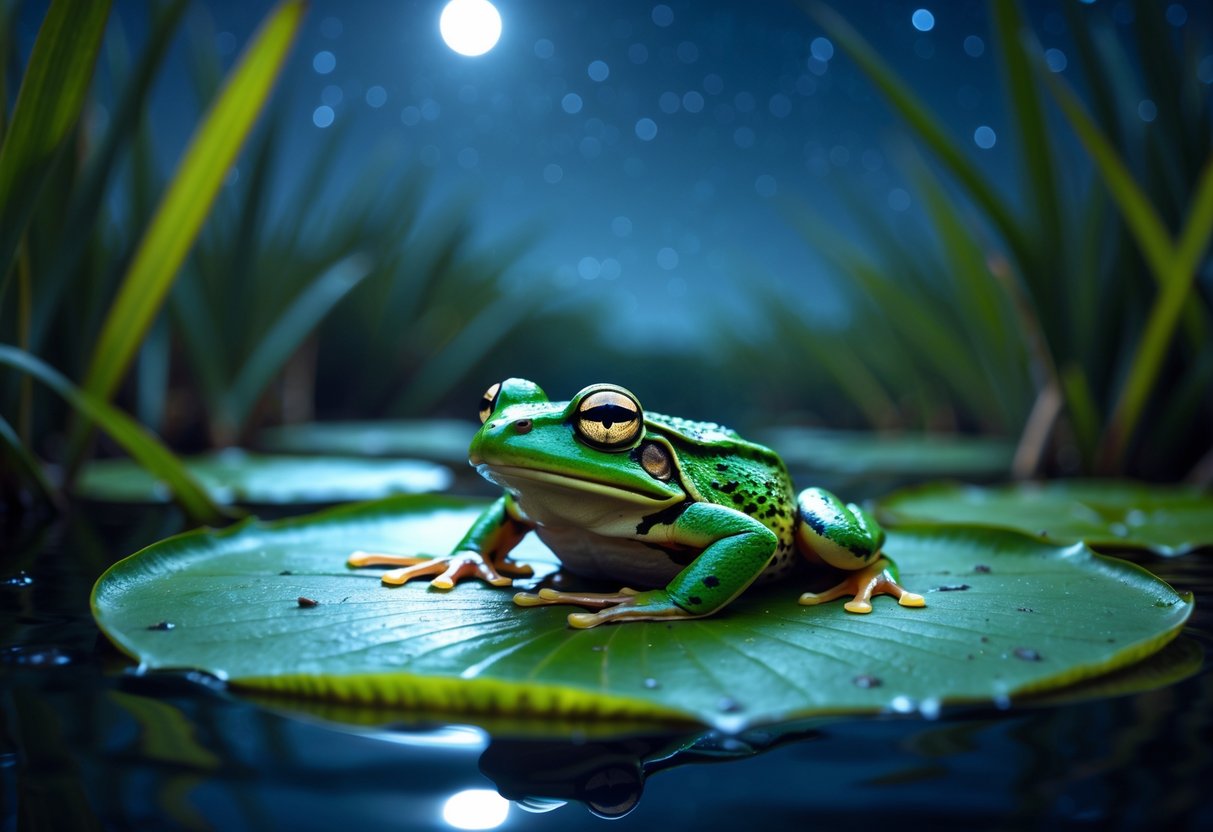
Frogs don’t sleep the way we do, but they definitely have periods of downtime. Their sleep habits depend a lot on their species and what they’re up to. Some frogs get busy at night, while others chill during the day.
You’ll notice that frogs have their own ways of resting that fit their needs and the places they live.
Nocturnal Versus Diurnal Sleep Patterns
Most frogs are nocturnal, so they’re hopping around at night and taking it easy during the day. During daylight, you might spot them hiding under leaves or just sitting quietly in one spot. That helps them dodge predators and hang on to their energy.
Some species go the other way, resting when it’s cooler or even at night. Their habits really depend on their environment and when they like to hunt or eat. If you know whether your frog is nocturnal or diurnal, you’ll have a better idea of when it’s likely to be snoozing.
How Frogs Sleep: Behaviors and Differences from Mammals
Frogs don’t have eyelids like we do, but they use a nifty membrane called a nictitating membrane to cover their eyes when they rest. Usually, they’ll tuck their limbs in and stay super still. It looks like sleep, but it’s not quite the same as the deep slumber mammals enjoy.
Instead of sinking into deep sleep, frogs just slow down and chill for a while. You might catch them resting for hours, but whether they dream or get REM sleep? Honestly, nobody’s really sure.
Why Frogs Sleep and the Role of Rest
Frogs rest to save energy and stay sharp in case something dangerous comes along. Rest keeps them healthy and prepped for hunting. When they rest, their bodies slow down, which helps them manage their temperature depending on whether it’s warm or cold out.
Staying still and quiet during rest also helps frogs avoid being spotted by predators. Some frogs even go into long periods of rest during cold months—basically hibernation. It’s a survival trick that keeps them going until the weather gets better. If you want to dive deeper, check out this detailed explanation about how frogs sleep.
Frog Sleep Mechanisms and Unique Features

Frogs have some pretty interesting ways of resting. Their eyes, their favorite sleep spots, and even when they choose to sleep all help keep them safe and comfy. These quirks let frogs stay on alert while still getting the downtime they need.
The Nictitating Membrane and Eye Protection
Frogs don’t have eyelids that close all the way like ours. Instead, they’ve got this see-through eyelid—the nictitating membrane. It slides over their eyes and acts kind of like a windshield wiper. It keeps dirt, water, and even nosy predators away, but still lets in some light.
Because of this, frogs can rest without totally shutting out the world. The membrane lets them keep an eye (sort of) on what’s happening around them. That’s a big deal for staying safe.
Typical Sleep Positions and Locations
Depending on the species and where they live, frogs rest in all sorts of ways. You might catch one sitting upright or crouched down, limbs tucked in tight. Some even burrow into soft dirt or hide under leaves to blend in.
These positions help them avoid predators while they’re taking it easy. In wetter places, frogs pick cool, damp spots so they don’t dry out. Honestly, picking a good sleep spot is just as important as the resting itself, since it’s all about survival.
Sleep Duration and Environmental Influence
Frogs don’t all sleep the same way—it really depends on what’s going on around them. A lot of frogs choose to be active at night, so they rest during the day when things get warmer and predators are out and about.
Some frogs prefer to move around at dusk or dawn instead, then catch up on rest at different hours. It’s not a one-size-fits-all thing.
Temperature and humidity play a big role too. Frogs are cold-blooded, so their bodies change with the weather. When things get cold or dry, they’ll often rest longer just to save energy.
So, you’ll notice their sleep schedules can look pretty different depending on where you spot them.
If you’re curious, you can dive deeper into these quirky frog habits at How does a frog sleep? | CK-12 Foundation.


