
So, you found a frog in your yard, and you’re not sure what to do next. Honestly, unless the frog’s in trouble, you should probably just let it be.
Frogs know how to get around and usually split their time between land and water. They’re pretty good at finding their own way.
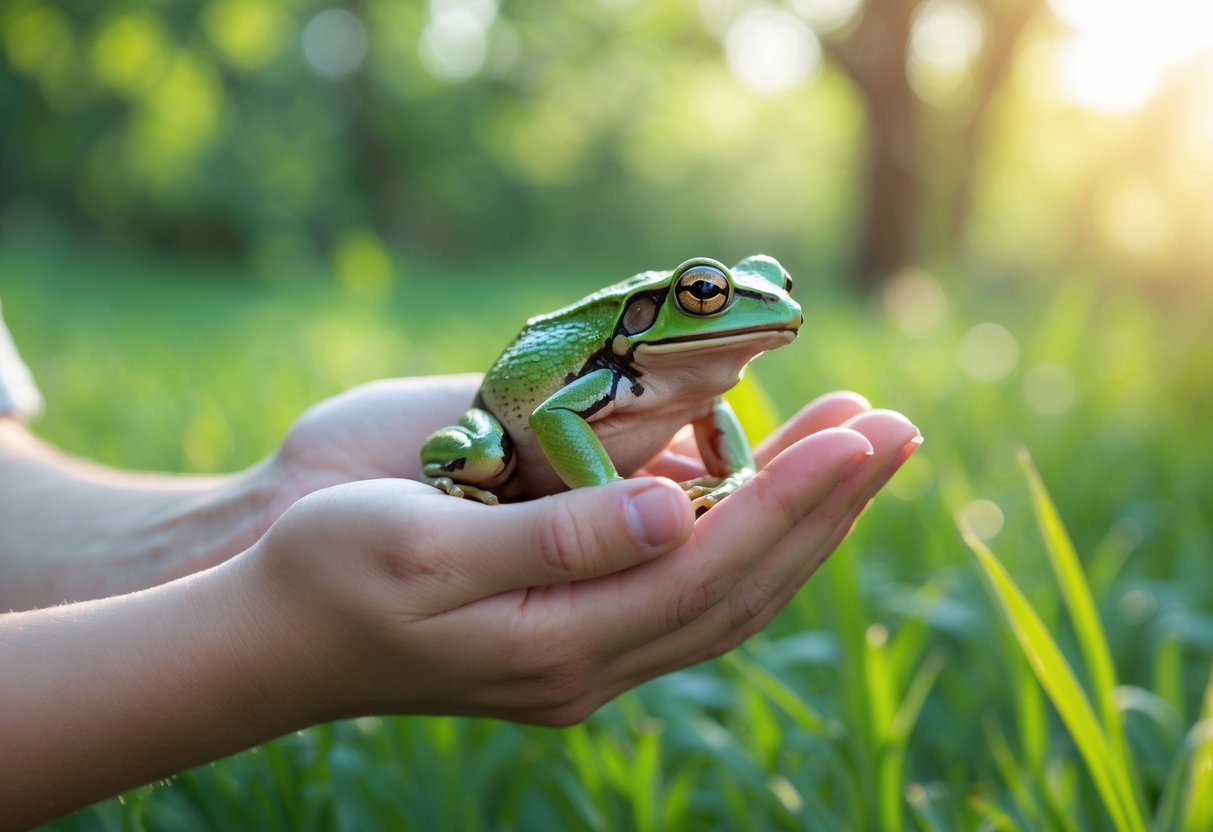
But if the frog’s stuck somewhere dangerous—like right next to a busy street or in the middle of your work zone—you can pick it up and move it somewhere safer. Try to find a spot with some good cover, like under a log, in a compost pile, or tucked into thick plants where it can hide out.
It helps to know a bit about what frogs like, so you can decide when to step in and when to just watch from a distance.
Best Practices for Handling and Relocating Frogs

When you spot a frog, pause before you act. Moving them the wrong way can hurt them or mess up their home.
You want to make sure you’re actually helping, not just interfering.
Assess If Intervention Is Needed
Check if the frog’s in real danger before you do anything. If it’s just hanging out, let it be.
But if it’s somewhere risky—like near traffic or pollution—you can move it. Try to place it close to where you found it, near clean water like a pond or wetland.
Don’t drop frogs into rivers. They mostly use rivers as travel routes, and fast water can be rough for them.
How to Safely Move a Frog
If you need to pick up a frog, wet your hands or use a damp cloth. Their skin’s super sensitive and dries out fast.
Don’t squeeze them. Just be gentle.
Carry the frog in a small container lined with moist leaves or paper. Keep it shady and cool while you move it.
Move it only a short distance—ideally under 100 meters—to keep it from getting stressed or lost. Let it go near a sheltered, clean pond or wetland, far from pollution and predators.
When You Should Leave Frogs Alone
Most of the time, frogs are fine on their own. They hang out in gardens, on land, and by water, and they help keep pests in check.
If the frog isn’t in danger, just watch and leave it alone. Too much handling stresses them out and can cause harm.
If you see frogspawn in a pond, leave it there. The young frogs need to grow up in their natural spot.
Risks and Common Mistakes to Avoid
Never grab frogs with dry or dirty hands. Chemicals or grime can hurt their skin.
Try not to pick them up too often. It really stresses them out.
Don’t move frogs far from where you found them or into totally new areas. They can get lost or not survive.
Stay away from putting frogs in rivers or dirty water. That can be dangerous or even fatal.
And don’t forget to wash your hands after handling frogs—they can carry bacteria like Salmonella.
Creating a Frog-Friendly Environment in Your Garden

If you want frogs to stick around, you’ll need to make your garden inviting. They love quiet, damp spots with fresh water and places to hide.
Choosing the Right Spot for Frogs
Pick a shady, cool area that stays moist. Frogs like spots near water but away from lots of noise or heavy traffic.
Don’t choose places that get too dry or hot—frogs lose moisture quickly.
Go for native plants to attract insects, since that’s what frogs eat. If your yard slopes, setting up at the bottom helps water collect.
Keep pets and mowers away from the frog zone so they don’t get disturbed.
Building and Maintaining a Garden Pond
A small pond is one of the best things you can add for frogs and tadpoles. Make sure it’s shallow and has gentle slopes so frogs can get in and out easily.
Use a pond liner to keep water fresh and prevent leaks. Add some native aquatic plants for shade and shelter.
Change out some water now and then, but skip the chemicals or chlorine.
Keep the pond tidy by clearing out leaves and debris. Regular maintenance keeps the water healthy for frogs and other wildlife.
Providing Shelter and Cover
Frogs really need places to hide from predators and to stay moist. Toss some logs, rocks, or even leaf piles around your yard, and you’ll give them a cool, damp spot to rest during the day.
Try planting dense shrubs or ground covers for extra hiding places. Mulch or moss works well too, keeping the soil nice and damp.
If you set up these shelters close to water, frogs will probably feel safer—and honestly, who could blame them? They might just decide to stick around your garden.


