
If you’ve got frogs hopping around your garden—or if you’re hoping to attract some—feeding them the right stuff keeps them happy and healthy. Frogs mostly snack on live insects like crickets, worms, and flies they find right in your yard.
Offering a mix of small insects that match their natural diet is honestly the best way to help out the frogs in your garden.
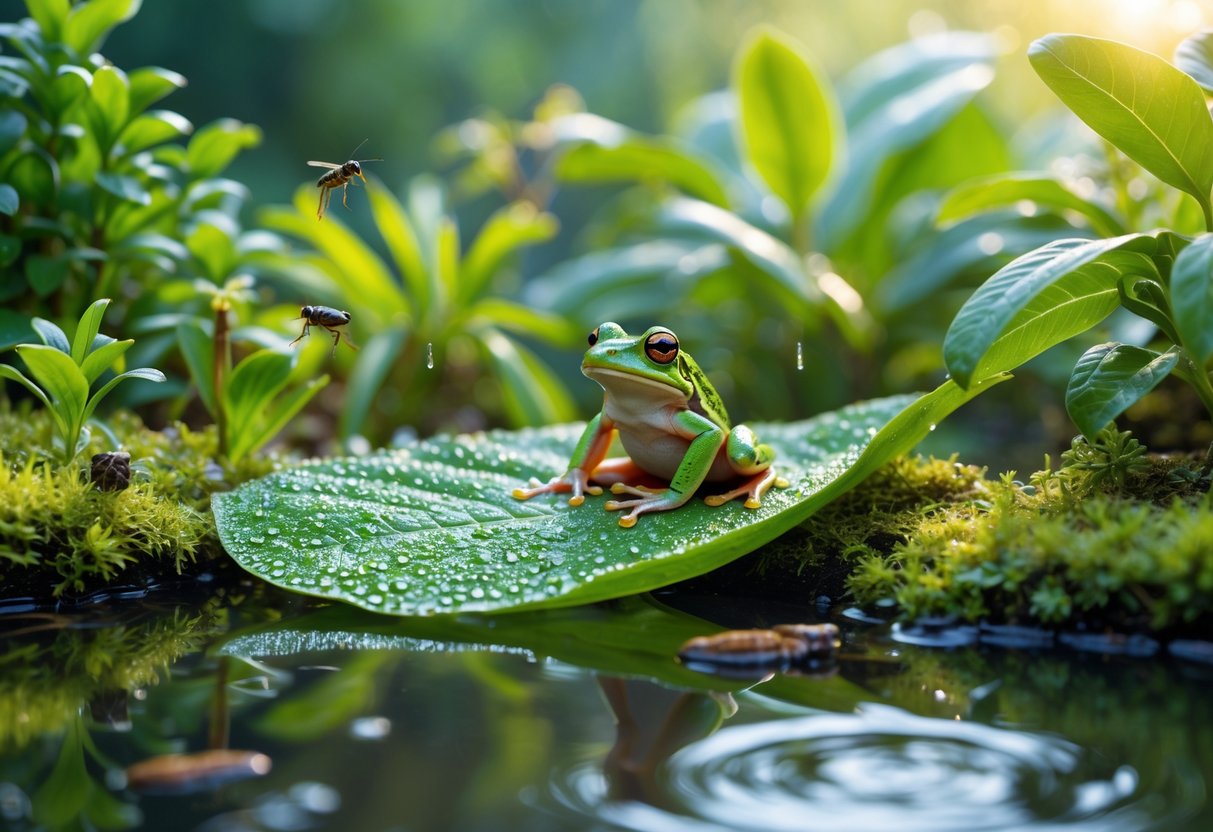
You really don’t need to hand-feed garden frogs. Instead, focus on creating a habitat with lots of insects and plants they love, and frogs will show up on their own.
Worms, larvae, and small flies work well if you want to toss out a treat. Just don’t give frogs human food or anything processed—it can actually hurt them.
When you know what frogs eat and how to make your garden more frog-friendly, you get to watch these awesome little pest-eaters at work. Want ideas about which bugs frogs like most? Check out this guide on feeding frogs in your garden.
What to Feed Frogs in Your Garden

To keep frogs healthy and active in your garden, offer foods they naturally eat. The right insects help frogs stay strong and do their job as natural pest controllers.
It’s also smart to know what to avoid and when to add extra nutrients.
Best Natural Food Options for Garden Frogs
Garden frogs mostly go for live insects and small invertebrates. You’ll see them munching on crickets, worms, caterpillars, and beetles.
These bugs give frogs the protein and nutrients they need to thrive.
They’ll also eat slugs, grasshoppers, and small flies. Frogs help cut down on pests naturally, so you don’t have to rely on chemicals.
If you want to help frogs out, encourage habitats where these insects are common. Plant a mix of greenery and keep some areas moist to draw in the bugs frogs love.
This way, you’re helping both the frogs and your garden. For more about what frogs eat, have a look at the Hepper guide on what to feed frogs.
Foods to Avoid When Feeding Frogs
Don’t feed frogs human food or anything processed. Bread, dairy, and junk food just aren’t good for them and can cause health issues.
Skip pet foods meant for other animals too. Fish food, dog kibble, or reptile mixes don’t give frogs what they need and can mess up their digestion.
Stay away from insects gathered in polluted spots or anywhere sprayed with pesticides. Those can poison frogs and cause toxic build-up.
It’s safest to stick with live, clean insects from safe places or pet stores that sell feeder insects.
Supplemental Feeding: When Is It Needed?
Usually, garden frogs find plenty of food on their own, so you don’t need to feed them much. If you keep frogs inside or notice fewer bugs outside, supplements might help.
Feed “gut-loaded” insects—ones that have eaten nutritious food before you give them to the frogs. You can also dust feeder insects with vitamin powder.
Talk to a vet before adding supplements, just to be safe. They’ll let you know what’s best and how often to use them.
In most gardens, you won’t need to supplement if you’ve built a healthy, bug-filled habitat. Frogs handle pest control naturally, keeping your garden in good shape.
Creating a Frog-Friendly Garden for Healthy Feeding
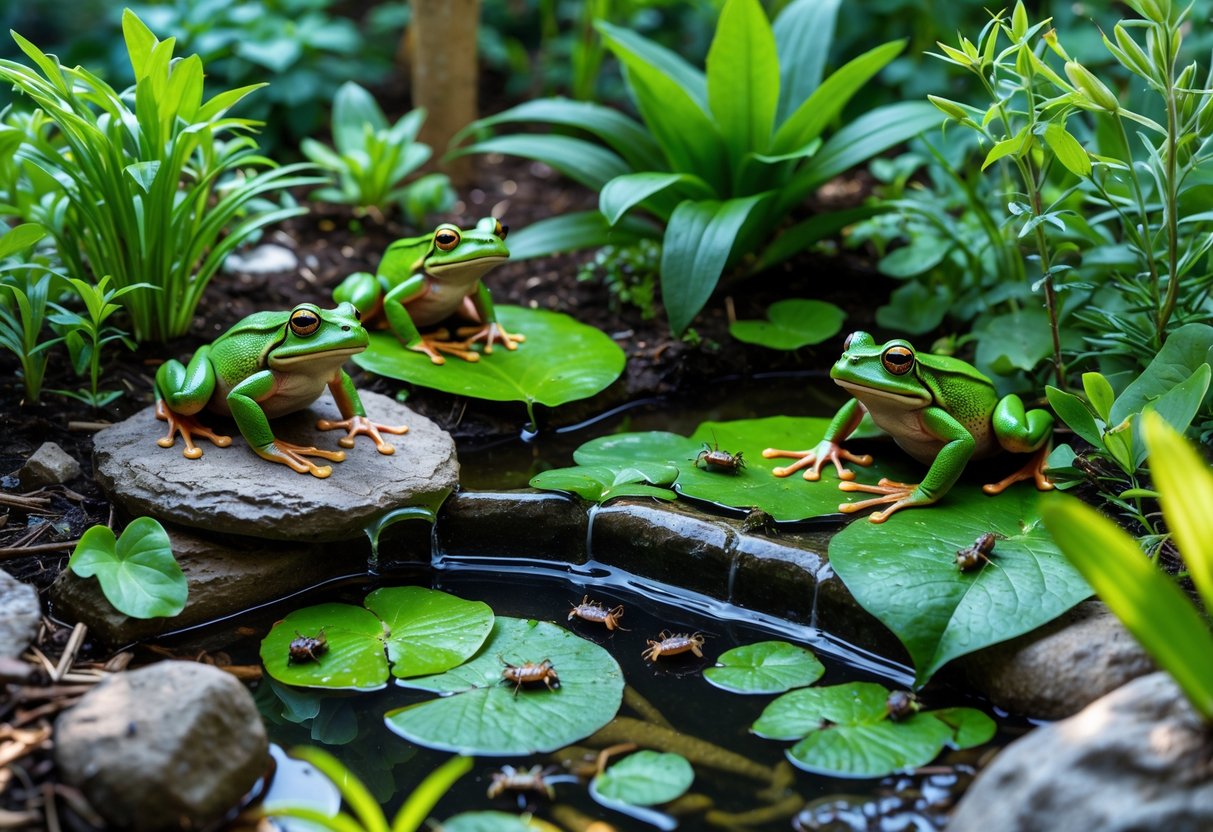
To help frogs thrive in your garden, focus on plants that offer shelter and food. Make sure there’s clean water for breeding and keep the area free of harmful chemicals.
These steps help frogs and the bugs they eat stick around.
Attracting Frogs Through the Right Plants
Pick plants that attract both frogs and their favorite insects. Ferns, hostas, and creeping jenny give shade and moist hiding spots.
Wetland plants like marsh marigold offer cover and draw in insects frogs like to eat.
A mix of low plants and taller ones helps frogs find safe spots to rest during the day. Water lilies near ponds add shade and help keep water cool for comfort.
Native plants attract local insects, which means more food for your frogs.
A garden full of different leafy plants makes a perfect hunting and hiding place for frogs.
Safe Water Features and Ponds
A clean, chemical-free pond really draws in frogs. Build your pond with shallow edges so frogs can get in and out easily and hunt for insects.
Add aquatic plants like water lilies and marsh marigold to give frogs shelter and spots to breed. These plants also help keep water clean by adding oxygen and filtering out junk.
Skip pumps and filters that create strong currents. Frogs (and their eggs) do better in still water.
Use rainwater or dechlorinated water to fill your pond and keep things safe.
A well-planned pond brings in larvae and bugs, giving adult frogs plenty to eat.
Avoiding Chemicals for Frog Well-Being
Try to keep pesticides, herbicides, and fertilizers out of your garden. These chemicals hurt frogs directly. They also wipe out insects, so frogs end up with less to eat.
Go for organic gardening instead. When you encourage helpful bugs like beetles and moths, frogs have more food.
If you leave leaf piles and logs around, insects can multiply on their own. Frogs find shelter in these spots too.
Watch out for chemical runoff from nearby lawns or driveways. It can seep into your garden pond or soil before you even notice.
A chemical-free garden gives frogs a safer home and plenty of natural prey. Isn’t that what we want, anyway?


