
At night, frogs really come alive—maybe more than you’d expect. Most frogs spend the darkness hunting for food, calling out to find mates, and dodging predators. The cover of night lets them stay safer and gives them a buffet of insects.
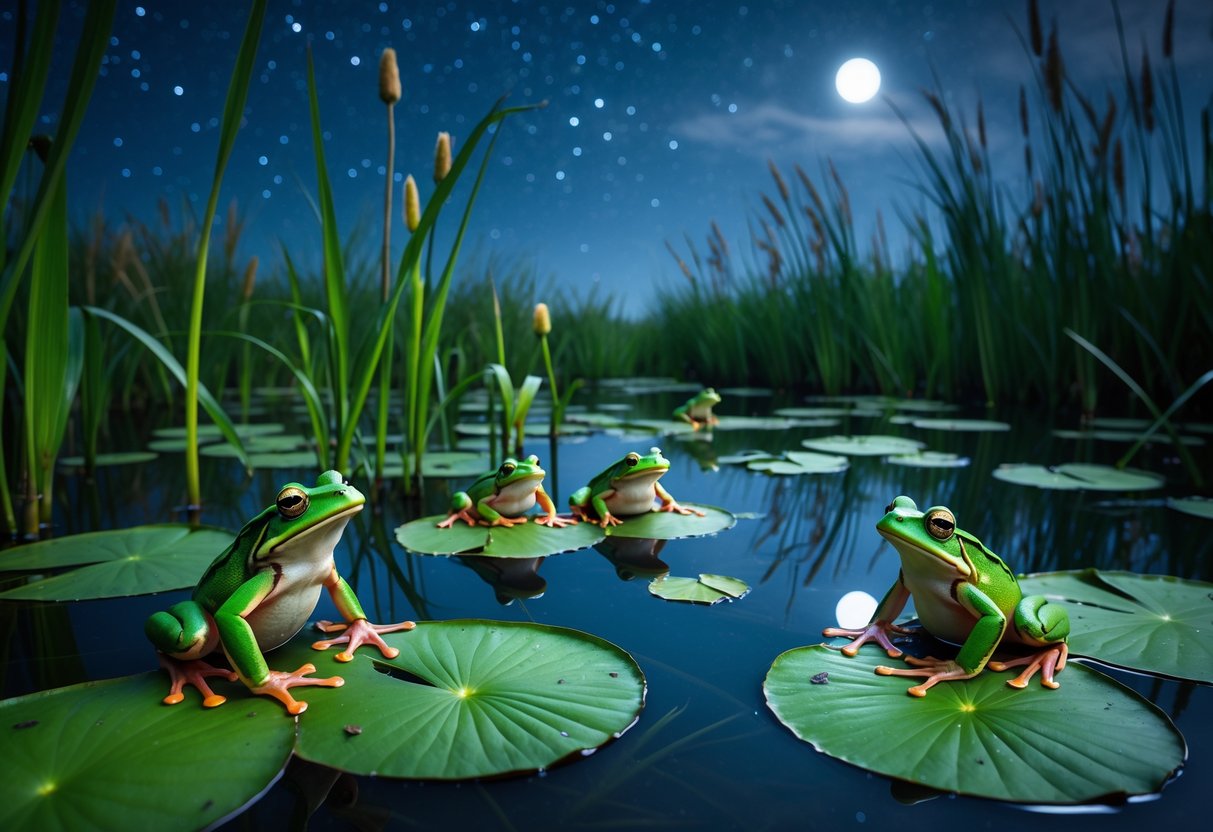
You might wonder where frogs hide during the day, but nighttime is when they get down to business. Their eyes work much better in low light, so they prefer moving and chatting with other frogs after sunset.
If you’re curious about what frogs are up to after dark, stick around.
Nocturnal Behaviors of Frogs

Frogs show off all sorts of quirky behaviors after sunset. They get way more active, using the night to hunt, call out, and stay out of trouble.
Their bodies just handle cool, damp nights better than hot, dry days.
Why Frogs Are Active at Night
Most frogs and toads come out after dark because the night just suits them better. Frogs are amphibians, so they need moisture to keep their skin in good shape.
Night air is usually more humid, and dew forms, so their skin stays nice and damp.
Cooler temperatures at night help frogs avoid overheating. Since they can’t control their body temperature, the night is just easier for them.
Predators like birds aren’t around much after dark, so frogs feel safer hopping around. No wonder bullfrogs and their cousins prefer to party at night.
Croaking and Communication After Dark
When you hear frogs croaking at night, they’re mostly chatting with each other. Male frogs call out to attract females and warn off other males.
The quiet nighttime lets their voices travel farther. Some frogs have eyes built for darkness, but they still rely on their calls to connect.
This is just what frogs do—it’s a huge part of their nightlife.
Hunting and Feeding Habits at Night
At night, bugs and other small critters come out, so frogs have plenty to eat. Think of frogs as little night hunters, taking advantage of the cool, moist air to catch insects, spiders, and sometimes even small mammals.
Their moist skin helps them stay alert and quick while they’re on the hunt. Bullfrogs and other big frogs can even grab larger prey in the dark.
Hunting at night just fits their style.
Where Frogs Go When the Sun Sets
Once the sun goes down, frogs leave the dry, hot hiding spots they use during the day. You’ll find them near ponds, streams, or any damp place with water nearby.
These spots keep their skin wet and give them plenty of hunting grounds.
Some frogs nap under leaves, logs, or even in mud during the day. At night, they head out to cooler, wetter places to stay safe and busy.
You’ll see this back-and-forth with lots of frog species, whether they’re in your backyard or the wild.
Different Species and Nighttime Adaptations

Frogs have all sorts of tricks for surviving and thriving at night. Some use their sharp eyes and ears to hunt in the dark.
Others hide or show off bright colors to warn predators. Each species seems to have its own way of making it through the night.
Tree Frogs and Their Night Activities
Tree frogs really wake up after dark. You’ll hear their calls as males sing for mates.
They hunt insects like moths and crickets, using sharp night vision and sticky tongues. Their big eyes help them see in the dark.
Tree frogs also blend in with their surroundings. Their skin matches leaves and bark, so they can hide from predators while waiting for dinner.
At night, they stick to moist spots to avoid drying out and use the cooler air to stay active.
Bullfrogs: Nighttime Giants
Bullfrogs are the big players and come out mostly at night. You might spot them near ponds or lakes, hunting bigger prey like insects, small fish, or even other frogs.
Their strong legs and wide mouths make catching food easier in the dark.
Bullfrogs use deep, booming calls to find mates on warm nights. Those sounds can echo across the water and are pretty hard to miss.
During the day, they hide in water or under plants to avoid heat and danger.
Diurnal and Brightly Colored Frogs
Some frogs stick to daylight, but brightly colored ones usually switch things up at night. Their flashy skin warns predators that they might be poisonous or taste awful.
At night, these frogs slow down and move less to avoid being noticed by hunters that rely on sound or sight. You probably won’t catch them hunting much after dark, but they stay alert just in case.
Their bright colors send a clear message: stay away.
Dart Frogs and Poison Dart Frogs After Dark
Dart frogs might be tiny, but they’ve got some serious defenses. Most of them come alive at night, flashing those wild colors—almost as if they’re saying, “Back off!” to anything that might want a snack.
These frogs chase down ants and mites, darting around with surprisingly sharp eyesight. Their movements are quick, almost jittery sometimes.
When darkness settles in, poison dart frogs start calling out to each other. You can really hear them during breeding season. Those calls echo through the dense, shadowy forest, helping them track down potential mates.
Their skin packs toxins that most nighttime predators just don’t want to mess with. Thanks to that, dart frogs have a pretty good shot at making it through the night.
Curious about more frog adaptations? Check out tree frog nocturnal activities and dart frog behaviors.


