
Ever wondered how to spot a common frog in your garden or by a pond? It’s actually not that hard.
Common frogs have smooth skin, long back legs with dark bands, and a dark mask just behind their eyes. Their colors change a lot—sometimes green, sometimes brown, and occasionally even red or yellow. So, don’t stress if they look a bit different from one another.
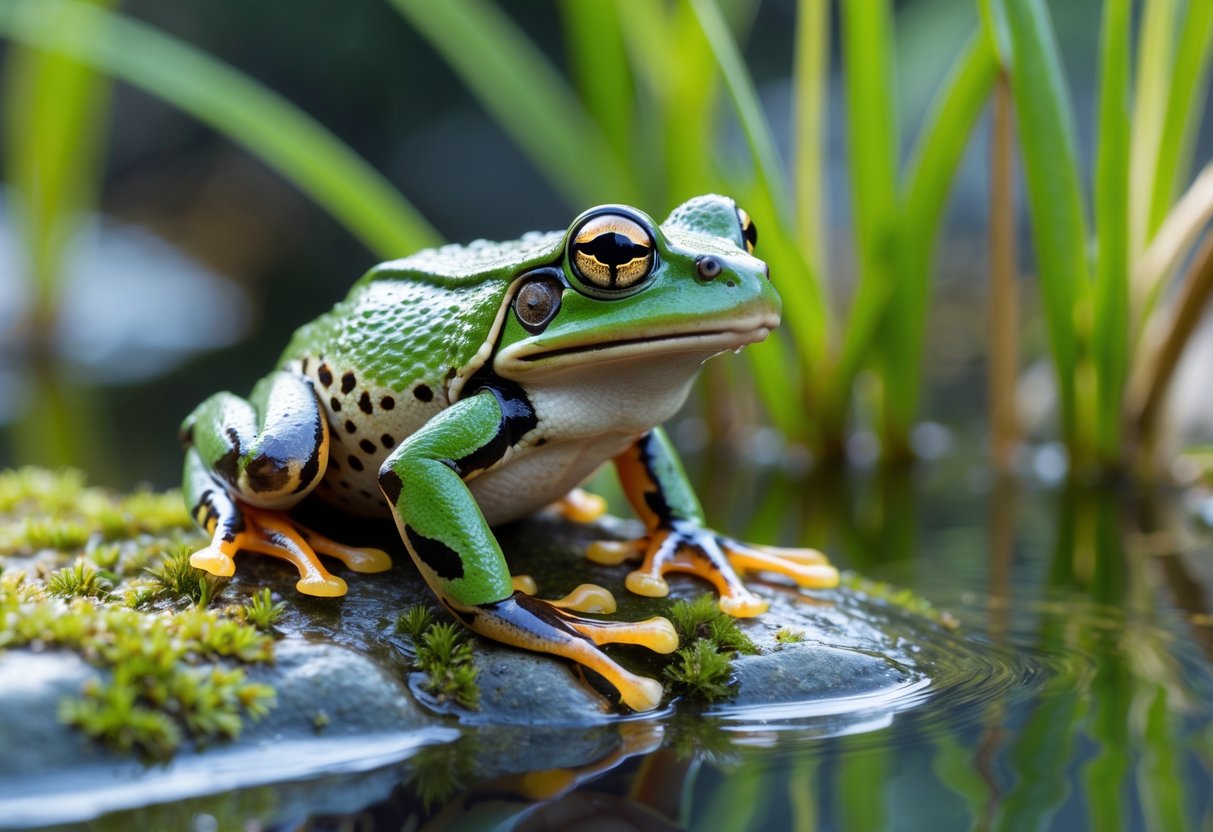
You’ll usually spot them hopping or jumping rather than walking. If you’re out in spring, keep an eye out for those jelly-like clumps of spawn floating in the water.
These simple clues make it way easier to recognize this familiar amphibian next time you’re outside.
Curious to know more about common frogs and how to pick them out in all sorts of places? Stick around, and you’ll probably end up spotting these little jumpers all the time. For more details, the Wildlife Trusts have a handy common frog guide.
Physical Identification of the Common Frog

When you’re looking for a common frog, check the size, color, and markings. These details really set them apart from other frogs.
Notice how their color shifts, or where those dark patches are, and even how their skin feels. Once you get used to these features, you’ll spot common frogs in your area more easily.
Distinctive Color Variations
Common frogs come in a surprising range of colors. You’ll most often see olive-green or brown, but sometimes they show up in yellow, cream, pink, or even black.
Their skin always feels smooth and moist, which keeps them healthy.
Their color changes depending on where they live or the season. This helps them blend in and avoid predators.
So, don’t expect every frog to look identical. The shades and brightness vary, but that smooth skin is usually a giveaway.
Key Markings and Features
Check for dark patches or blotches on the frog’s back. You’ll also notice a dark “mask” right behind each eye.
The legs often have dark stripes, especially on the back ones.
Their pupils are oval and sit horizontally. Body size gives you another hint—males reach about 9 cm, while females can grow up to 13 cm.
If you hear them, their croak is soft and repetitive, much gentler than some other frogs.
Differences Between Common Frog and Other Frog Species
To tell a common frog apart, look at the skin and legs. Common frogs have smooth skin, while toads and a few other species have rough, warty skin.
Their long legs help them jump quickly. Their tadpoles start out black, but as they grow, they get light bronze speckles.
Common toad tadpoles just stay black. If you pay attention to these things, it’s much easier to avoid mixing up the common frog with other species. There are plenty of comparison guides and photos out there if you want to double-check.
Life Cycle, Habitats, and Seasonal Behavior

You’ll see common frogs go through several clear stages, from eggs to adults. They live in all sorts of wet places, and sometimes you’ll find them near homes.
Their behavior changes a lot with the seasons, especially during breeding.
Eggs, Tadpoles, and Froglets
In spring, female frogs lay thousands of eggs in water. You’ll often find these in garden ponds or shallow, still water.
These eggs stick together in clumps, usually attached to underwater plants.
When the eggs hatch, tadpoles appear. Tadpoles live only in water and breathe with gills.
They mostly eat algae and tiny plants. After a few weeks, they grow legs, lose their tails, and turn into froglets.
Froglets leave the water but need moist places to hide. This helps them get ready for life on land as adults.
Preferred Environments and Urban Adaptation
Common frogs like wet, cool spots—ponds, marshes, shady woodlands. You’ll find them in gardens with water, leaves, and bugs to eat.
In towns, they adapt pretty well if there’s a pond or damp place with shelter, like logs or thick plants. They hunt invertebrates like slugs and worms, which are everywhere in gardens.
Even in cities, you might find them hiding under stones or in leaf litter. They always need fresh water nearby for breeding and to keep their skin moist.
Breeding Season and Adult Behavior
Breeding usually kicks off in early spring—think March through May. Adult frogs head over to ponds or slow-moving rivers to find each other and mate.
Male frogs try to get a female’s attention by calling out with a soft croak. Once they’ve paired up, the females lay their eggs in the water, and the males fertilize them right there.
Most of the time, when they’re not breeding, adult frogs stay busy during the day. They hunt insects or whatever small invertebrates they can catch.
If it’s a warmer place, though, frogs might flip their schedule and get active at night just to dodge the heat.
When autumn rolls in and temperatures drop, frogs look for cozy spots—maybe under a log or tucked into a pile of leaves. They’ll hunker down and hibernate until spring shows up again.


