
Would you ever guess that some frogs eat snakes? It sounds wild, but it’s true.
Most frogs stick to eating insects or little critters, but the big ones? They’ll absolutely chow down on a small snake if they get the chance. If the snake’s small enough, big frogs like bullfrogs won’t hesitate to gulp it down.
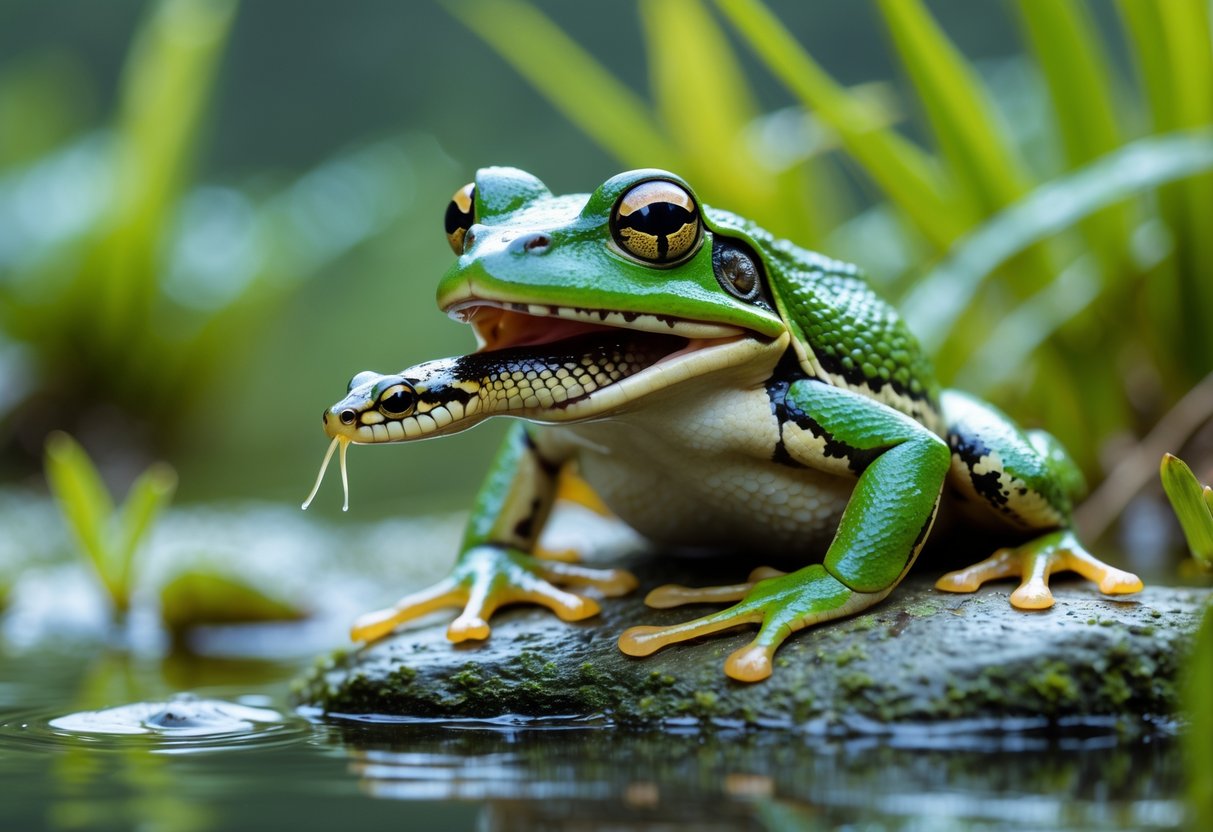
You probably won’t catch this happening in your backyard, but out in the wild, frogs take what they can get. Sometimes, they even eat mildly venomous snakes, which is honestly impressive.
When you dig into what frogs really eat, you’ll see just how adaptable they can be. It’s not just bugs and worms on the menu.
Ever wondered about how frogs and snakes interact? Turns out, some frogs are way more than just bug-eaters.
Let’s see which frogs eat snakes and why this happens.
Which Frogs Eat Snakes and How?

If you think frogs only go after bugs, you might want to think again.
Some frogs are strong enough to take down small snakes. They usually pick prey that fits their size and can handle the risks—even with venomous snakes.
Large Frog Species Known to Eat Snakes
Big frogs like bullfrogs and Goliath frogs are the main snake hunters. American and African bullfrogs have mouths wide enough to swallow small snakes whole.
The Goliath frog, which is just massive, can even handle bigger prey, including young snakes.
You’ll also find cane toads and Argentine horned frogs (Pacman frogs) eating snakes. These frogs use their powerful jaws to grab and swallow any snake that comes too close.
Some tree frogs, like the Australian green tree frog, eat young snakes too. They grow bigger than most people expect, so they can handle it.
Preference for Non-Venomous vs. Venomous Snakes
Most frogs prefer non-venomous snakes. They’re just safer and less likely to fight back with something nasty.
But a few frogs don’t back down from venomous snakes either. The Australian green tree frog, for example, has eaten venomous snakes like the coastal taipan.
Bullfrogs sometimes resist venom from snakes like copperheads and cottonmouths. It’s not foolproof, but they manage to survive bites more often than you’d expect.
A lot of frogs do get bitten while eating venomous snakes. Some survive, thanks to a bit of natural resistance.
Hunting Methods and Prey Size
Frogs usually hunt by ambush. They sit still and wait, then leap or snap at anything that gets close.
Their sticky tongues help them grab fast-moving snakes before they can slither away.
Prey size really matters here. Frogs can only eat snakes that fit in their mouths, so big frogs can swallow juvenile or small snakes.
Smaller frogs only manage tiny, young snakes. Frogs swallow snakes alive, often tail first, which sometimes leads to a bite or two as the snake tries to fight back.
Notable Examples of Frog-Snake Encounters
Some frogs actually seem to seek out snakes. Bullfrogs have eaten garter snakes and other small species.
The Australian green tree frog has eaten venomous snakes like the red-bellied black snake and even the coastal taipan.
Pacman frogs use their strong bite to catch juvenile snakes. Cane toads, being big and heavy, eat small snakes when they’re hungry.
Despite the danger, these frogs often survive even after getting bitten.
This mix of size, hunting skill, and a bit of venom resistance lets certain frogs add snakes to their diet in pretty unique ways.
If you want more details, check out this article on do frogs eat snakes.
Can Frogs Kill Snakes and What Risks Are Involved?

Frogs can be surprisingly good hunters when it comes to small snakes.
But let’s not ignore the real dangers they face. Catching snakes isn’t exactly a safe gig.
How frogs catch snakes, the risk of venom or bites, and their own natural defenses all play a part in whether they make it through the meal.
How Frogs Capture and Swallow Snakes
Big frogs like bullfrogs and cane toads use quick, strong moves to grab small snakes.
Some frogs use their long, sticky tongues to pin the snake before swallowing. Others just leap on the snake and grab it with their mouths, then swallow it whole.
Since they have such big mouths, these frogs can eat animals almost as long as themselves.
They usually swallow snakes headfirst. That way, they avoid the teeth and make swallowing a bit easier.
Bigger frogs go after non-venomous snakes more often. Some will risk a venomous snake, but it’s a gamble.
Smaller frogs just don’t go after snakes—they’re too big or too dangerous.
Potential Dangers and Defenses
Eating snakes comes with risks. Many snakes bite back or have venom that can hurt or kill a frog.
Venomous snakes, like vipers, can do serious damage with just one bite.
Frogs might get poisoned or injured while trying to eat a snake.
Some frogs have defenses, though. Cane toads, for example, have poison glands on their skin that can harm or even kill smaller predators, including some snakes.
But that doesn’t mean they’re safe from everything.
Snakes use venom to defend themselves. Many snakes avoid frogs that are too toxic or tough to eat.
Honestly, the size of the frog and the type of snake really decide how these encounters end up.
Toxins and Immunity Between Frogs and Snakes
Some frogs, like poison dart frogs and cane toads, carry seriously powerful toxins. These poisons make them a real hazard for anything that tries to eat them.
But certain snakes, such as the keelback, have actually evolved resistance to some frog toxins. The keelback can chow down on cane toads, poison and all.
Still, if a cane toad gets big enough, even the keelback might not make it. Sometimes snakes will try to spit out a toxic frog fast, but the poison just overwhelms them anyway.
On the flip side, most frogs don’t have any real immunity to snake venom. If they go after a venomous snake, they’re taking a huge risk—serious injury or even death is on the table.
Both frogs and snakes have their own tricks for dealing with poisons. But honestly, these defenses aren’t foolproof. Nature’s a tough place, isn’t it?


