
Ever wondered if frogs have teeth? The answer might not be what you expect.
Some frogs do have tiny teeth, mostly on their upper jaws, but a lot of species don’t have any teeth at all. Instead of chewing, frogs use those little teeth to grip prey while they swallow it whole.
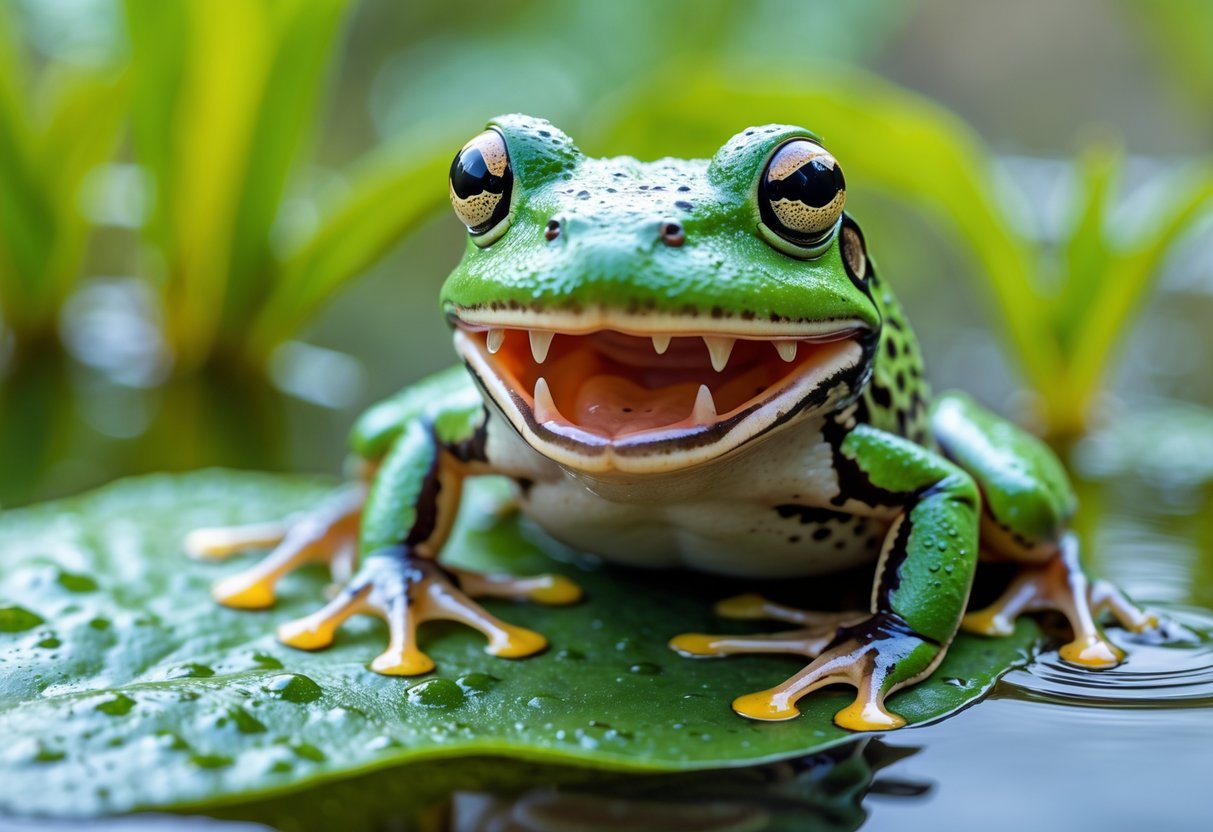
Maybe you’ve seen a frog and assumed they all have teeth, but frogs actually make up a huge group—over 7,000 species. Their dental features? They vary a ton. Some have sharp, tiny teeth, some have fang-like things, and others just use their sticky tongues to snag food.
Why do some frogs lose their teeth as they evolve? Which species still have real teeth? And how do these little amphibians manage to eat without chewing? It’s honestly a wild mix of biology and survival that sets frogs apart.
Do Frogs Have Teeth and What Types Exist?

Frogs show off all kinds of teeth, depending on the species. Some only have teeth in their upper jaws, and a few have some pretty unique setups.
Let’s break down the main types of frog teeth, and also look at the frogs that don’t have any teeth at all.
Maxillary Teeth in Frogs
You’ll find maxillary teeth along the edges of a frog’s upper jaw. These teeth are usually small and kind of pointy.
Frogs use these to grip prey so it can’t wriggle away. They don’t chew with them—unlike us.
Instead, maxillary teeth just hold food in place while the frog swallows it whole. They have enamel, but they’re way simpler than human teeth.
A lot of frogs have maxillary teeth, but they’re so tiny that you probably won’t notice unless you look really close. Still, they’re pretty important for feeding.
Vomerine Teeth Explained
Vomerine teeth sit on the roof of the frog’s mouth, near the front. They point backward, toward the frog’s throat.
This spot helps frogs keep prey from escaping once they’ve caught it. Vomerine teeth are usually smaller and fewer than maxillary teeth.
Frogs use these as an extra grip, especially for slippery insects and small animals. Because they’re hidden inside the mouth, you’d have to open a frog’s mouth wide to see them.
Even though they’re less obvious, vomerine teeth play a big role during feeding.
Unique Cases: Mandibular Teeth and True Teeth
Most frogs don’t have teeth in their lower jaw. That’s just how it goes.
But the Gastrotheca guentheri? It’s a rare one. This species has true teeth on both its upper and lower jaws.
Those teeth have enamel and dentin, just like you’d expect in other vertebrates. The lower jaw teeth help this frog hold onto prey extra tight.
Some frogs, instead of real teeth, have bony, fang-like structures in the lower jaw. These aren’t covered by enamel and act more like little spikes than teeth for chewing.
Toothless Frogs and Toads
A lot of frog species—and most toads—don’t have any teeth at all. They just depend on their sticky tongues to catch and swallow prey.
Toothless frogs usually eat tiny insects, like ants or termites. For them, teeth really aren’t necessary because their tongues do all the work.
Over time, frogs have lost their teeth again and again as they evolved. Some species even lost and then regained teeth, depending on what they ate or where they lived.
If you’re curious about how tooth loss connects to frog diets, check out this frog tooth evolution and dental anatomy article.
Fascinating Adaptations and Evolution of Frog Teeth

Frog teeth are honestly more varied than you’d guess. Some frogs replace their teeth all the time, while others have really odd types.
A few species keep unique teeth, but many just lose them altogether as they evolve. You can see how these differences tie into what they eat and how they live.
Tooth Replacement and Shedding
Frogs, like most amphibians, swap out their teeth regularly as they age. This lets them keep sharp teeth for catching prey.
When a tooth falls out or wears down, another grows in its place. Froglets, or young frogs, start growing teeth during metamorphosis—not when they’re embryos.
Not all frogs follow the same tooth pattern, though. Some only have teeth on the upper jaw, while rare ones like Gastrotheca guentheri have true teeth on both jaws.
These teeth are usually so tiny you’d need a magnifying glass to spot them. This constant replacement helps frogs keep their grip on prey, especially insects.
Still, lots of frogs lose their teeth for good and don’t grow new ones, which probably says something about their diet.
Special Frog Species with Notable Teeth
A few frog species really stand out because of their teeth. Gastrotheca guentheri is one of the rare frogs with full sets on both jaws.
Pacman frogs and African bullfrogs (Pyxicephalus adspersus) also have thick, prominent teeth for grabbing bigger prey. The Pacman frog’s teeth let it bite down hard, which fits its fierce reputation.
African bullfrogs use their sharp teeth to hold onto prey that’s fighting back. These strong teeth are a big contrast to most frogs, who just use sticky tongues to catch small bugs.
It’s pretty clear that frogs evolved their teeth—or lost them—based on what they eat and where they live.
Evolutionary Insights and Dollo’s Law
Frogs have ditched their teeth more than 20 times over their long evolutionary history. That’s pretty unusual when you compare them to most other animals.
Depending on what they eat, some frogs just don’t need teeth anymore. Daniel Paluh and his team used CT scans to dig into this strange trend.
Oddly enough, a few frogs seem to have grown tooth-like structures again after losing real teeth. That really throws a wrench into Dollo’s law, which basically claims that once a complex feature like teeth disappears, it shouldn’t come back.
Scientists still aren’t sure if these new structures count as true teeth. They’ll need more research to figure that out.
Frog tooth evolution just keeps surprising us. If you want to dive deeper, check out studies on frog dentition and evolution.
Learn more about tooth evolution and loss in frogs and see how this connects to their survival.


