
Spotting a frog in your garden can be a surprise, but honestly, it’s usually a good one. Frogs eat a ton of garden pests, so they help keep bug populations down.
If you come across a frog, the best move is to make sure it’s got a safe place to hang out, and just try not to bother it too much.
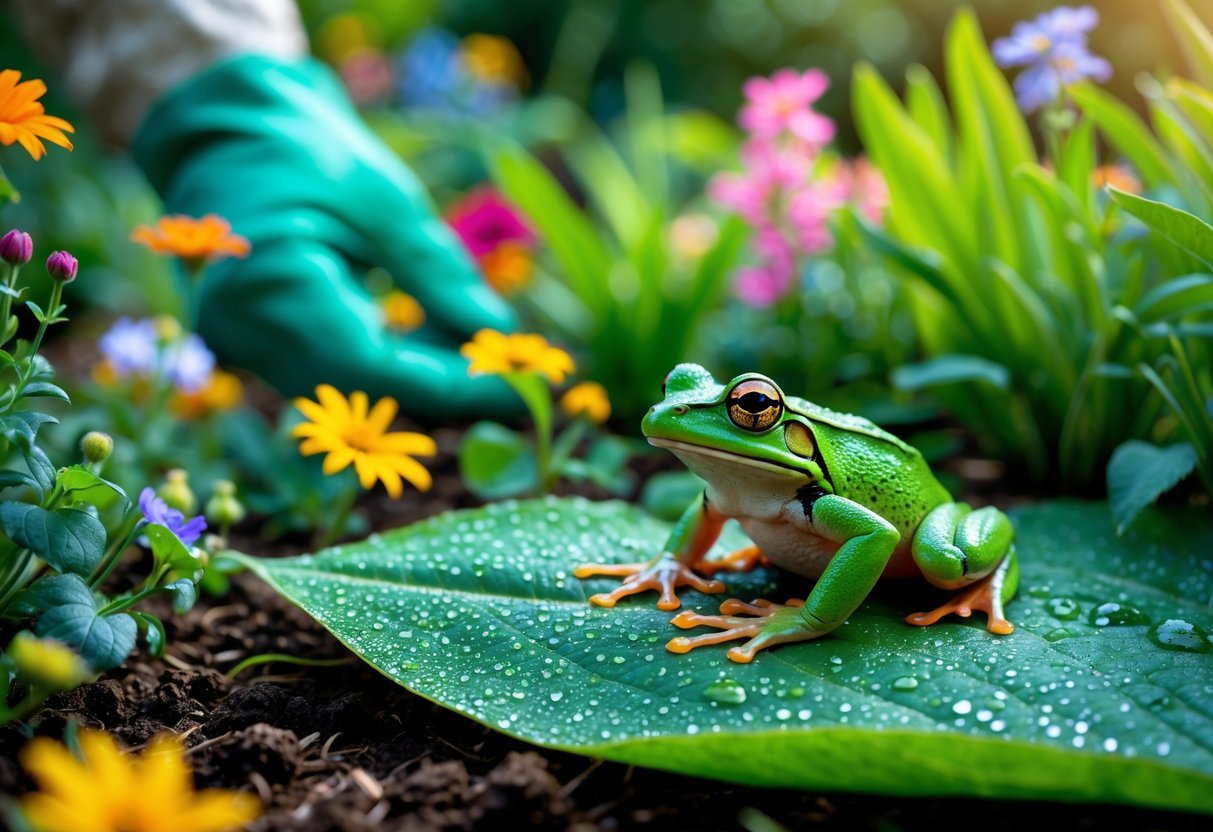
You can help frogs by keeping your garden tidy, getting rid of standing water, and leaving some natural shelter like plants or logs around.
Frogs look for damp, shady spots where they can hunt bugs and stay hidden. If you know why frogs show up, you can decide whether to welcome them or maybe nudge them along.
If you want to keep your garden friendly for frogs—or if you’d rather they move along—acting quickly really helps. This guide’s here to walk you through caring for your new visitors or keeping them from causing trouble.
First Steps When You Find a Frog

When you spot a frog, try to approach it carefully and with respect. It helps to know how to watch the frog without stressing it out.
Sometimes you’ll need to step in if the frog’s in danger. Learning to recognize the frogs that live in your area helps you figure out what you’re dealing with.
How to Safely Observe Frogs
Give the frog some space. Frogs react to loud noises and fast movements, so move slowly and keep quiet.
If you want a closer look, grab some binoculars instead of reaching in. Don’t pick up the frog unless it’s really in trouble.
Frog skin’s delicate and can soak up stuff from your hands, which isn’t good for them.
Take note of where the frog likes to hide or rest. Look around for water or damp spots—frogs need moisture to stay healthy.
Helping Frogs in Danger
If you find a frog that’s stuck or hurt, try moving it gently to a safer spot. Pick a place nearby with shelter—maybe under some leaves, bushes, or a rock.
Make sure it’s out of reach from predators and not exposed to harsh weather.
Keep the frog close to where you found it. Frogs like familiar territory, usually near ponds or damp ground.
If the frog looks really hurt, reach out to a vet who knows amphibians. Some vets can give advice or even treat wild frogs.
Skip household remedies or chemicals—they can do more harm than good.
Identifying Common Frog Species
It helps to know which frogs live in your area. Check out their size, color, and skin texture.
Most common frogs are green or brown and have smooth, moist skin. Some show off dark spots or stripes.
You might run into toads too—they’ve got drier, bumpier skin. Listen for their calls, especially in spring, since that can be a big clue.
Grab a simple guide or use an online tool to help you ID the frog. Once you know what you’re looking at, it’s easier to protect them or figure out if you’ve found something unusual.
If you want more details about handling and identifying frogs, check out The Frog Lady FAQ.
Managing Frogs in Your Garden

Frogs can be helpful garden buddies, but sometimes they’re a bit of a nuisance. Knowing when to let them stay and how to handle their visits makes your garden better for you and for them.
You can create spaces frogs love or gently keep them away if you need to—no harm done.
Understanding the Benefits of Frogs
Frogs, along with toads and tree frogs, munch on lots of insects that annoy gardeners. They help control pests like mosquitoes, flies, and caterpillars, so you don’t have to reach for chemicals.
Bullfrogs even eat bigger bugs and sometimes small pests, which keeps things balanced.
Frogs improve soil health by cycling nutrients through their waste. They also feed animals like grass snakes and birds, so they’re a big part of your backyard’s ecosystem.
And honestly, watching frogs can be fun—they add a bit of charm to the garden.
When Frogs Become a Problem
Sometimes frogs show up in big numbers or get really loud, especially in spring or summer. Too many can hide in tall grass or damp spots and may damage tender plants or lawns.
Their croaking might get on your nerves if they’re close to where you hang out.
Some frogs release mild toxins, so if you have pets or kids, keep an eye on where frogs gather.
Pools or ponds without escape ramps can trap frogs, which isn’t good for them and can mess with your water quality.
Creating a Frog-Friendly Habitat
If you want frogs around, give them shelter, food, and water. Set up a shallow pond with some moving water—like a little fountain or bubbler—to keep mosquitoes down and help frogs breed.
Add rocks, logs, or thick shrubs for hiding places.
Plant herbs like mint and marigolds; they cut down on pest bugs and won’t hurt frogs. Keep grass trimmed but leave some moist soil here and there so frogs can keep cool.
Skip the pesticides—they can harm frogs and the good insects, too.
How to Keep Frogs Away Humanely
If you want fewer frogs hanging around, start by getting rid of their favorite hiding spots. Keep your grass and weeds trimmed short. Move wood piles, toys, or anything else where frogs could take a break.
Try tossing a few fake predators—like rubber snakes or herons—around the yard. Sometimes that’s enough to make frogs think twice about sticking around.
Frogs love moisture, so limit standing water wherever you can. Put up a fence or some chicken wire if you want a physical barrier.
You can gently discourage frogs by spraying a homemade vinegar solution or sprinkling coffee grounds. These won’t hurt them, but frogs usually don’t like it.
Got a pool? Set up a floating ramp or a FrogLog so frogs can climb out easily. That way, they won’t get stuck or drown.
Skip the harsh chemicals and traps—they’re not safe for anyone. If things get out of hand, you might want to call a pro who can move frogs safely and legally.
For more tips, check out 8 Best Ways To Safely Get Rid Of Frogs From Your Garden.


