
Ever wondered if frogs can bond with humans? The answer isn’t exactly what most people hope for. Frogs don’t love or form emotional bonds like dogs or cats, but they can get used to you through routine and positive experiences. In time, your frog might learn to trust you and feel safe when you’re around.
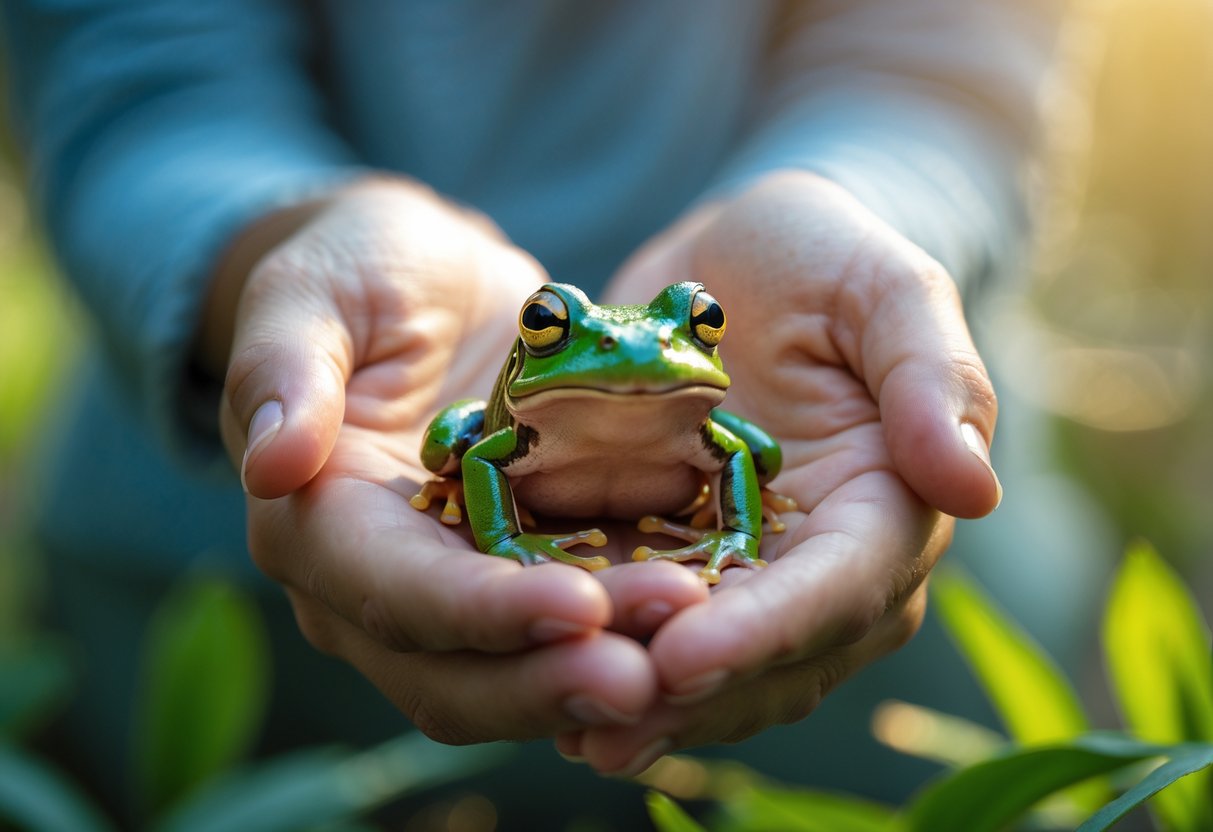
Bonding with a frog takes patience and a bit of understanding. Frogs show comfort in their own way.
They won’t seek out affection, but they might get used to your voice, your gentle hands, and the way you care for them. When you see your frog relax around you, that’s a good sign you’re building trust.
If you want to connect with your frog and understand their unique quirks, this guide offers some practical steps. You’ll find it’s not about hugs—it’s about helping your pet feel at ease.
Can Frogs Bond With Humans?
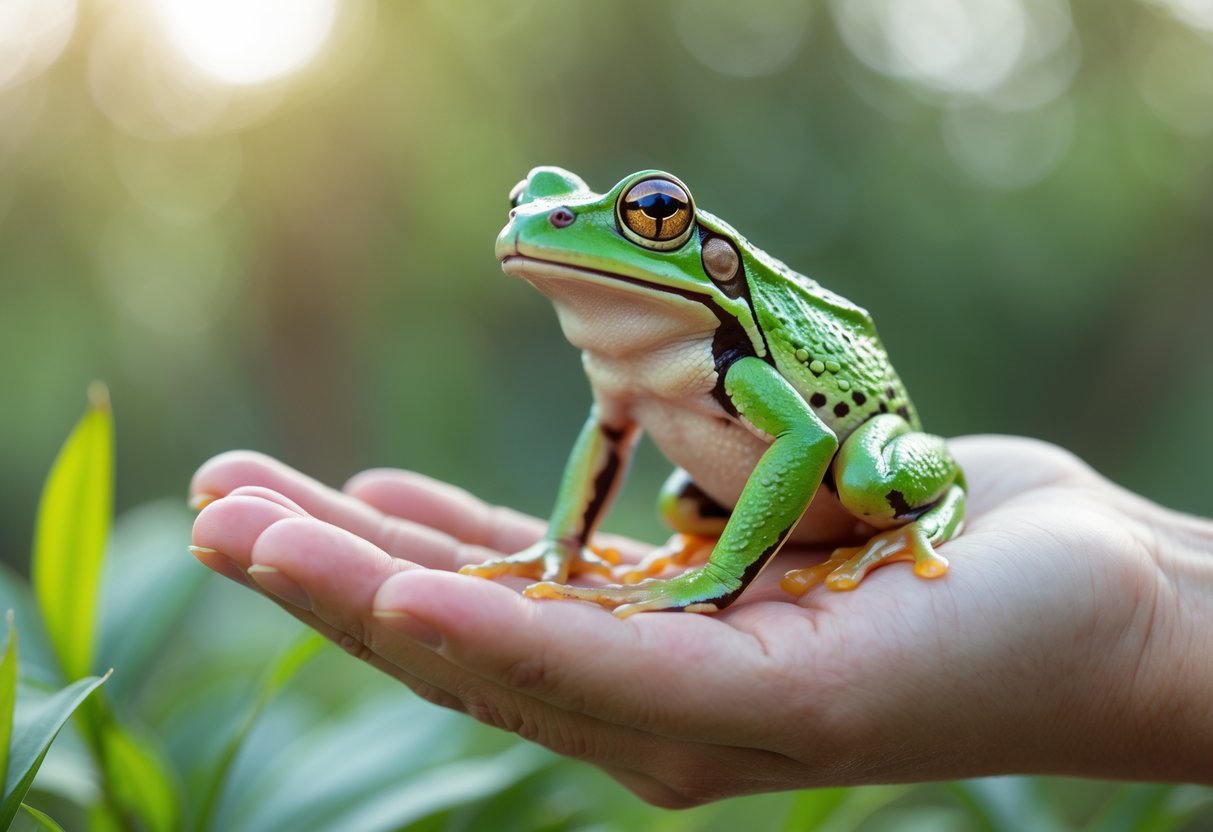
Frogs don’t bond with humans the way dogs or cats do. Still, they can recognize their caretakers and show behaviors that hint at comfort or familiarity.
If you get to know their limits, you’ll set better expectations for your relationship.
Understanding Frog Behavior Towards Humans
Frogs mostly see you as part of their world. If you feed them regularly, they might recognize you by sight, smell, or just the routine.
Usually, they connect you with food or warmth, not affection. Sometimes frogs “cuddle” up to warm spots, but that’s really just about comfort.
With gentle, daily interactions, they might get less jumpy and a bit more relaxed. Each frog species handles things differently.
Some tolerate handling better than others, but most frogs prefer you keep it to a minimum. Consistent care and a gentle approach help build trust.
Emotional and Social Capabilities of Frogs
Frogs don’t feel emotions like love or hate. Their brains just aren’t built for it.
Some species, though, show basic social behaviors—like pair bonding in the wild.
Researchers found that Ranitomeya imitator poison frogs can sync up hormonally with their mates. That hints at a simple connection between pairs, but it doesn’t mean they bond with humans.
For pet frogs, emotions stay simple and focus on survival: food, safety, and reproduction. What you see is more about those needs than any emotional attachment.
Signs of Attachment in Frogs
Frogs won’t form attachments to humans like a dog might, but they can get familiar with you. If your frog stays calm when you approach or stops trying to escape, that’s a good sign.
Some frogs will sit near you for warmth or stick to their feeding routines. Over time, they might seem less nervous, which means they trust your care.
Don’t expect your frog to come to you for comfort or to miss you when you’re gone. Their “bond” is mostly practical, built on routine.
If you’re curious about other people’s experiences, check out Reddit’s r/frogs for discussions on frog affection.
Factors That Influence Frog-Human Bonds
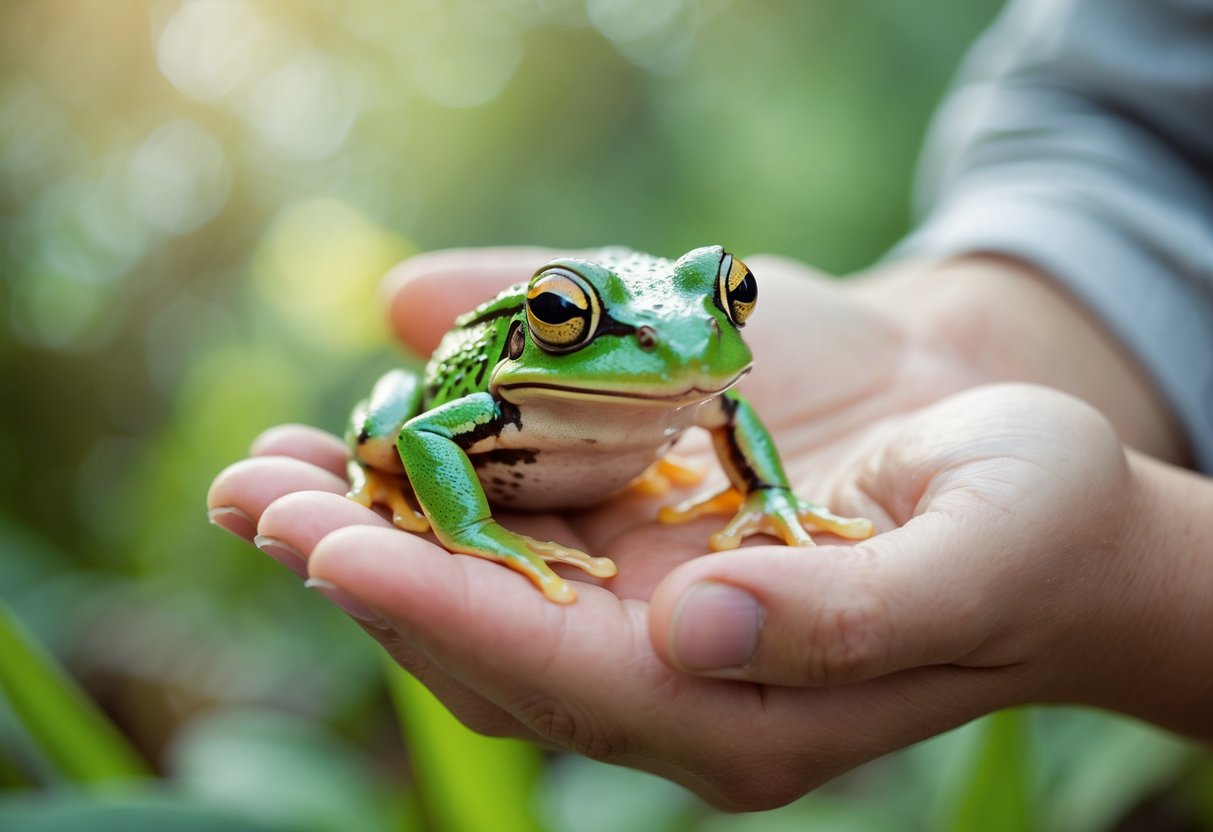
Connecting with frogs depends on a few things. How often you interact, whether the frog recognizes you, and what kind of frog you have all matter.
These factors shape how comfortable or cooperative your frog seems with you.
Role of Regular Interaction and Care
Spending regular time with your frog helps build trust. When you handle or feed them gently, frogs get used to your presence.
You’ll want to stay calm and move slowly—frogs startle easily. Keeping their habitat clean and cozy also matters.
When you meet their needs, frogs feel safer. While they won’t show affection like a dog, steady care can make them less stressed.
Always wet your hands before touching a frog, since their skin is sensitive. These small steps help your frog get familiar with you.
Recognizing and Responding to Owners
Frogs can learn to recognize you, mostly by sight and smell. If you show up regularly with food, they may stop hiding or acting nervous.
You might notice your frog staying still or inching closer when you’re near. This means it knows you’re not a threat.
Building this kind of trust takes patience and repeated positive experiences. Frogs don’t show affection openly, but their subtle signs of recognition are still pretty meaningful.
When you notice these changes, it’s easier to connect and keep things calm for both you and your frog.
Species Differences and Personality
Different frog species react to humans in their own ways. Poison frogs, for example, tend to act more social and active, so you’ll spot changes in their behavior more easily.
Other frogs? They might just hide and keep to themselves.
Your frog’s personality matters too. Some frogs warm up to their owners pretty quickly, but others just seem to stay cautious no matter what.
Things like age, health, and the environment definitely play a part.
If you know your frog’s species traits, you can tweak how you care for and interact with them. Let’s say you’ve got a bullfrog—those guys can get pretty vocal, especially during feeding or handling, unlike some quieter frogs.
If you want to dig deeper, there’s a study on pair bonding and behavior in poison frogs: Physiological state matching in a pair bonded poison frog.


