
So, are frogs actually clean to touch? Well, not really. Frogs can carry nasty bacteria like salmonella, so handling them with bare hands isn’t always the best idea. Their skin also soaks up whatever’s on your hands—chemicals, oils, you name it—which can mess them up. Honestly, touching frogs without thinking it through can be risky for both you and the frog.
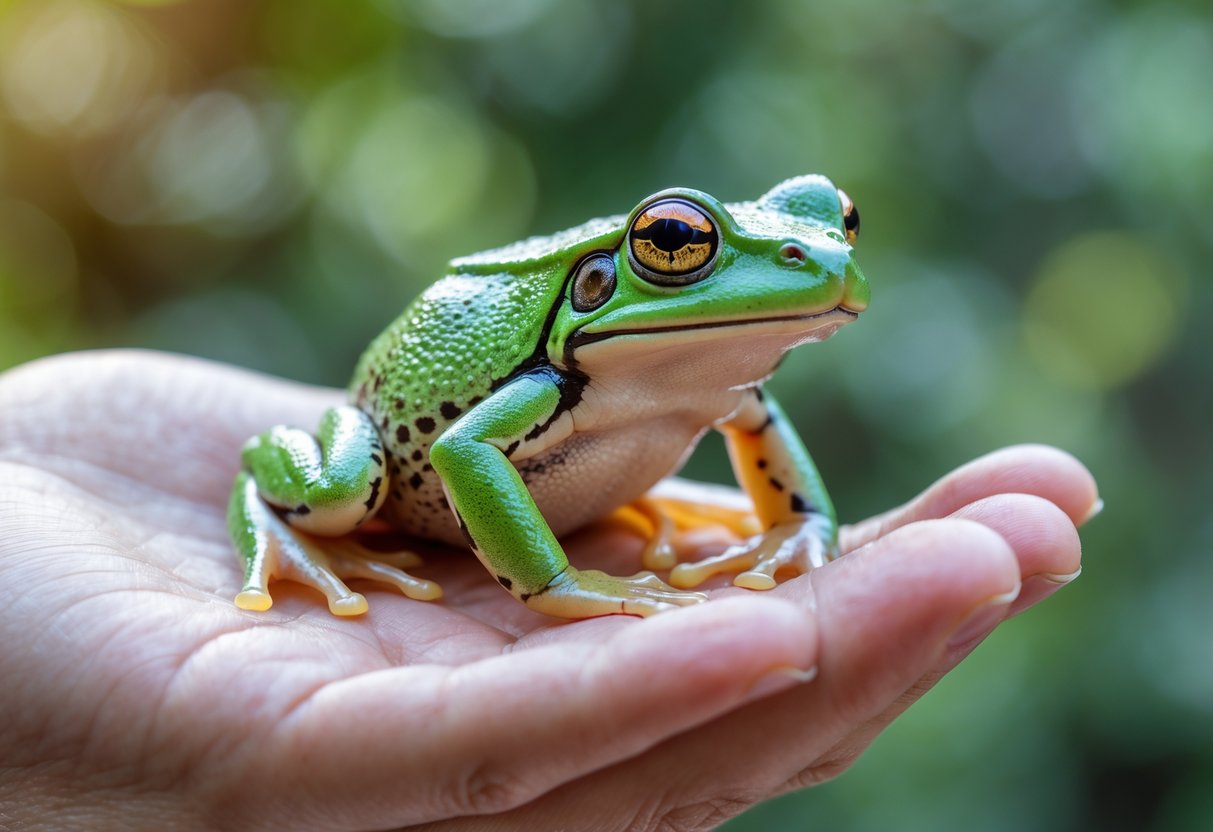
Even if frogs look harmless and kind of cute to hold, their skin is super delicate. Anything on your hands can affect them. On top of that, a lot of frogs have toxins on their skin to keep predators away.
Some frogs might even give you mild irritation if you touch them. It’s smart to be cautious and not just scoop them up.
If you want to enjoy frogs, you’ve got better options than just grabbing them. Learning how to handle them gently and washing your hands well can keep you both out of trouble.
Let’s look at what you should know before you reach for a frog.
Can You Safely Touch Frogs?

Touching frogs might sound fun, but there’s stuff you should know first. Their skin is fragile and some species carry toxins that can be bad news for you.
If you get the risks, you’ll do a much better job protecting yourself and the frogs.
How Clean Are Frogs to the Human Touch?
Frogs aren’t very clean for us to touch. Their skin can have bacteria and parasites that might cause infections in people.
When you pick up a frog, you could end up with germs or diseases they carry. Not great.
Since frogs hang out in water and damp places, their skin usually hosts bacteria that can get on your hands. That’s why washing up afterward is a must.
Some frogs also secrete mucus that feels slimy and might have harmful bacteria in it.
But it goes both ways. Human skin can hurt frogs too.
Oils, lotions, or soap from your hands can damage their skin, which they actually use to breathe. Before you touch them, wet your hands with clean water or put on damp gloves to keep them safe.
If you want more details, check out this guide on steps to safely handle and observe frogs.
Risks of Touching Frog Skin
Frog skin is super fragile. If you touch them with dry or dirty hands, you can mess up the thin layer they use to breathe.
That can stress them out or even injure them.
You can also spread diseases between frogs. Amphibians get hit hard by stuff like chytrid fungus, which has wiped out a lot of frogs around the world.
If you handle frogs in different places without cleaning your gear, you might spread harmful pathogens.
Handling frogs too long or during breeding can bother them and throw off their normal behavior. Keep your handling short and gentle.
Use clean, wet hands or powder-free gloves to reduce risks. There’s more on this in the frog handling etiquette article.
Dangers of Toxins: Poisonous Frogs and Toads
Some frogs and toads have toxic skin to keep predators away. These toxins can hurt you if you touch or accidentally swallow them.
Poison dart frogs, for example, have seriously strong poisons on their skin that can cause big problems for humans.
Toads make a substance called bufotoxin. If that gets on your hands and then you touch your eyes, mouth, or a cut, you might get irritated or sick.
Don’t touch your face after handling toads or poison dart frogs.
If you’re not sure whether a frog or toad is toxic, just don’t touch it. Always wash your hands after any contact with amphibians to get rid of toxins or bacteria.
You can read more about these risks in this article about poisonous frogs and toads.
Best Practices for Handling Frogs

When you handle frogs, you need to protect their sensitive skin and avoid spreading disease. Even simple things like wetting your hands or wearing the right gloves can help a lot.
Some species, like tree frogs, need even more care because they’re extra delicate.
Why Wet Hands Matter
Frogs have thin, delicate skin that’s covered in slippery mucus. This mucus keeps them moist and guards them against germs.
Dry hands can wreck this layer and hurt the frog.
Before you touch a frog, wet your hands with water from where the frog lives, like a pond or stream. That helps keep the mucus safe and keeps the frog calmer.
Wet hands also lower your chances of picking up germs.
Skip the soaps, lotions, or anything chemical. That stuff can soak into a frog’s skin and cause real problems.
Wetting your hands with natural water is honestly the best way to go if you have to handle a frog.
Using Non-Powdered Vinyl Gloves
If you need to handle frogs a lot or more than one at a time, go for gloves. Non-powdered vinyl gloves work best since they don’t have the nasty chemicals some other gloves do.
Before you put them on, rinse the gloves with pond or natural water to keep the frog’s skin happy. Use a new pair for each group of frogs or each location to avoid spreading diseases.
Powdered gloves aren’t good for frog skin, so skip them. Vinyl gloves give you a clean barrier but you can still feel the frog enough to be gentle.
Always toss the gloves after you’re done so you don’t spread anything to other animals.
Tree Frogs and Handling Considerations
Tree frogs have super soft, thin skin, so you really need to be careful when you handle them. Their skin reacts quickly to damage or drying out, and honestly, it’s just better not to touch them unless you absolutely have to.
If you need to pick up a tree frog, go ahead and wet your hands first, or grab some vinyl gloves and dampen them with pond water. Don’t squeeze or grip them too tightly—these little guys get stressed pretty easily.
Stress can mess with their health and change how they act. Most of the time, it’s smarter to just watch tree frogs instead of picking them up, unless you’re rescuing them or moving them for their own safety.
Handle them as gently and briefly as possible. That way, their skin stays healthy and you lower the risk of hurting them or making them sick.
Want more details on handling amphibians? Check out this advice on how to safely handle frogs.


