
You’ve probably heard someone say frogs have two lives. It’s not just a quirky phrase. Frogs really do experience two totally different lives—they start out in water as tadpoles, then turn into adults that live on land.
This wild transformation is called metamorphosis. It lets frogs survive in both water and on dry land, which is pretty rare for animals.
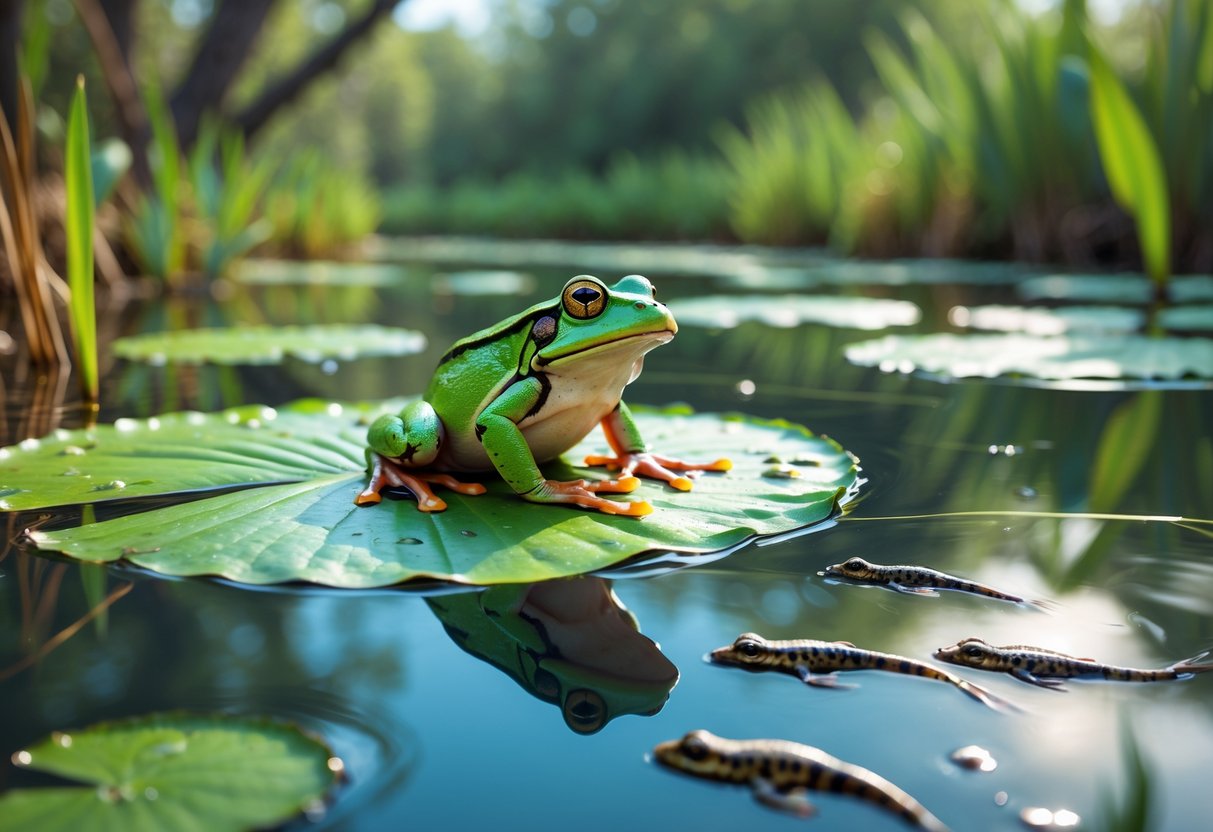
When frogs are tadpoles, they breathe through gills and swim around with a tail. As they grow up, they develop lungs and legs, then hop out onto land.
This unusual life cycle lets frogs explore two worlds. Not many animals get to do that.
It’s honestly fascinating and makes frogs stand out among other creatures.
Curious how and why frogs make this dramatic switch? Let’s dive into their journey and see what it means for their survival and spot in the natural world.
If you want even more details, you can check why frogs are said to have two lives at The Dogman.
Understanding Why Frogs Are Said to Have Two Lives

Frogs really do live in two different worlds. They start off in water, then move onto land as adults.
Their bodies change a lot to handle both places. It helps them survive wherever they end up.
What Does ‘Two Lives’ Mean for Frogs?
When people say frogs have “two lives,” they’re talking about how frogs live in two separate places during their life. First, you’ll find them as tadpoles underwater.
Tadpoles breathe with gills and swim around with their tails. Later on, they morph into adult frogs.
Adults grow lungs so they can breathe air, and legs for hopping on land. This shift is almost like starting over.
It lets frogs find the best food and safest spots at each stage.
The Dual Stages: Aquatic and Terrestrial Life
Frogs go through two main stages: aquatic and terrestrial. In the aquatic stage, frogs lay eggs in water, and these eggs hatch into tadpoles.
Tadpoles use their gills to breathe and their tails to swim. They munch on algae and other tiny plants.
After metamorphosis, the terrestrial stage kicks in. Frogs grow legs and lungs, and their tails disappear.
Now, they live on land, hunting insects and other small creatures. This helps them dodge water predators and tap into new food sources.
Reasons Behind the Dual Life Cycle
Frogs’ two lives serve a real purpose. Water gives young frogs a safe place to grow.
Eggs and tadpoles stay protected from drying out and some dangers on land. Once they’re adults, frogs use land to find food and escape threats in the water.
Splitting life between water and land helps frogs survive in different habitats. It’s a clever way to balance the risks and rewards of both worlds.
Adaptations for Life in Water and on Land
Frogs have some pretty cool tricks for living in both places. In water, tadpoles breathe with gills and use their tails to swim.
Their mouths are set up for eating tiny plants. When they move to land, frogs develop lungs for breathing air.
Their skin keeps them moist, so they don’t dry out. Strong back legs let them jump, and their eyes help them spot prey and watch out for danger.
Hormones inside their bodies control these changes. Everything happens at just the right moment for a smooth switch from water to land.
Want to learn more about how frogs manage two lives? Check out Understanding the Dual Lives of Frogs.
Frog Metamorphosis and Development Stages

Frogs start out in water, then head to land as their bodies change. You’ll see how they go from eggs to tadpoles to adults.
Let’s look at what happens during these changes, and how hormones like thyroxine steer the process.
The Life Cycle of Frogs: From Egg to Tadpole to Adult
Frogs begin as eggs, which they lay in ponds or wetlands. The eggs hatch into tadpoles that live fully underwater.
Tadpoles breathe through gills and swim with their tails. They eat plants and algae as they grow.
Over time, tadpoles go through metamorphosis. Legs start to sprout, tails shrink away, and lungs develop.
Once they’re ready, frogs leave the water and live on land. Adults breathe air and can jump.
This whole cycle shows how frogs rely on both water and land at different times. That’s where the “two lives” idea comes from.
Key Changes During Frog Metamorphosis
During metamorphosis, frogs go through some dramatic changes. Their gills shrink as lungs grow in, so they can breathe air.
Legs pop out for moving on land, and the tail fades away. Even the mouth changes shape—from a small, plant-eating mouth to a bigger one for catching bugs.
The digestive system gets shorter since adults switch to eating insects. Each change happens step by step.
Tadpoles slowly lose their water-living features and pick up what they need for life on land.
Role of Thyroxine and Hormones in Transformation
Thyroxine really drives frog metamorphosis. It tells the body when it’s time for those big changes—like sprouting legs and dropping the tail.
If tadpoles don’t get enough thyroxine, they just won’t turn into adult frogs the way they’re supposed to.
Other hormones jump in to help thyroxine with tissue changes and organ growth. These signals sort of keep the transformation on track, making sure everything happens at the right moment.
It’s kind of amazing how nature manages the frog’s switch from water to land, right?


