
Frogs actually live pretty busy lives, even if they look quiet most of the time. They start out as tiny eggs in the water, then grow into tadpoles with gills, and eventually turn into frogs that can handle both land and water.
Throughout their lives, frogs eat, dodge predators, search for mates, and sometimes even look after their young.
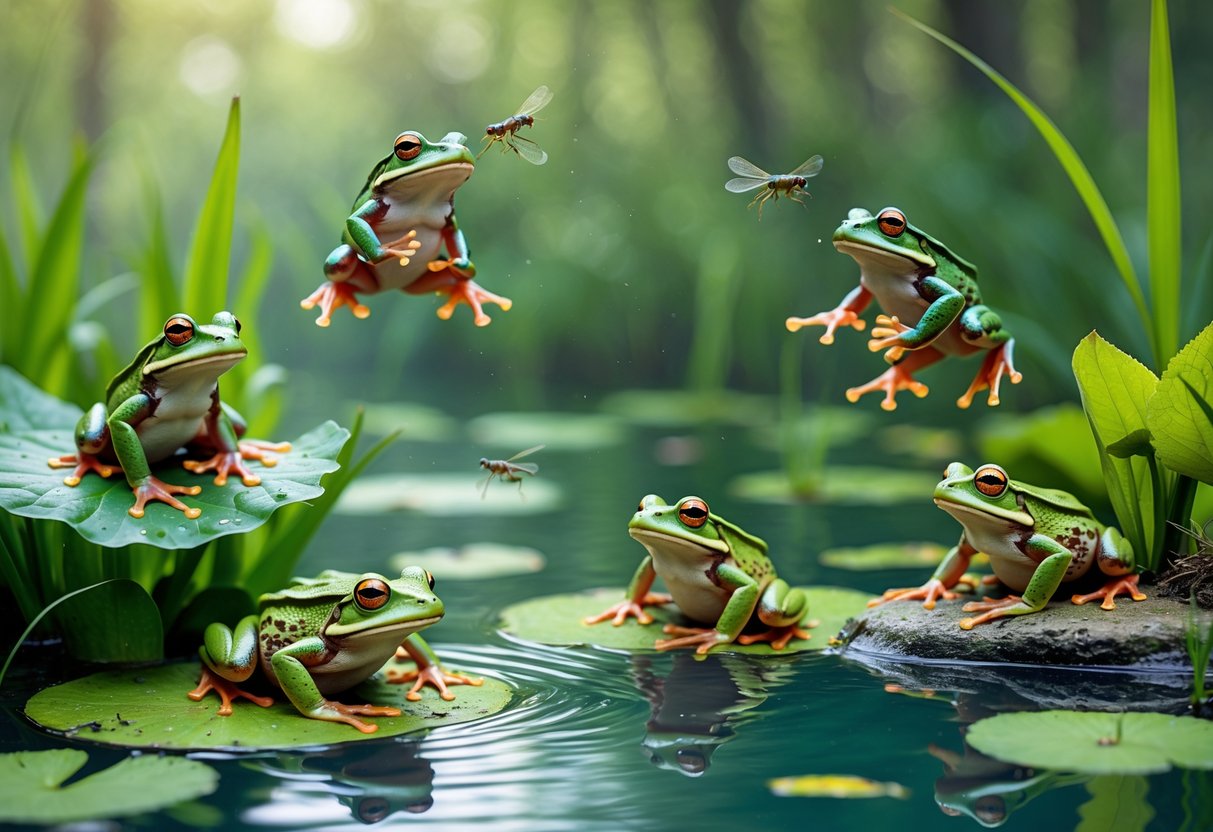
You might spot frogs hopping around or hear them croak at night, but there’s way more happening than you’d guess. Their strong legs let them leap away from trouble, and their diet changes a lot—from munching on tiny plants as tadpoles to snapping up insects as adults.
Frogs play a pretty important part in nature, keeping bugs under control and serving as food for lots of other animals.
If you’re curious about what frogs do every day and why they matter so much, stick around and check out their habits and life stages.
Life Cycle of Frogs: From Egg to Adult

Frogs start their lives in water and go through some pretty wild changes to get ready for land. Their life moves through obvious stages, and you can really see their bodies and habits shift along the way.
They begin as eggs, grow into tadpoles, change through metamorphosis, and finally become adult frogs that can live and reproduce.
Frog Eggs and Embryo Development
A frog’s life kicks off as an egg, usually laid in calm places like ponds or marshes. Frogs lay their eggs in clusters called spawn, and a jelly coating covers them to keep them safe from drying out and hungry animals.
Inside each egg, the embryo slowly grows. In about one to three weeks, the embryo develops enough to hatch as a tadpole.
How fast this happens depends on temperature and water conditions.
The egg stage matters because it gives the tadpole a safe start before it faces the outside world.
Tadpole Stage and Growth
After hatching, the frog becomes a tadpole—a little aquatic creature with a long tail and gills. Tadpoles breathe underwater and mostly eat plants and algae.
This stage is all about getting bigger and stronger. As the tadpole grows, it starts to sprout legs—first the back ones, then the front.
You’ll see its gills slowly turn into lungs, getting ready for air.
Depending on the species and environment, this stage might last a few weeks or even months. You’ll notice lots of changes as the tadpole gets ready for the next step.
Metamorphosis: Tadpole to Froglet
Metamorphosis is where things really speed up. The tadpole’s tail shrinks and gets absorbed, and its legs finish developing. Lungs take over for breathing, and the gills fade away.
Inside, the digestive system changes too, switching from a plant-based diet to eating mostly insects.
These changes set the froglet up for life on land.
This phase really shows off how frogs can handle both water and land—it’s pretty amazing, honestly.
Adult Frogs and Reproduction
Once metamorphosis wraps up, the froglet turns into an adult frog that can mostly live on land. Adult frogs have strong legs for jumping and sticky tongues for catching insects.
They come in all sizes and live in all sorts of places, but every adult frog helps control bugs and lets us know when the environment is changing.
After growing for a year or two, adult frogs look for mates and lay eggs, starting the whole cycle again.
Adult frogs help keep ecosystems healthy by controlling insects and supporting biodiversity.
For more details on the stages of frog development, you might want to check out the full frog life cycle.
Diversity and Survival of Frog Species
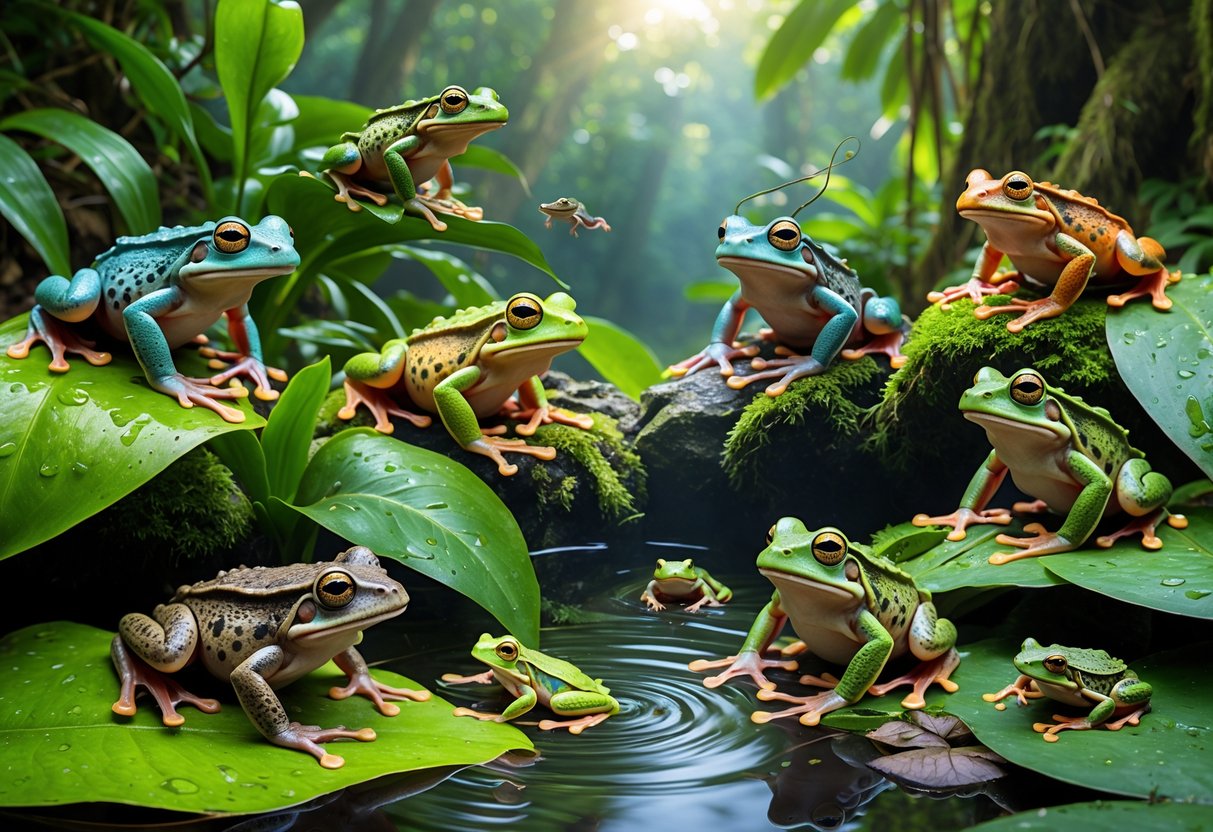
Frogs come in all sorts of shapes and sizes, and they’ve figured out some clever ways to survive and protect their babies. They deal with a lot of problems in their habitats, but many find ways to keep their numbers up.
You can find some frogs hanging out in quiet forests, while others manage just fine in deserts or even up in trees.
Unique Parenting Strategies in Frogs
Some frogs really go the extra mile when it comes to parenting. For instance, the Surinam toad carries eggs in pockets on her back until the baby frogs pop out. This keeps the eggs safe from predators and drying out.
A lot of frogs use amplexus, where the male grabs onto the female during egg laying to make sure fertilization happens.
Some poison dart frogs take things even further by guarding the eggs and carrying tadpoles to water.
These parenting tricks help frogs survive in places where predators or dry ground could make things tough for their young. Their care means more babies grow up to be adults.
Environmental Challenges and Frog Populations
Frogs face some serious threats, like pollution and losing their habitats. People destroy wetlands and forests, shrinking the places frogs need to live. Pollution in the water can make frogs sick or stop their eggs from growing right.
Frogs have sensitive skin, so they react quickly when the environment changes. That makes them good indicators of how healthy an ecosystem is.
If you want to help frogs, try using fewer chemicals and support wetland conservation.
Healthy frog populations mean stronger ecosystems for a lot of other species too.
Remarkable Frog Species Around the World
You’ll find frogs with some mind-blowing adaptations all over the globe. Poison dart frogs in South America, for example, flash their bright colors and actually get toxins from what they eat to keep predators far away.
The Surinam toad spends its life in the water and carries its young in a way that’s honestly pretty wild. Tree frogs? They rely on camouflage, melting right into the leaves to dodge danger.
Every frog species seems to match its environment, whether that’s through their color, skin, or just the way they act. Some live in thick rainforests, others somehow make it in dry deserts.
Frog diversity is just staggering. Over millions of years, they’ve figured out how to survive in places most animals wouldn’t even try.
If you’re curious about more of these survival tricks, check out Exploring the World of Frog Species Diversity.


