
So, you’ve found a frog in your house. That can be a bit of a surprise, right? The main thing is—don’t panic. Try to keep the frog in one room, and either guide it outside or gently catch it in a container so you can release it safely.
Doing this keeps the frog out of harm’s way and honestly, it makes things much easier for you too.
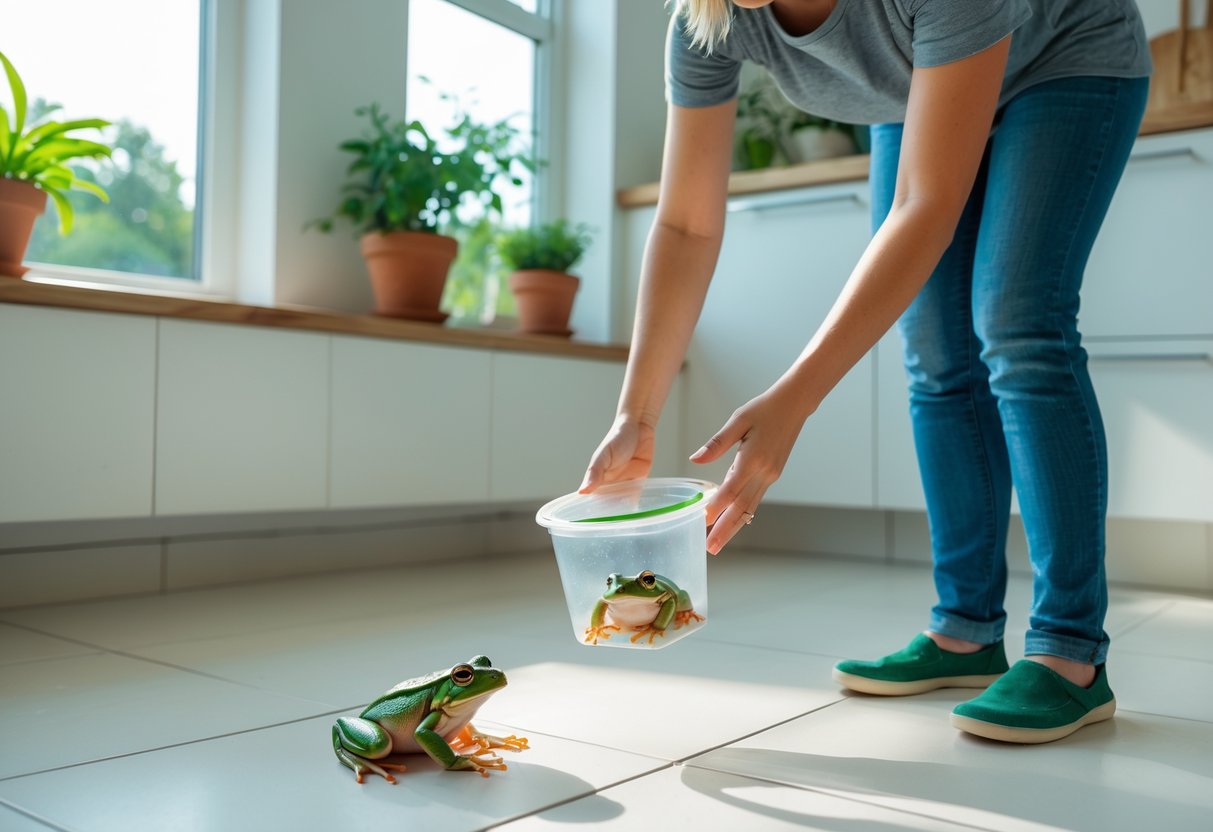
Maybe you’re worried about pets or just not sure what to do next. If you’ve got pets, keep them away from the frog and close doors so the little guy can’t wander around too much.
With a bit of patience, you’ll get the frog outside without anyone getting hurt or stressed.
If you want to know how to get rid of a frog safely—and maybe how to stop them from coming back—stick around. There are some simple steps you can use, and honestly, once you know what to do, it’s not so bad.
Immediate Actions to Take When You Find a Frog Indoors

Spotting a frog indoors can definitely throw you off for a second. But if you know what to do right away, you’ll keep yourself and the frog safe.
Try to catch the frog carefully, figure out where it’s hiding, and handle it gently so you don’t hurt or stress it out.
How to Safely Catch a Frog
Move slowly and stay calm when you go after the frog. If you rush, you’ll probably just scare it, and nobody wants that.
Grab a small container, like a cup or a clear box. Cover the frog gently with it, then slide a thin piece of cardboard underneath to trap it inside.
If you can, make sure there’s a little air getting in—just leave a small gap or use a container with holes. Hold the container steady, and whatever you do, don’t squeeze the frog.
Carry the frog outside and let it go near some plants or water. That’s where it’ll feel most at home.
Try not to use your bare hands, unless you have to. Frogs have really sensitive skin, and stuff on your hands can hurt them.
Best Ways to Locate a Hiding Frog
Frogs love cool, damp spots, so start your search under furniture, near water, or in dark corners. Check places like bathrooms, basements, or anywhere you’ve got houseplants.
Turn off bright lights—frogs like things dim. Sometimes you’ll hear a soft croak, and that can help you track them down.
Use a flashlight and peek behind furniture or appliances if you need to. While you look, close doors to other rooms to keep the frog from sneaking away.
Precautions When Handling Frogs
Be super gentle if you have to touch the frog. Their skin and legs are delicate.
Wash your hands before and after you handle them. That keeps the frog safe from any oils or soap on your skin, and you safe from germs.
Keep pets out of the room until you’re done. Never grab the frog too tightly—it can really hurt them.
If you’re using a container, don’t snap the lid on tight. Frogs need to breathe, just like us.
Try not to hold onto the frog for too long. Let it go outside in a shady spot with some water and plants so it can hide and stay safe.
For more tips, check out What To Do If There Is A Frog In Your House.
How to Prevent Frogs from Entering Your House

Keeping frogs out of your house starts with figuring out how they’re getting in. Once you find those spots, you can fix them and make your place less inviting.
Check for tiny holes, deal with damp spots, and try to cut down on bugs around your home—frogs love those.
Identifying Common Frog Entry Points
Frogs can squeeze through surprisingly small spaces. Look for cracks near doors, windows, vents, and pipes.
Pay attention to gaps under doors or cracks in your foundation. Even spots around water pipes or wires can let frogs slip in.
Check your window and door screens for holes or tears. Make sure your chimney has a cap, too.
Walk around your house every so often, especially when it’s rainy, since frogs get more active then.
Tips for Sealing Gaps and Cracks
Put weatherstripping or door sweeps on all outside doors to block gaps at the bottom.
Seal up cracks and holes using caulk or a good sealant. Check window frames and vents, and add mesh screens if you need them.
If you see gaps around pipes or wires, fill those spaces with expanding foam or silicone sealant. Even tiny openings can let frogs in, so don’t ignore them.
Clear away leaves or wood piles near your house’s foundation. Frogs love to hide there, and it can make it easier for them to get inside.
Reducing Moisture and Food Sources for Frogs
Frogs love water and insects, so it makes sense that they’ll show up wherever they find both. If you’ve got leaking pipes, fix them. Try to get rid of any standing water, and if you have birdbaths or pools, just cover them when you’re not using them.
Keep your gutters clean so water actually drains away from your house. It’s surprising how quickly a little puddle can attract frogs.
If you want fewer insects hanging around, turn off outdoor lights at night, or maybe swap them out for yellow bug lights. Frogs hunt bugs, so fewer bugs means fewer frogs, right?
Some people like to use white vinegar as a natural repellent—just spray it around the base of your home. It’s not a miracle fix, but it can help. Oh, and don’t leave pet food or uncovered trash outside; that stuff brings in insects, which then brings in frogs.
If you want more tips, check out how to prevent frogs from entering your house.


