Ever wondered how frogs manage to catch their food so fast? Frogs don’t chew like humans—they use their long, sticky tongues to sneak up on insects and other small prey, then swallow them whole.
A frog eats by flicking out its tongue lightning-quick, grabbing food, and pulling it straight into its mouth.
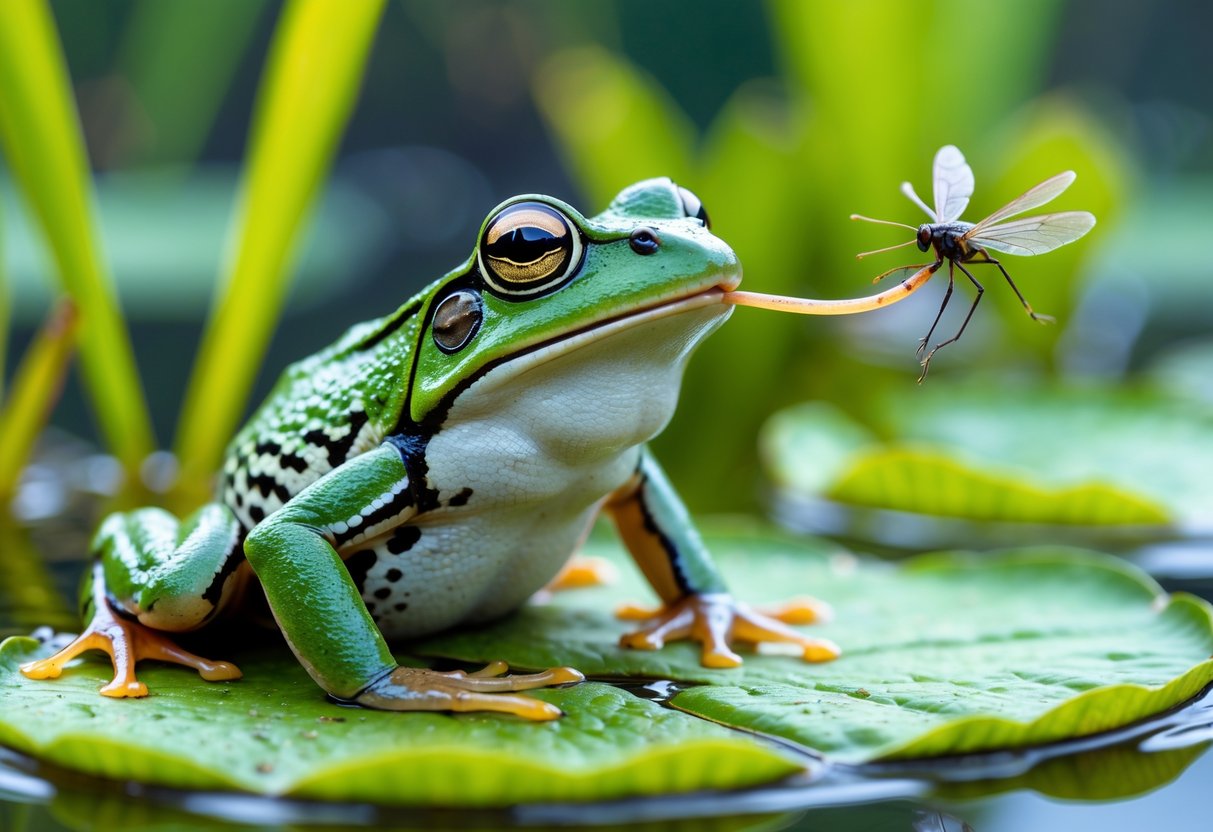
That tongue isn’t just for show. It’s a real hunting tool, covered in sticky saliva, and it helps the frog hold onto squirming bugs.
Different frogs munch on different things, depending on where they live. Most will snap up anything small enough to fit in their mouths, from insects to tiny fish.
Learning how frogs eat might make you appreciate these little hunters even more. Maybe you’ve watched a frog snap up a fly, or maybe you’re just curious how tadpoles turn into such impressive predators.
Either way, their eating habits are clever and honestly, kind of wild.
How Frogs Eat: Feeding Behavior and Adaptations

Frogs combine smart hunting tricks with unique body features to catch and swallow their meals. Their feeding habits change a lot as they grow from tadpoles into adults.
You’ll also see that frogs have some unusual ways of drinking water that really fit their environment.
Hunting Techniques: Tongue Projection and Ambush
Usually, frogs just sit still and wait for prey to wander close. When a bug or insect scurries by, the frog whips out its long, sticky tongue in a flash.
The tongue attaches at the front of the mouth, so it can shoot out far and grab prey easily.
That sticky surface snags the insect and yanks it back before the prey knows what hit it. Frogs rely on sharp eyesight to spot even the tiniest movement.
Bigger frogs sometimes grab small animals like mice or reptiles if they get the chance.
It’s basically a quick ambush, like using a built-in sticky fishing line. This trick works best for catching insects, spiders, and sometimes even little fish.
If you want to dive deeper, Britannica has more on frog hunting.
Swallowing and Digestion Process
When a frog snags its prey, it snaps its jaws shut to keep the catch from escaping.
Frogs don’t chew at all—they swallow their food whole.
Here’s the weird part: their eyes actually help them swallow.
Frogs pull their eyes down into their mouths to push the prey toward the throat.
This eye movement helps shove the food into the esophagus.
Once the food slides down, it lands in the stomach where digestion kicks off.
Acids and enzymes break down the prey into nutrients.
The intestines soak up the good stuff to fuel the frog and help it grow.
Waste leaves the body through the frog’s cloaca.
This whole process lets frogs digest everything from bugs to, if they’re big enough, small rodents.
How Tadpoles Feed and Transition to Adult Feeding
Tadpoles eat very differently from grown-up frogs.
At first, tadpoles mostly munch on algae, plants, and tiny bits of organic stuff floating in the water.
They use little mouthparts to scrape or suck up food.
As they grow, their bodies and mouths change, getting ready for a meat-based diet.
Eventually, they grow legs and lungs, and their mouths become perfect for catching insects and other live prey.
Switching from eating plants to eating meat helps them survive.
Tadpoles need plant energy to grow, but adult frogs need the protein from animals to stay healthy.
Simply Ecologist has more info on how frog diets shift as they grow.
Do Frogs Drink Water?
Frogs don’t usually drink water the way most animals do.
Instead, they soak up water through their skin, which needs to stay moist.
Frogs often hang out near water or in damp spots to stay hydrated.
Their skin acts like a sponge, pulling in water without any sipping needed.
If their skin dries out, frogs can get dehydrated fast.
So, the right environment with enough moisture is super important for them.
The Spruce Pets has a nice breakdown of how frogs keep themselves hydrated.
What Frogs Eat: Diets by Species and Life Stage
Frog diets really depend on their species and age.
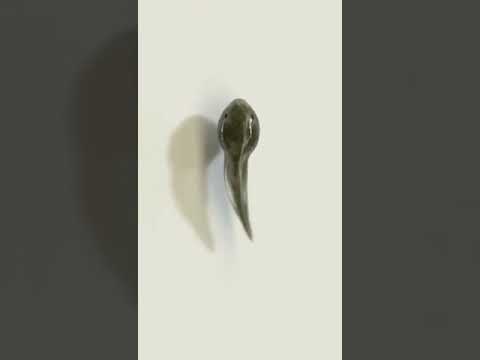
Young frogs, or tadpoles, mostly eat plants and tiny water creatures.
Adult frogs usually go for live bugs and sometimes small animals.
Pet frogs need special diets to stay healthy and avoid trouble.
Common Diet of Tadpoles: Herbivores and Omnivores
Tadpoles mostly eat plants like algae and other soft plant bits found in ponds.
This diet helps them grow when they’re little.
Some tadpoles stick to plants, while others eat small aquatic insects, snails, or even dead animals.
As they get bigger, lots of tadpoles start adding protein from tiny worms and brine shrimp.
This change gets them ready for eating meat as adults.
What tadpoles eat can vary by species, but plants and small water creatures are usually on the menu before they grow legs.
Carnivorous Diet of Adult Frogs: Insects, Worms, and More
Most adult frogs chase live prey they can catch with their tongues.
They’ll eat crickets, flies, beetles, ants, moths, spiders, and worms.
Bigger frogs, like African bullfrogs or Goliath frogs, might even eat small rodents, birds, or other frogs.
Aquatic frogs, such as the African clawed frog, hunt underwater for fish, aquatic insects, snails, and slugs.
Tree frogs stick to insects and spiders they find in the trees.
If it fits in their mouth and moves, it’s probably food.
Unique Diets of Different Frog Species
Frog diets can be pretty different depending on the species.
Glass frogs usually eat small insects like springtails and flies.
Toads go for ants and beetles.
African dwarf frogs mostly eat small aquatic creatures, like brine shrimp.
Goliath frogs, which are the biggest, can eat small vertebrates like rodents, along with insects.
Wood frogs rely a lot on insects and spiders they find on the forest floor.
Each frog species has its own menu, shaped by where it lives and how it hunts.
What Pet Frogs Eat and Nutrition Concerns
If you decide to keep frogs as pets, you’ll need to feed them live insects like crickets, mealworms, or worms. These foods help mimic what they’d eat in the wild.
Some pet frogs really do better with vitamin and calcium supplements tossed in, since that can help prevent issues like metabolic bone disease. It’s a bit of a hassle, but honestly, it’s worth it.
Bigger frogs? They might eat small mice, but you should always double-check what your particular frog species needs. Giving your frog the wrong foods—or anything that’s not alive—can actually harm them.
Try to keep their meals balanced with a good mix and proper nutrition. That way, your frog stays happy and healthy. If you want more info on feeding pet frogs, check out What Frogs Eat – The Spruce Pets.


