
Ever spotted a frog hopping through your garden and wondered what it’s snacking on? Frogs in your garden love munching on insects like flies, beetles, and mosquitoes. They help keep pests in check, using their sticky tongues to snag bugs—usually at night when insects are buzzing around the most.
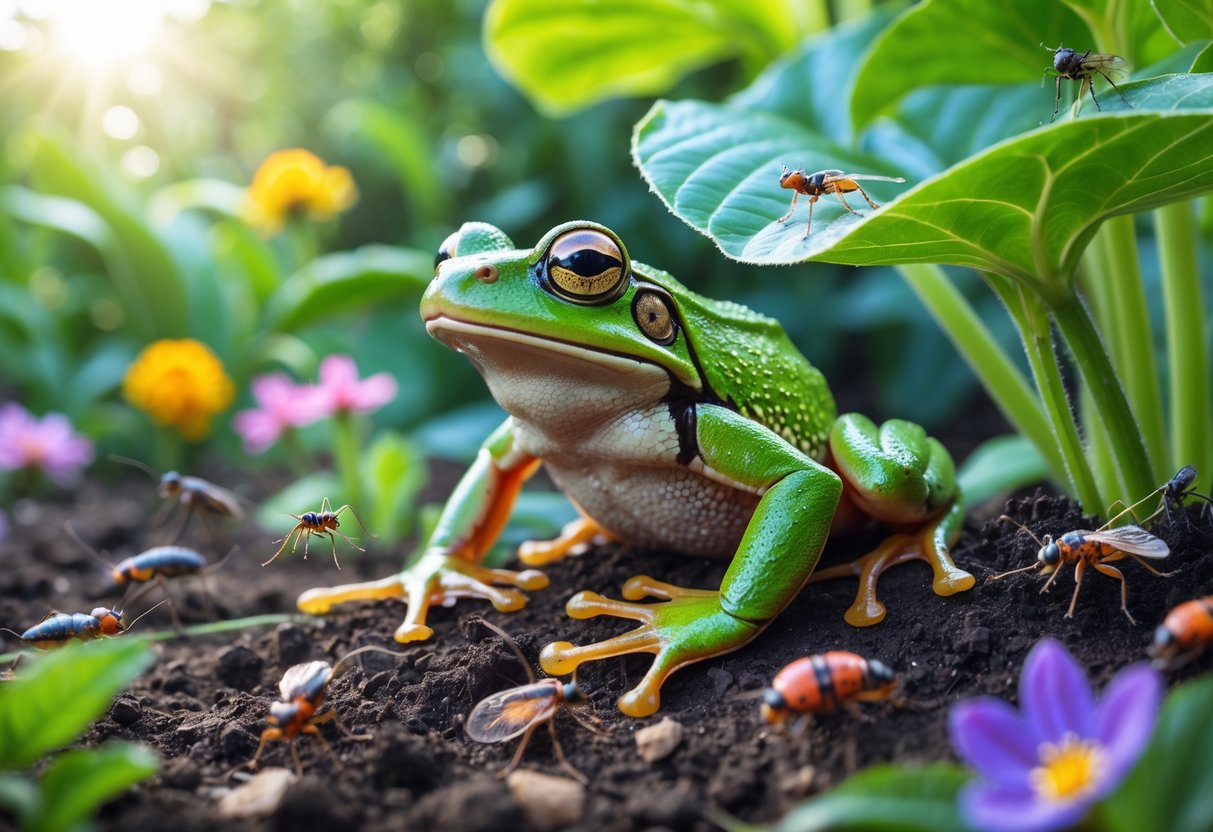
Once you know what frogs like to eat, you can make your garden more welcoming for them. If you set up a moist, shady spot with plenty of bugs, frogs might just decide to stick around. That means fewer pests bothering your plants, and honestly, it’s kind of fun having these little helpers around.
What Do Frogs Eat in Your Garden?

Frogs chow down on all sorts of insects and small critters you’ll find in your yard. They hunt anything that fits in their mouth and, honestly, they’re pretty good at keeping pests under control.
If you’re curious about what to feed them (or just want to know what they’re eating), it’s worth taking a closer look.
Typical Insects and Invertebrates Eaten by Frogs
In gardens, frogs go after crickets, grasshoppers, caterpillars, and locusts. They’ll also gobble up worms and spiders crawling through the dirt or on your plants.
These bugs are easy targets and give frogs a good meal. Frogs aren’t picky—they’ll eat any small bug they can swallow.
If you’ve got mealworms or waxworms around, frogs will happily eat those too. The variety keeps them healthy, since different bugs offer different nutrients.
Since frogs eat so many pests, they’re awesome natural pest controllers. You’ll usually spot them close to plants where insects hang out, or in damp spots where worms hide.
Differences in Frog Diets by Species and Habitat
Different frog species have different tastes, depending on where they live. Frogs that hang out in water might eat small fish or aquatic bugs.
Backyard frogs mostly stick to land insects like crickets and caterpillars. Bigger frogs sometimes eat small snakes, other frogs, or even tiny rodents.
Most garden frogs just focus on insects and worms. Smaller frogs usually go for tiny bugs like springtails or little flies.
Your garden’s setup changes what frogs can find to eat. If your yard is full of plants and stays moist, you’ll attract more bugs—and that means more food choices for frogs.
Best Live Foods to Offer Backyard Frogs
Thinking about feeding the frogs in your garden? Offer live insects that match what they’d find naturally.
Crickets are a top pick—they come in all sizes and frogs catch them easily. Grasshoppers, mealworms, and waxworms work well too.
These bugs give frogs the nutrition they need. And live food keeps frogs active, since they get to hunt just like they would in the wild.
Skip dead bugs or processed foods—they aren’t good for frogs. Live snacks are the way to go.
Foods to Avoid When Feeding Garden Frogs
Don’t give frogs anything that could harm them. If you’re not sure about pesticides or pollution, skip feeding them insects you caught outside.
Wild bugs might have chemicals or parasites that can hurt frogs. Also, don’t feed frogs bugs or animals that are too big for them to swallow.
That can lead to choking or even injury. Human foods like bread, cheese, or snacks are a no-go.
Frogs can’t digest them, and it can mess up their health. Stick to live insects and your garden frogs will thank you.
Encouraging Frogs and Natural Pest Control

Frogs munch on loads of garden pests, which helps your plants out a lot. If you want to make your garden more inviting for them, add water, shelter, and plants that attract bugs.
These things work together to keep frogs happy and doing their pest-control job.
How Frogs Help Control Garden Pests
Frogs eat insects like mosquitoes, slugs, beetles, and caterpillars. One frog can eat hundreds of pests in just one night.
That’s a lot fewer bugs chewing up your plants. Since frogs do this naturally, you won’t need as many chemical pesticides.
This way, you protect helpful insects and keep your garden’s ecosystem balanced. If your garden has enough bugs, frogs will find their own food—no need to feed them directly.
Creating a Frog-Friendly Garden Environment
Frogs need water to survive and breed. Try adding a small pond or even a water bowl.
Just keep the water clean and free of chemicals. Place logs, rocks, or thick plants nearby so frogs have places to hide from predators.
Native plants help create shady, moist areas where frogs feel safe. Avoid spraying pesticides or chemical fertilizers near where frogs hang out.
These small changes can make your garden a safe, welcoming home for frogs and encourage them to stick around.
Attracting Beneficial Insects for Frogs
Frogs love to snack on insects, so pulling in the right bugs is pretty important. Try planting flowers like marigolds, daisies, or even some native wildflowers—these will bring in pollinators and a bunch of insects that frogs actually eat.
Skip the pesticides if you can. They really mess with insect populations. Tossing down some leaf litter or growing ground cover plants gives insects more places to hide and live, which just means more food for your frogs.
If you want a garden that helps frogs and keeps pests in check, focus on making it a friendly spot for insects. You’ll find more about attracting frogs for natural pest control at How to Attract Frogs to Your Yard.


